
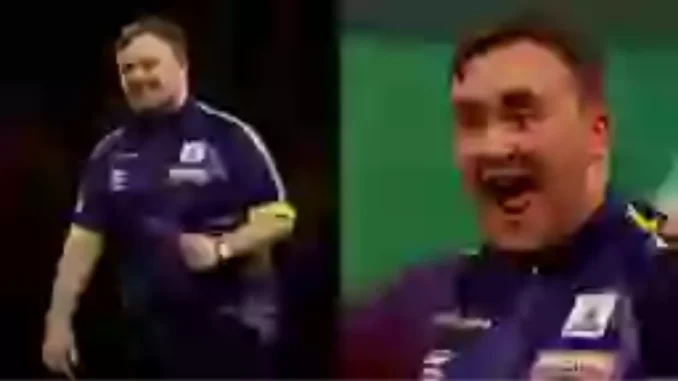
Remember When Luke Littler Had to Prove He Was Actually 16?
Back in early January 2024, darts was in a full-blown fever and half the country still could not believe the kid on the Ally Pally stage was only 16.
Luke Littler had just smashed his way to the World Championship final. He had taken down Raymond van Barneveld and then beaten Rob Cross 6-2. He was the youngest finalist the tournament had ever seen. And because he walked out with a full beard and the composure of someone twice his age, a chunk of the internet decided he must be lying.
That is how we ended up with a birth certificate doing the rounds on social media on the eve of the biggest night of his life.
The moment that still gets shared
Looking back, the radio clip is the bit that still makes you smile.
Andy Goldstein told him on talkSPORT that he had bet colleagues Littler was actually in his thirties. The teenager did not blink.
“You’ve had a bet? You’ve lost your money there because I’m 16, I’d say [I’ve had the beard] a good two years now.”
At the time it felt like a punchline. Two years later it feels like the first time a lot of casual fans realised this kid was not going to be rattled by anything.
Then TalkTV posted what appeared to be his birth certificate with the caption “Proof he really is a wonderkid.” It showed he was born on 21 January 2007 at North Cheshire Hospitals NHS Trust in Warrington. That should have ended the argument. Instead it started a second one.
Why fans were so worked up
The leak sparked genuine backlash. People who had been joking about his age suddenly felt uneasy about a minor’s official document sitting on timelines. Others still refused to accept it. One comment that did the rounds at the time was that he “looks like he is 42.” That was the mood. Disbelief mixed with a bit of cruelty.
The rumours were not new. A family member, Leanne Seddon, a cousin of Littler’s mum, said at the time that the same stuff had followed him for years.
“Some years ago when he was winning everything, other parents of young players started a rumour he was lying about his age. To enter a competition you have to give proof of age, but that didn’t stop them. It was pure jealousy and nastiness by adults attacking a young teenager on social media. To stop the hate his parents posted proof of his age back then.”
Littler himself treated it like background noise. Speaking to the BBC after the tournament he said:
“I’ve got a nice beard, that’s what people are going to say. People are 16 without one hair, and people even older! When I was 14 they said I didn’t look my age. They were saying, ‘He’s not 14, he’s not 15.’ But I’m not bothered. I know I’m 16. It’s been going on for years. But I just block it out, laugh at them, don’t even reply to them, don’t give them the airtime.”
That attitude is why the moment stuck. He was a teenager being asked to produce paperwork before a world final, and he sounded more bored than angry.
What it meant then, and why it still matters
At the time the story sat right next to the sport itself. Littler was hours away from facing Luke Humphries. He lost that final, but the run had already changed darts. Suddenly people who had never watched a leg were arguing about a 16-year-old’s birthday.
Looking back now, the age row feels like the first chapter of something bigger. The same look that made strangers doubt him became part of the character. The beard, the walk-ons, the calm under lights. Fans who once posted conspiracy comments later watched him keep winning. The joke aged worse than he did.
There is a serious side too. A private document landing online because the public could not accept a teenager was that good was a line a lot of people thought should not have been crossed. The backlash over the leak was justified. Proving a point should never have required that.
These days nobody needs a certificate to know how old he is. The record is there. The titles are there. The kid who had to confirm he was 16 is the same player crowds still argue about for completely different reasons.
That week at Ally Pally remains one of those “you had to be there” stretches. A debutant in the final. A radio bet. A document on social media. And a 16-year-old telling grown adults they had lost their money.
Do you remember where you were when that birth certificate first popped up, or were you one of the people convinced he had to be older? Drop the memory. That week still lives rent-free for a reason.