
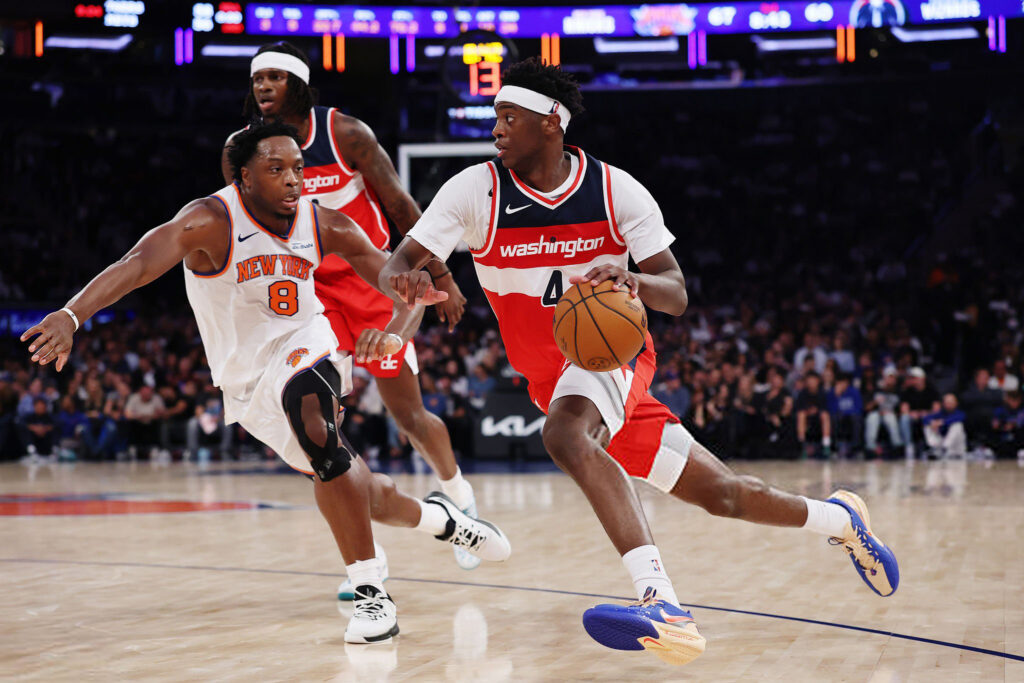
Wizards Rally Late to Beat Knicks 111-109 at Madison Square Garden
The New York Knicks returned to Madison Square Garden looking to build momentum ahead of the new NBA season, but the Washington Wizards had other ideas. In a tight preseason contest on Thursday, October 8, Washington produced a late surge to snatch a 111-109 victory and leave the home crowd watching a frustrating finish.
For the Wizards, this was an encouraging start to their preseason campaign, especially with new-look personnel offering plenty of reasons for fans to pay attention. For the Knicks, however, the result raised questions about their ability to close out games, even if preseason basketball should never be treated as a definitive preview of what lies ahead.
The final score tells only part of the story. New York led for long stretches, built a cushion during the second quarter and appeared capable of controlling the contest. Yet Washington stayed close enough to make a move late, and the Knicks could not do enough to prevent a two-point defeat.
A New-Look Wizards Team Makes an Early Statement
One of the biggest talking points coming into the game was Washington’s new-look roster. The Wizards had an opportunity to see how veteran stars Trae Young and Anthony Davis could fit alongside young talent, including 2026 first overall pick AJ Dybantsa.
That combination immediately gives Washington an interesting storyline. Young brings playmaking and long-range shooting, while Davis offers interior scoring, rebounding and defensive presence. Dybantsa, meanwhile, represents the kind of young talent the franchise will want to develop as it builds toward a more competitive future.
Of course, one preseason game cannot tell us whether all those pieces will fit perfectly once the regular season begins. Still, beating a Knicks team featuring its established starting lineup is an encouraging way to begin.
Washington finished with 40 made field goals from 86 attempts, shooting approximately 46 percent from the floor. It also connected on 13 of 33 three-point attempts, giving the Wizards a significant advantage from beyond the arc. New York made the same number of field goals but needed 95 attempts to get there.
Anthony Davis Leads Washington’s Scoring
Davis led the Wizards with 16 points, shooting six of 11 from the field and knocking down two three-pointers. He also collected seven rebounds, providing a solid contribution in his first preseason appearance with the team.
Young added 15 points, including three made shots from beyond the arc, while recording four assists and two steals. Those numbers offered a glimpse of how his scoring threat could complement Davis’s presence around the basket.
Dybantsa contributed 11 points and four steals, making an impact beyond scoring alone. His defensive activity was particularly encouraging, suggesting he could bring energy and versatility while adjusting to the demands of professional basketball.
Washington also received useful contributions from its supporting cast. Justin Champagnie scored 12 points, Bub Carrington added 11, and Kyshawn George finished with 12 points, seven rebounds and five assists.
That balance matters. A team cannot expect its headline names to solve every problem over a long season, so contributions from role players will be essential if Washington hopes to turn individual talent into consistent performances.
For now, the biggest positive is that the Wizards found multiple ways to stay competitive and eventually win. The challenge will be maintaining that collective effort when opponents have more regular-season film to study and fewer reasons to experiment with their rotations.
Knicks Have Reasons to Be Concerned
New York’s defeat was not without positives, but the manner of the loss will give head coach Mike Brown plenty to review.
Jalen Brunson scored 13 points and added three assists, while Josh Hart also recorded 13 points, six rebounds and three assists. Landry Shamet matched their scoring total, connecting on three of his four three-point attempts to provide a welcome shooting contribution.
OG Anunoby added 10 points, while Karl-Anthony Towns finished with eight points and seven rebounds. Mikal Bridges, however, had a quieter outing, scoring just two points on one-of-six shooting.
The most obvious problem was New York’s perimeter efficiency. The Knicks made only 11 of 38 attempts from three-point range, a conversion rate of approximately 29 percent. Washington, by comparison, made 13 of 33.
That difference might appear small in terms of made shots, but it becomes significant when a game is decided by two points. Had New York converted a couple of additional attempts, the final result could easily have been different.
There is also a bigger tactical question. The Knicks created 28 assists compared with Washington’s 22, demonstrating that they were capable of generating opportunities for teammates. However, good ball movement only goes so far if those opportunities are not converted consistently.
New York also committed 15 turnovers, compared with Washington’s 22. That is a clear reminder that the Wizards did not win because they were flawless. They gave the ball away more often, yet still found a way to finish ahead.
The Fourth Quarter Changed Everything
The decisive stretch arrived in the fourth quarter, when Washington outscored New York 30-25.
The Knicks entered the final period with an 84-81 advantage, having recovered from a one-point deficit after the opening quarter. They had also built a six-point halftime lead by winning the second quarter 34-27.
But Washington refused to let the game slip away. The visitors increased their pressure, found more reliable scoring opportunities and made their free throws when they needed them.
One of the most important differences came at the foul line. Washington attempted 13 free throws in the fourth quarter, making nine, while New York attempted just two. The Knicks also committed eight fouls during the period, compared with one for Washington.
That disparity helped the Wizards build momentum during the closing minutes. While New York was still finding shots, Washington did a better job of turning its possessions into points.
The Knicks also committed six turnovers in the fourth quarter, allowing the visitors additional opportunities to seize control. In a contest this close, mistakes that might seem minor early in the game can become decisive when the clock is running down.
To New York’s credit, the team remained competitive until the finish. But the inability to protect its advantage will be the main lesson from this matchup.
What This Result Means Going Forward
It is important to keep the context in mind: this was a preseason game, not a regular-season contest with standings implications.
Coaches use these games to evaluate combinations, build chemistry and assess players in different roles. Results matter, but they are only one part of the preparation process. The Knicks should not panic over a narrow defeat, just as Washington should not assume one victory proves its rebuilding project is complete.
For the Wizards, the encouraging signs are the scoring balance, three-point efficiency and ability to respond under pressure. If Young and Davis develop strong chemistry, Washington could become a more intriguing team to watch than many casual observers expect.
For the Knicks, this game highlights areas worth addressing before the games begin to count. Better perimeter shooting and greater composure in the fourth quarter would help them avoid turning promising performances into frustrating defeats.
The most interesting question is how both teams respond in their next outings. Washington will want to carry its confidence into its next preseason test, while New York will look to sharpen its execution after opening the preseason with consecutive losses.
Final Thoughts
The Wizards’ 111-109 victory at Madison Square Garden was a useful early test for two teams with very different objectives. Washington showcased its new-look roster and found the late-game execution needed to secure the win, while New York was left to reflect on missed opportunities and an inconsistent perimeter performance.
There is no reason for Knicks fans to sound the alarm just yet, but there is plenty for the coaching staff to examine. Meanwhile, Wizards supporters have every reason to be encouraged by the contributions from Davis, Young and their supporting cast.
Preseason results rarely tell the whole story, but close games can still reveal weaknesses and promising signs.
So, what do you think? Should Knicks fans be concerned about their team’s late-game struggles, or should this defeat simply be treated as preseason preparation? And could the new-look Wizards surprise people this season?