
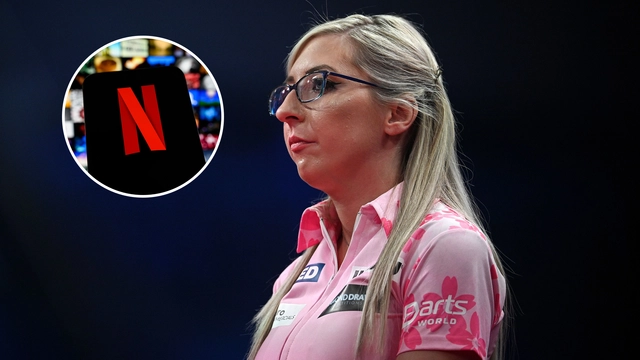
Netflix’s decision to include established darts names in its upcoming Beat Luke Littler event has sparked a fierce debate among fans, with some questioning whether the competition still matches its original promise of giving ordinary players a shot at life-changing money.
The streaming giant has now responded to the backlash, insisting that every selected contestant went through the same application and audition process. With £501,000 on offer for anyone who can defeat the world number one in a single leg of 501, the controversy has put the spotlight on a show that has yet to throw its first competitive dart.
Why the Line-Up Has Angered Darts Fans
The controversy began when the 24 contestants were announced, with familiar faces from competitive darts appearing alongside people whose careers have little to do with the professional circuit.
Fallon Sherrock is arguably the biggest talking point. The 32-year-old made history in 2019 by becoming the first woman to win a match at the PDC World Darts Championship, defeating Ted Evetts at Alexandra Palace before reaching the third round.
Then there is Mitchell Lawrie, the Scottish teenager who has already attracted attention for his ability and potential. At just 15, he is a reigning junior world champion and has been tipped by some observers as a future star of the sport.
For fans who imagined an ordinary pub player stepping up to the oche against Littler, seeing those names on the list was always going to raise questions.
One fan expressed the frustration by writing: “Is this a joke? I thought it was supposed to be amateurs.”
Another supporter questioned whether the selection had been decided long before the public auditions began, while others argued that the programme would have been more exciting with a greater number of completely unknown players.
The criticism is understandable. Part of the original appeal was the possibility of someone who normally plays darts for fun suddenly becoming £501,000 richer after producing one outstanding leg against the best player in the world.
Netflix, however, believes the selection process was fair.
Netflix Explains Its Rules for Contestants
In its response to City AM, a Netflix spokesperson explained that every contestant had to follow the same process and meet the same eligibility requirements.
“The application and audition process for Beat Luke Littler was exactly the same for everyone and open only to people aged 12 and over who do not hold – and have never held – a PDC Tour Card,” the spokesperson said.
The statement continued: “The final 24 that have been selected for the chance to face Luke this week, all queued up to compete in the heats in London or Manchester, respectively, and managed to complete a leg of 501 in 24 darts or less to prove their darting ability.”
That is an important distinction. Having experience in competitive darts does not automatically mean a player has held a PDC Tour Card, which is the key restriction Netflix used to determine eligibility.
Contestants first had to complete a leg of 501 in 24 darts or fewer. Those who passed were interviewed by the production team before their throwing ability was assessed by respected figures including Wayne Mardle, Laura Turner and Phil Taylor.
Netflix can therefore argue that the rules were applied consistently.
However, following the same process does not necessarily settle the debate about whether the final line-up reflects what audiences expected when the event was announced. That is where the organisers still have a challenge.
There is a difference between meeting the technical definition of an amateur and being an ordinary recreational player with little experience of high-level competition.
Paul Nicholson Offers a Different Perspective
Former professional player and darts commentator Paul Nicholson has also weighed in on the debate, offering a more nuanced view of the decision.
Speaking to Sporting Life, Nicholson said: “When the parameters for the show came out, there was always the likelihood that some “names” would be part of it. What surprised me were the parameters for the supposed amateur players in it. I thought they’d keep it to a local hero level, but maybe having some names in it provides drama and more stories, which each and every show needs.”
Nicholson’s argument highlights the balancing act facing Netflix.
A programme featuring unknown players would deliver the classic underdog story. Viewers could follow ordinary people chasing an extraordinary prize, with every successful visit to the board potentially bringing them closer to changing their lives.
On the other hand, recognisable competitors bring established reputations, personal stories and a greater degree of credibility to the sporting contest.
Nicholson also defended the selected players’ right to compete, pointing out that they had fulfilled the stated criteria.
That is a fair point. If a contestant meets the published rules, it would be difficult to blame them for accepting the opportunity. The bigger question is whether the rules and the marketing created the same expectations among viewers.
Why Luke Littler Makes This Such a Huge Event
The decision to build the programme around Littler makes sense from a sporting and entertainment perspective.
The Warrington-born star became the youngest world champion in darts history at 17 and has continued to collect major titles. His rapid rise has established him as one of the sport’s biggest attractions, making him an ideal figure for a high-profile live competition.
His confidence is also part of the attraction.
“Everyone thinks they can beat me,” Littler said when addressing potential challengers. “Now they get a chance to prove it.”
The format creates a fascinating challenge because each contestant needs to beat him in just one leg of 501. That is a very different proposition from winning a long match against the world number one.
Littler remains the clear favourite, but a single leg leaves room for nerves, missed doubles and a moment of brilliance from an opponent.
Even a player who would struggle to compete with Littler over an entire tournament could take advantage of one imperfect visit. That possibility is precisely what gives the £501,000 prize its appeal.
What to Expect When the Show Goes Live
Beat Luke Littler is scheduled to air live on Netflix on Friday, October 30, at 7pm UK time. The 24 selected contestants will compete for 20 places before being split into groups and randomly selected to face Littler. The competition ends when somebody beats him.
That format should create plenty of tension, particularly if Littler starts slowly or a relatively inexperienced player finds their scoring rhythm.
It also means the presence of stronger competitors could make the event more compelling from a purely sporting perspective. Sherrock and Lawrie, for example, have experience that could help them handle the occasion better than someone playing under those circumstances for the first time.
But Netflix will ultimately be judged on more than the quality of the darts. The show needs to deliver the sense of possibility that attracted viewers in the first place.
If an unknown player wins the jackpot, the controversy surrounding the selection process may quickly become a footnote. If the established names dominate the attention and the ordinary contestants appear to have little realistic chance, criticism could continue.
The Final Verdict
Netflix has defended its decision by making clear that all 24 contestants met the same eligibility requirements and completed the audition process. That provides a straightforward answer to accusations that selected players were allowed to bypass the rules.
Yet the frustration among darts fans is not entirely about eligibility. It is also about expectations, fairness and the appeal of watching an everyday player get an opportunity that might never come again.
Personally, I can see both sides. Experienced competitors could make the event more entertaining, but a stronger emphasis on unknown pub players might have delivered an even more memorable underdog story.
Now the attention turns to the oche, where the arguments will finally give way to darts. With £501,000 waiting for anyone who can beat Littler, the biggest question remains whether the world number one will live up to his reputation or suffer a shock defeat on live television.
Do you think Netflix made the right call by including established darts names, or should Beat Luke Littler have been reserved for ordinary pub players?