
Luke Littler has reportedly turned down a substantial amount of money to star in a Tyson Fury-style documentary, raising fresh questions about just how much of his private life the darts superstar is willing to sacrifice for fame.
The world number one has become one of the biggest names in British sport, attracting attention from broadcasters, streaming platforms and commercial brands since his remarkable breakthrough at the PDC World Darts Championship.
But while plenty of athletes would jump at the opportunity to turn their sporting success into a lucrative television series, Littler appears to have other priorities.
And judging by the latest revelation from fellow darts star Stephen Bunting, money alone is not enough to convince The Nuke to let television cameras into his family home.
Bunting, who has developed a friendship with Littler and even shares ownership of a racehorse with the teenager and former England striker Michael Owen, revealed that the youngster had received an offer for a documentary reportedly titled ‘Home with the Littlers’.
Speaking about the proposal, Bunting said he knew Littler had been offered a “substantial amount of money” but believed he had ultimately rejected it.
It is an interesting revelation, particularly at a time when darts is enjoying unprecedented mainstream attention.
And perhaps the most surprising part is that Littler has apparently decided that protecting his privacy is worth more than another potentially enormous payday.
Stephen Bunting’s revelation puts Littler’s decision in the spotlight
What makes the story even more interesting is that Bunting’s comments suggest this was not simply a case of Littler being too busy to consider another television opportunity.
Littler’s family and management team have reportedly rejected multiple approaches from broadcasters interested in producing documentaries and television shows about the family.
That suggests there has been a conscious effort to control how much access the outside world gets to the teenager’s personal life.
And honestly, that might be one of the smartest decisions his camp has made.
Littler is already under enormous pressure whenever he steps onto a darts stage. Every performance is analysed, every defeat becomes a talking point and every tournament appearance attracts attention.
The last thing he necessarily needs is a television crew following him around his home, documenting arguments, family conversations and everyday moments that should arguably remain private.
There is a difference between allowing supporters to see more of your personality and turning your entire household into entertainment.
Not every successful sportsman needs to do the latter.
Tyson Fury has shown both sides of the documentary business
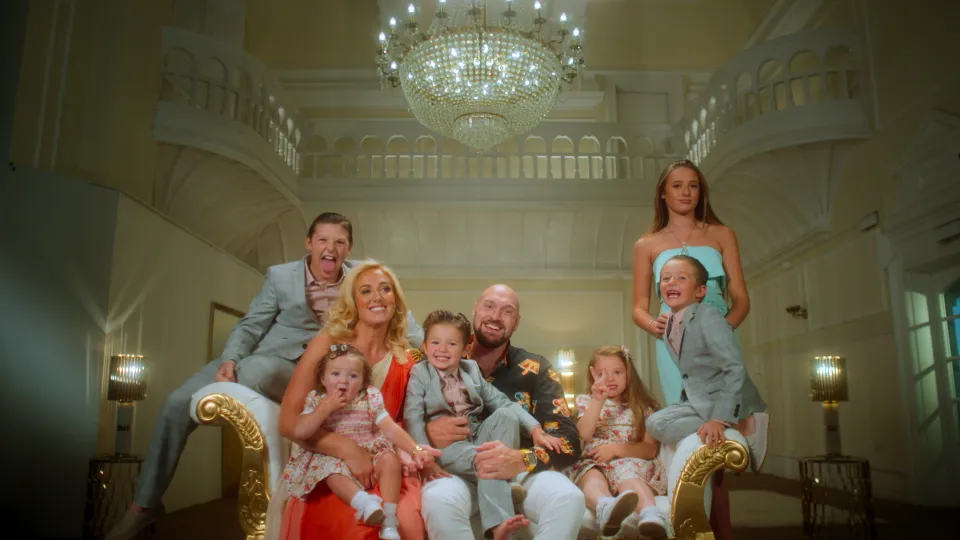
The obvious comparison is Tyson Fury and his Netflix series, At Home With The Furys.
The programme gave viewers an intimate look at the former heavyweight champion’s life outside boxing, including his relationship with wife Paris, his children and the challenges that come with balancing family responsibilities and sporting fame.
It was a successful concept because Fury is an enormous personality who was willing to let viewers into parts of his world that normally remain behind closed doors.
But there is another side to that arrangement.
Fury previously admitted that he struggled with the filming process and even considered getting out of the original documentary agreement.
That is something people should remember before assuming that a lucrative television deal is automatically a wonderful opportunity.
Being followed by cameras for weeks is not the same as recording a few promotional interviews or posting videos on social media.
It means surrendering a significant amount of control over your everyday life.
And while the financial reward might be attractive, the personal cost can be considerably harder to measure.
Littler would be under even greater scrutiny because of his age, his extraordinary rise and the public fascination surrounding his relationship and family.
A documentary could become a massive hit, but it could also create unnecessary conversations about people who never asked to become public figures.
Littler previously explained why he rejected the cameras
Interestingly, this is not the first time Littler has spoken about turning down a documentary opportunity.
Back in May 2026, the two-time world champion revealed that he had previously declined an offer because he did not have the time to allow a production crew to follow him around for more than a month.
Speaking on the Double Tops Podcast, Littler explained that he did not even know which production company had approached him.
He said: “I didn’t have 31 days to be followed about with a camera. So, we declined that.”
However, he also left the door open for a possible documentary in the future, admitting that he would be interested if producers returned with another approach in 2027.
That detail is particularly important because it suggests Littler is not completely against the idea.
He simply wants the timing and circumstances to be right.
There is also a difference between a young athlete rejecting an opportunity because he does not want cameras around and one refusing because he does not believe the financial reward is worth the disruption.
Either way, it is difficult to criticise him for making that choice.
Netflix has already discovered the commercial value of Luke Littler
The irony is that Littler does not need a personal documentary to prove his entertainment value.
Netflix has already demonstrated that his name can attract considerable attention outside traditional darts broadcasting.
The recent Beat Luke Littler special offered 20 challengers the opportunity to beat the world number one in a single leg and collect a life-changing £501,000 jackpot.
It was an unusual concept, but it put darts in front of a much wider entertainment audience.
And the ending was even more dramatic than many expected.
Fallon Sherrock defeated Littler in the decisive one-leg shoot-out, walking away with the enormous prize after producing the performance of her night.
The result generated plenty of discussion, particularly because of the debate surrounding the show’s amateur eligibility criteria.
But from a commercial perspective, the event demonstrated why streaming platforms are increasingly interested in darts.
Littler is not just a player who wins tournaments. He is a recognisable personality who can sell an entertainment concept.
That is a valuable position to be in.
Netflix has an opportunity to build more projects around him, but it does not necessarily have to involve cameras following him around his family home.
Is turning down that money actually the right decision?
Here is where I think Littler deserves credit.
Too many athletes become so focused on commercial opportunities that they forget what made them famous in the first place.
There is nothing wrong with making money from your popularity. In fact, Littler should absolutely take advantage of the opportunities that come with being one of the biggest names in darts.
But there is a danger in becoming more famous for your private life than your sporting achievements.
A documentary might bring millions of additional viewers, but it could also create distractions that follow him long after filming has finished.
Imagine a disagreement at home becoming a major talking point on social media. Imagine private family moments being dissected by strangers or ordinary conversations becoming headlines.
That is the reality of inviting cameras into your personal space.
And Littler is still young enough to have plenty of years ahead of him in the sport.
He does not need to rush into every opportunity simply because someone is offering a substantial amount of money.
If anything, protecting his privacy now could prove more valuable than accepting another big cheque.
However, I also believe there is a commercial opportunity being missed here.
A properly produced documentary about Littler’s rise, his preparations for major tournaments and the pressures of being darts’ biggest young superstar could be fantastic television.
It would introduce new audiences to the sport without necessarily turning his family into the main attraction.
That is the kind of project I would like to see.
Stephen Bunting might have an alternative idea
Bunting certainly enjoyed revealing the opportunity that Littler had reportedly rejected.
The Bullet even joked that if producers could not get hold of The Nuke, perhaps they should consider making a programme called ‘Home with the Buntings’.
It was clearly a light-hearted suggestion, but it also highlights how much the sport has changed.
Darts players who once struggled to attract mainstream television attention are now being considered for major streaming projects.
And with Littler leading that transformation, there is no shortage of commercial interest.
The bigger question is whether the sport can continue capitalising on this popularity without making its biggest stars feel that they must turn every part of their lives into a television product.
For now, Littler appears comfortable keeping certain things away from the cameras.
And perhaps that is exactly how it should be.
My verdict: Turning down substantial money might sound crazy to some people, but Littler has already earned the right to decide how much of his life the public gets to see. He should not have to become a reality television star to remain darts’ biggest attraction.
The documentary opportunity might return in 2027, but this time producers will have to convince him that the project is worth more than just the money.