
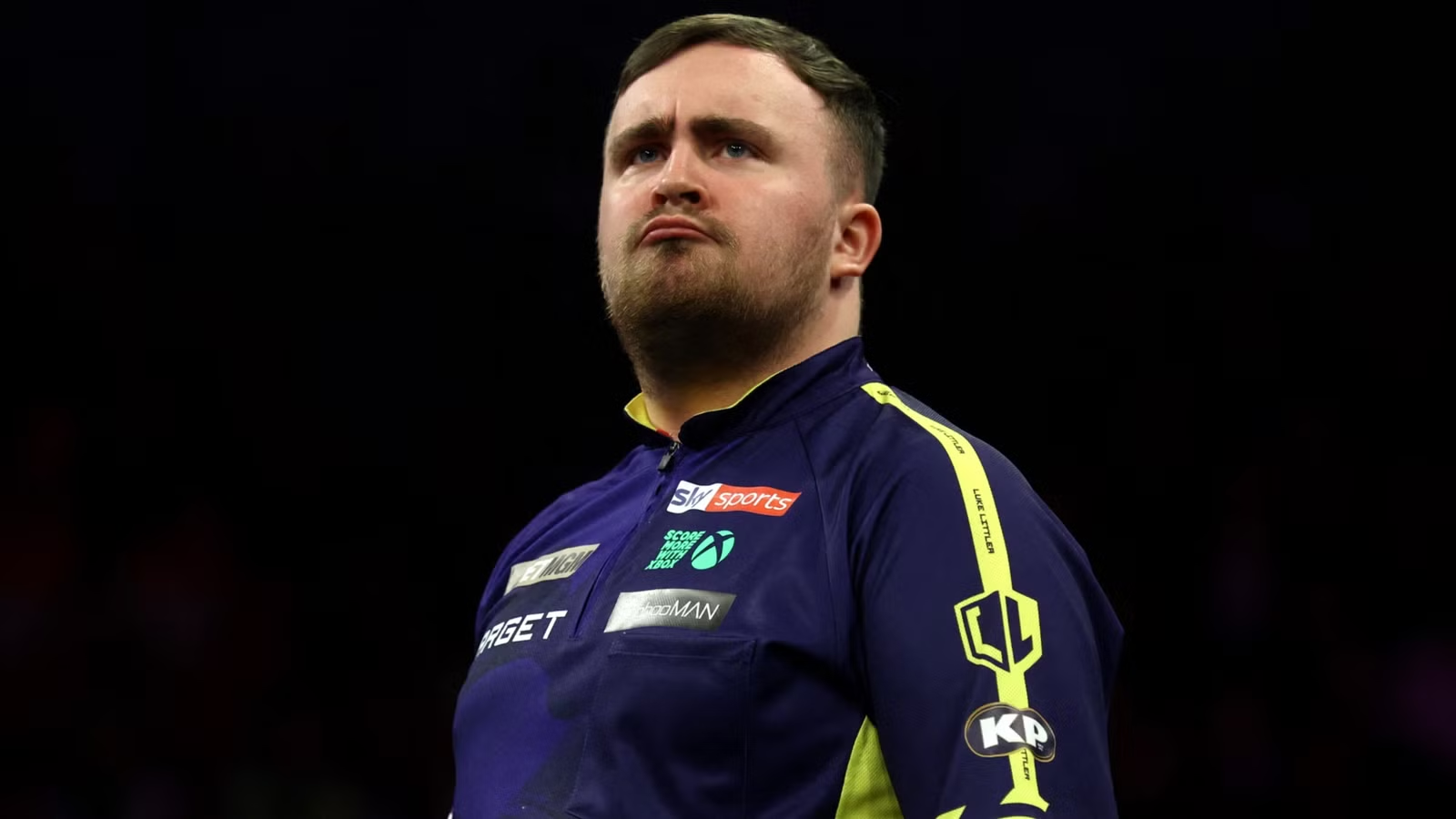
Luke Littler has spent much of 2026 making elite darts players look like they are playing a completely different sport. Six consecutive major victories, a second World Championship triumph, and a level of dominance that had fans wondering whether anyone could realistically stop him.
But suddenly, the trophies have stopped coming.
The world number one has endured a difficult run of results, suffered some unexpected defeats, and watched his remarkable winning momentum disappear. While some fans are beginning to question whether his opponents have finally figured him out, one experienced former professional believes there is a much simpler explanation for what is happening.
And it could be a warning that Littler needs to hear before his next major challenge.
Luke Littler’s recent results have created a fascinating debate across the darts world, particularly because the teenager appeared almost unstoppable earlier in the season. Vincent van der Voort, a former professional with 24 years of experience, believes the problem is not necessarily a sudden loss of ability.
Instead, he thinks Littler may simply not be playing enough competitive darts to maintain the sharpness required to dominate at the highest level.
Vincent van der Voort believes Littler needs more match practice
Van der Voort has questioned Littler’s recent preparation, suggesting the world champion’s limited competitive appearances could be contributing to his disappointing results.
Speaking on the Darts Draait Door podcast, the Dutchman made his assessment clear.
“He just doesn’t have the same sharpness he had six months ago.”
That observation is particularly interesting because Littler’s incredible talent has never really been in question. His scoring power, finishing ability and confidence under pressure have made him one of the most dangerous players the sport has ever seen at such a young age.
But darts is a game where even the smallest difference in rhythm, timing and confidence can have a huge impact. When a player spends less time competing against opponents in serious tournament conditions, it is possible for those tiny details to become noticeable.
Van der Voort believes that is exactly what is happening.
“From what you can see from the outside, you think he hasn’t done enough. Now he hardly plays at all. He has weeks off and only turns up now and then for the very biggest tournaments. I don’t think that’s a great approach at his age.”
His comments are not necessarily an attack on Littler’s ability or dedication. Instead, they raise a legitimate question about whether the teenager’s current schedule is allowing him to remain at his absolute best.
Littler’s incredible start to 2026 made the slump more noticeable
It is easy to forget just how dominant Littler was during the first half of the year.
The reigning world champion entered 2026 with enormous expectations, but he quickly turned those expectations into reality by collecting major titles and producing performances that left his rivals struggling to keep up.
He won six consecutive major tournaments, including the World Championship, World Masters, UK Open, Premier League, World Cup and World Matchplay.
That sort of run is almost impossible to sustain indefinitely.
Even the greatest players in darts history have experienced periods where their performances dip, opponents suddenly start finding opportunities, and matches that previously felt comfortable become much more difficult.
Littler’s problem is that his extraordinary success has changed the expectations surrounding him. When he wins, people consider it normal. When he loses, suddenly there is a debate about whether something is wrong.
That is the reality of being the sport’s biggest superstar.
The teenager is no longer simply competing against his opponents. He is also competing against the standards he established himself earlier in the season.
A difficult autumn exposed a different side of the world number one
Littler’s struggles became increasingly noticeable after the World Matchplay, where he defeated Gerwyn Price to lift another major trophy in July.
Since then, the results have not been nearly as impressive. He suffered defeats against Jonny Clayton at the World Series of Darts Finals, Luke Woodhouse at the World Grand Prix and Krzysztof Ratajski at the European Championship.
His Grand Slam of Darts campaign also ended in disappointment, with Jermaine Wattimena producing an impressive performance to beat him 10-8 in the last 16.
Wattimena was not simply waiting for Littler to make mistakes. He brought his own quality to the contest, showing that opponents are capable of putting the world number one under serious pressure when they take their opportunities.
That is arguably the most important development for Littler moving forward.
For a long time, opponents knew they needed something extraordinary to beat him. Now, with the teenager experiencing a dip in form, there is perhaps a little more belief among the players facing him.
However, that does not mean Littler has suddenly become an easy opponent.
He remains one of the most dangerous scorers in the game, and a player capable of producing an incredible average whenever he finds his rhythm. The problem is that his recent performances have not consistently reached the level fans became accustomed to seeing.
Missing the Players Championship Finals is another setback
Littler’s absence from the Players Championship Finals is another consequence of his limited participation in the qualifying events.
The tournament represents an important opportunity for players to build momentum ahead of the World Darts Championship, particularly because it brings together many of the strongest performers from the Players Championship circuit.
Littler will not be there to defend his title after failing to qualify.
Van der Voort believes the lack of regular competition is precisely what could continue hurting the teenager, particularly when other top players are spending valuable time competing against one another.
“He only plays exhibitions and that kind of tournament, of course. You won’t get by on that!”
That is a strong assessment, although there is another side to the argument.
Littler has already demonstrated that he can win major tournaments without playing every event on the calendar. His workload, travel schedule and approach to preparation are decisions that he and his team will have to manage carefully.
Playing more tournaments does not automatically guarantee better performances. The challenge is finding the right balance between staying sharp and avoiding unnecessary fatigue.
Littler still has time to silence his critics
Despite the recent disappointments, writing Littler off would be a huge mistake.
He remains the reigning world champion and is still capable of producing the kind of darts that can destroy an opponent’s confidence within a few legs. His recent struggles are concerning because of his previous standards, not because he has suddenly stopped being an elite player.
The World Championship at Alexandra Palace will offer the perfect opportunity to respond.
A successful title defence would immediately change the conversation surrounding his recent results. Instead of debating whether he has lost his sharpness, fans would once again be talking about his ability to deliver when the biggest prizes are on the line.
But the pressure will be enormous, especially with several rivals eager to take advantage of his recent vulnerability.
Van der Voort’s warning may ultimately prove to be valuable advice rather than criticism. Littler has already shown what happens when he is at his best, and the priority now is finding that level consistently again.
The question is whether he needs more competitive matches to rediscover his rhythm or whether he can simply switch back into top gear when the World Championship begins.
Either way, darts is suddenly looking a lot more competitive than it did a few months ago, and that should make the upcoming tournament even more exciting.