
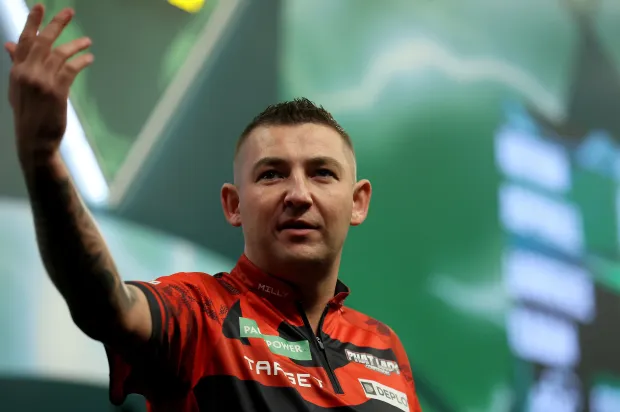
The electric atmosphere at the Paddy Power World Darts Championship inside Alexandra Palace is one of the sport’s biggest attractions. Thousands of passionate fans pack into Ally Pally each year, creating a famous party vibe filled with fancy dress, chants and relentless energy. But beneath the celebrations, a growing issue is increasingly troubling the players: spectators whistling during throws, a distraction that can seriously affect performance at the highest level. One of the strongest voices speaking out against it is Nathan Aspinall.
The Stockport ace, known as “The Asp,” is a two-time major winner with victories at the UK Open and World Matchplay. As he competes in the 2025/26 World Championship, the 34-year-old has once again raised concerns about crowd behaviour, arguing that current punishments simply do not go far enough. While offenders can be removed from the arena, Aspinall believes that alone is not a strong enough deterrent and is calling for far harsher sanctions.
Aspinall has not been shy about addressing the issue publicly. He has previously used on-stage interviews at Euro Tour events to plead with fans to stop whistling and simply enjoy the darts. However, those comments quickly spread across social media platforms like Instagram and TikTok, often framed in a sensational way that suggested he was attacking the crowd. Despite the backlash, Aspinall insists his motivation has always been about protecting the integrity of the sport rather than criticising supporters.
The challenge, he argues, is the sheer scale of the problem. With crowds of around 10,000 people inside Alexandra Palace, it is incredibly difficult to identify and stop individuals who whistle at key moments. The sharp, sudden noise can instantly break a player’s concentration, particularly when they are lining up crucial doubles or attempting to set up a big finish, where focus is everything.
To tackle this, Aspinall has suggested introducing long-term bans for those caught disrupting play. In his view, simply being ejected on the night is not enough. He believes a ban of several years would send a clear message that such behaviour will not be tolerated, forcing fans to think twice before intentionally trying to put players off.
The timing of his comments is significant. Darts is currently enjoying unprecedented popularity, driven by packed arenas, viral moments and a carnival-style atmosphere that has become part of the sport’s identity. Prize money has soared, with this year’s world champion set to earn a record £1 million, and the professional standard has never been higher. As a result, the fine line between entertainment and fair competition is becoming increasingly important. Other players have also voiced concerns in recent years about distractions such as whistling, excessive booing or deliberate heckling.
Aspinall’s stance reflects his deep respect for the game and his fellow professionals. Having overcome injuries and mental challenges during his career, he understands just how demanding the sport is at the elite level. His message is simple: fans should add to the spectacle, not interfere with it, and allow the skill and drama on the oche to take centre stage.
With the World Championship moving into its decisive stages and stars like Luke Humphries and Luke Littler continuing to draw huge attention, the debate around crowd behaviour is unlikely to fade. Whether Aspinall’s proposal for extended bans is adopted or not, his comments have sparked an important conversation about how darts can protect its players while preserving the unique atmosphere that makes the sport so special.
As darts continues to grow bigger than ever, finding the right balance between passion and professionalism could prove vital for its future. Aspinall’s outspoken views may well mark a turning point in how the sport handles crowd conduct at its biggest events.