
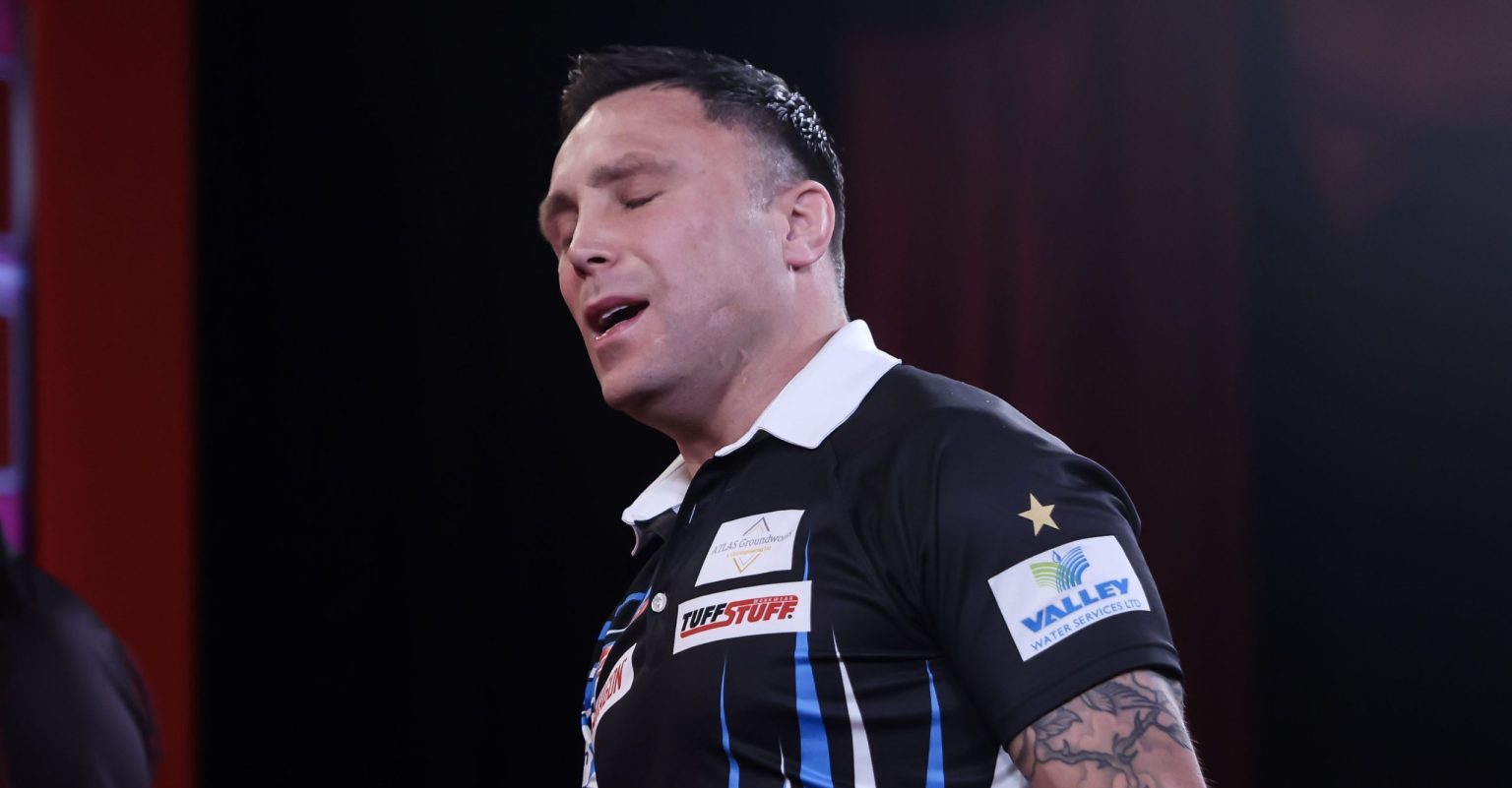
In the intense, high-pressure environment of professional darts, where mental fortitude can prove as decisive as pinpoint accuracy, Gerwyn Price has once again made his position crystal clear. The outspoken Welshman, a former PDC World Champion, firmly dismisses any suggestion that teenage sensation **Luke Littler** holds a special **psychological edge** over him or the rest of the field.
As the pair geared up for yet another high-profile showdown—this time in the quarter-finals of the World Grand Prix in Leicester—Price delivered his trademark no-nonsense assessment. “I am not scared of anybody,” he declared defiantly. “The key is that I don’t care who I play. I play the board, not the player.”
This straightforward mindset stands in stark contrast to what Price sees as a growing aura surrounding the 18-year-old world champion nicknamed “The Nuke.” Since exploding onto the PDC scene as a 16-year-old debutant, Littler has captivated fans and opponents alike with his explosive scoring, clinical finishing, and seemingly unflappable composure. His meteoric rise, record-breaking averages, and back-to-back world titles have elevated him to superstar status, prompting many players to approach matches against him with a mixture of admiration and apprehension.
Price, however, refuses to buy into that narrative. “All the other players are scared of him before they even get on the board, like with Phil Taylor years ago,” he observed, drawing a direct parallel to the legendary 16-time world champion who once loomed large over the sport. In Price’s eyes, this fear factor has become a real issue for much of the tour, but it simply does not apply to him. The Iceman insists he focuses exclusively on his own performance, believing that when he brings his “A-game,” the outcome heavily favors him. “I know if I play my A-game, nine times out of 10 I will win,” he stated confidently. “If I turn up, I will win. If I don’t it will be a tough game and I’ll probably lose.”
Their rivalry has evolved into one of the most compelling storylines in modern darts. Matches between the pair are rarely dull, often featuring dramatic swings, big checkouts, and intense battles of willpower. Price has historically held the upper hand in their head-to-head encounters, though Littler has shown clear signs of closing the gap with impressive recent victories. Price has openly referenced his strong record against “young Luke,” suggesting the teenager may overthink these clashes more than he does.
“I’m thinking I’m going to win. Obviously I’m playing really well. I’ve got a good record over young Luke and he’ll be thinking about it more than I will,” Price said ahead of one such encounter. “I don’t really care who I play. The only thing leading up to it is how I’m going to play and I can usually tell three hours before the game when I’m practising whether I’m on it or not.”
This self-assured approach highlights Price’s vast experience and resilience. At 40, the former rugby player brings a wealth of big-stage pedigree, having claimed the 2021 PDC World Championship and consistently ranked among the elite. His ability to thrive amid pressure and hostile atmospheres has earned respect across the sport, even as his candid comments occasionally stir debate.
Littler represents the bright new generation—fearless, exceptionally gifted, and seemingly immune to the weight of expectation. Since becoming the youngest world champion in history, he has continued to dominate, winning major titles and thrilling global audiences with his powerful throw and maturity beyond his years. Yet Price respects the youngster’s impact without allowing it to intimidate him. He has praised Littler for doing “wonders for the sport” while warning fellow professionals that standards must rise to keep pace. “We all need to start winning now because in the next few years he is going to be unbeatable,” Price cautioned. On another occasion, he added that Littler is “one of the best in the world and he’s going to be for the next few years. He’s going to get better and better… Only the younger generations can stop him, we can’t stop him.”
Their most recent high-profile meeting at the World Grand Prix delivered exactly the kind of drama fans crave. Price had eased through earlier rounds, while Littler produced moments of brilliance, including a spectacular 170 checkout. The quarter-final itself became a classic, with Price mounting a strong challenge and even holding three match darts, only for Littler to fight back dramatically from two sets down. The teenager sealed victory in the deciding leg with a sensational 152 checkout, advancing to the semi-finals.
Despite the defeat, Price’s pre-match comments underscored his refusal to concede any mental ground. He noted fluctuations in Littler’s form during the tournament, expressing hope that the young star might not be at his absolute peak. “Luke was fantastic in his first game against Gian. He wasn’t so good in his game against Mike so I hope he plays as bad as that!”
Beyond the immediate rivalry, Price’s stance touches on broader themes shaping professional darts today. As the sport enjoys surging popularity and increased prize money, the psychological dimension has grown ever more critical. Players must navigate crowd expectations, media scrutiny, and the shadow of emerging superstars. Littler’s success has amplified these pressures, creating what some call a modern “Phil Taylor effect,” where opponents can sometimes defeat themselves before stepping on stage.
Price positions himself as the antidote to that intimidation. By concentrating purely on the board and his own capabilities, he aims to neutralize any perceived psychological advantage. His message is direct: talent and current form matter, but so does unshakeable self-belief. No opponent, regardless of hype or achievements, should occupy unnecessary space in another player’s mind.
As their head-to-head battles continue to unfold across various PDC events, each meeting adds fresh layers to this fascinating dynamic. Price’s latest comments only heightened anticipation for their clashes, reminding the darts world that confidence and mental preparation remain powerful equalizers. Whether in Leicester, Dublin, or beyond, fans can expect fireworks whenever the Iceman faces The Nuke.
In an era dominated by Littler’s prodigious talent, Gerwyn Price stands out as a voice of defiance—unfazed, focused, and determined to prove that experience and mindset can still challenge even the brightest young stars. Their rivalry, blending respect with competitive fire, continues to enrich the sport and captivate audiences worldwide. Whatever the result on any given night, one thing remains certain: Price will approach the oche believing he belongs there, playing the board without fear.
Leave a Reply