
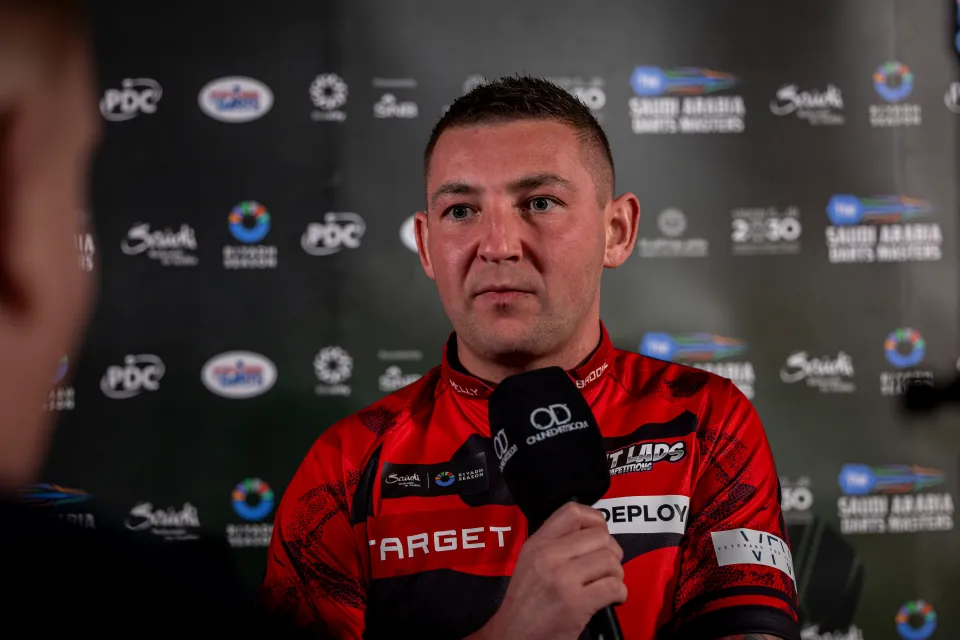
In the fast-paced, high-pressure arena of professional darts, where precision under bright lights and roaring crowds defines careers, the journey to the oche often proves as challenging as the matches themselves. This Easter weekend, one of the PDC’s most charismatic and accomplished stars, Nathan Aspinall, found himself once again grappling with the frustrations of the European Tour’s travel demands. Instead of savouring quality family time during the holiday, “The Asp” was left fuming after his luggage failed to materialise upon landing in Germany for the German Darts Grand Prix.
Aspinall, a dynamic player known for his explosive scoring and engaging personality on stage, had jetted out ahead of the tournament scheduled across Easter Sunday and beyond at the Kulturhalle Zenith in Munich. The event, the fourth European Tour stop of the 2026 season, promised intense competition, passionate German crowds, and crucial ranking points. Yet the build-up turned sour when his bag vanished at the airport. Taking to social media, Aspinall vented his clear irritation in a post that quickly resonated with fans and fellow players alike.
“The Euro tour just keeps on giving this year,” he shared. “Bag hasn’t turned up should have spent Easter with the kids instead.” He didn’t stop there, adding pointedly: “Airports are an absolute joke at the moment.” These words captured the raw disappointment of a dedicated family man forced to prioritise professional duties over precious moments at home. Easter, a time typically reserved for relaxation, chocolate eggs, and bonding with his children, was instead overshadowed by the hassle of lost property desks and the uncertainty of competing without his usual gear.
This incident is far from isolated. Throughout the 2026 season and in previous years, the PDC’s European circuit has been dogged by recurring travel disruptions that test the patience and preparation of even the most seasoned professionals. Just weeks earlier, during the Belgian Darts Open, Aspinall himself had voiced concerns about lengthy passport control waits, joining the likes of Jonny Clayton and Chris Dobey in highlighting the growing strain. Dobey, in particular, had grown increasingly vocal about the issues, at one point declaring the situation a “shambles” and suggesting he might skip future events, including the Easter weekend fixture in Munich, due to the cumulative toll.
Dobey’s own experiences underscore the depth of the problem. Earlier in 2026, he arrived in Germany for a Players Championship event only to discover his luggage – complete with vital darts equipment – had gone missing. The Geordie star was so exasperated that he publicly vowed not to fly for the remainder of the year, emphasising how such setbacks disrupt not just logistics but mental readiness. His frustrations echoed incidents from 2025, when he and Ross Smith landed in Kiel for another Euro Tour stop without their bags. Smith faced a similar nightmare en route to the Baltic Sea Darts Open, arriving without his darts or personal items and left scrambling to source replacements at short notice.
The list of affected players continues. Veteran campaigner James Wade unleashed his anger at British Airways after a trip to Hamburg in the summer of 2025. His luggage failed to arrive, and despite promises of delivery to his hotel, it never showed. With the prestigious World Matchplay looming just days later in Blackpool, Wade took to social media to express his dismay: “British Airways what an absolute mess… With me leaving to attend the World Matchplay on Friday the 18th July 2025 in Blackpool you can appreciate this is not ideal preparation for one of the biggest major tournaments of the PDC calendar year. Absolutely shocking customer service.”
Even Andrew Gilding, known for his consistency on the ProTour, suffered a devastating blow when a delayed KLM flight caused him to miss a connecting service to Hannover. The resulting knock-on effect forced him to withdraw entirely from Players Championship 15 in Hildesheim, turning what should have been a competitive outing into a wasted trip.
These stories reveal a broader pattern plaguing the Euro Tour. Players routinely criss-cross the continent for events that form the backbone of the PDC calendar outside the major televised tournaments. The German Darts Grand Prix, with its strong local support and high-stakes matches, exemplifies the appeal: packed venues, electric atmospheres, and the chance for stars like Aspinall, Michael van Gerwen, and rising talents to shine. Yet when airports and airlines falter – whether through lost baggage, endless passport queues, or flight delays – the human cost becomes evident.
For athletes like Aspinall, the impact runs deep. A three-time European Tour winner in 2025 and a consistent Premier League performer, he brings flair and intensity to every encounter. His style – aggressive, crowd-pleasing, and mentally resilient – has earned him a loyal following. But arriving potentially without spare flights, shafts, or even basic clothing adds unnecessary stress. The mental load of rushing through unfamiliar terminals, filing reports, and then stepping onto the stage under television lights is immense. It’s a far cry from the glamorous image of professional darts, where players appear invincible as they trade 180s and dramatic checkouts.
Aspinall’s candid outburst humanises the grind. “Should have spent Easter with the kids instead” strikes a chord because it reminds us that these athletes balance elite sporting careers with real family lives. Many are fathers, partners, and everyday individuals navigating a demanding schedule that requires near-constant mobility. The Euro Tour’s format, while vital for growing the sport across Europe, relies on smooth logistics that have increasingly fallen short amid post-pandemic recovery, holiday surges, and operational strains at major hubs.
Fans following the German Darts Grand Prix this weekend will watch closely to see if Aspinall can compartmentalise the frustration and deliver the kind of performance that has defined his career. Early draws pit him against strong opposition, including potential clashes with home favourites like Martin Schindler. The wider hope is that these repeated disruptions prompt meaningful improvements from organisers, airlines, and airports. Suggestions of boycotts or reduced participation have already surfaced, with players weighing the rewards against the hassle.
In a sport where focus and composure separate champions from also-rans, reliable travel should be a given rather than a gamble. The “gifts” the Euro Tour keeps delivering in the form of travel woes risk eroding enthusiasm at a time when darts enjoys unprecedented popularity. Aspinall and his peers continue to entertain millions with their skill and showmanship, but their off-stage battles highlight the need for systemic fixes.
As the arrows fly in Munich over Easter, the narrative extends beyond the scoreboard. It’s a story of resilience amid inconvenience, of family sacrifices for sporting passion, and of a circuit that must evolve to support its stars more effectively. Until smoother journeys become the norm, moments like Aspinall’s heartfelt social media post will serve as powerful reminders of the unseen challenges behind the dazzling lights of professional darts. The sport’s continued growth depends not only on thrilling matches but on ensuring its participants can focus on what they do best – hitting the treble twenty – without the added burden of logistical chaos.
Leave a Reply