
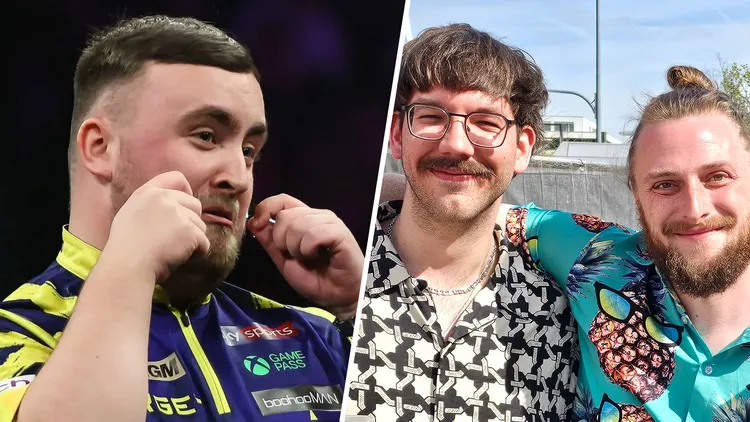
The atmosphere in German darts venues has long been electric, a raucous mix of passionate supporters, thumping music, and the unmistakable crack of tungsten darts hitting the board. Yet for **Luke Littler**, the young English phenom known as “The Nuke,” that energy has frequently turned hostile. Recent developments have thrust this tension back into the spotlight, with German fans openly questioning why the world champion continues to steer clear of many **European Tour** events on their soil.
The latest chapter in this ongoing saga comes as Littler appears to have boycotted several stops on the PDC European Tour in Germany. Fans and commentators alike have noticed his conspicuous absence from key tournaments, sparking heated discussions about respect, rivalry, and the pressures of performing under a barrage of jeers. One German supporter captured the sentiment bluntly: “He gets booed, nobody likes him here – so why should he come?”
This remark, echoing through online forums and darts communities, reflects a growing divide. While Littler remains one of the most dominant and marketable figures in the sport—fresh off back-to-back World Championship triumphs—his relationship with sections of the German crowd has soured dramatically.
### Roots of the Tension
The friction traces back several years but intensified in 2025. Littler first voiced his frustrations after experiencing repeated booing during matches on German soil. He recalled one particularly jarring incident in Hildesheim on the European Tour against Peter Wright: “I got booed in Hildesheim last year against Peter Wright on the European Tour. I was flying and they started booing me and I lost. Even when I went 1-0 up, they still didn’t like it.”
He described the sequence vividly: the walk-on might start with the usual fanfare, but the moment he stepped onto the stage, the boos would erupt. “Obviously, you do your walk-on, but then as soon as I got on stage, I started getting booed.” Littler even speculated on a possible cultural undercurrent, noting, “Obviously, the Germans mustn’t like us English.”
These experiences were not isolated. During the German Darts Grand Prix in Munich, Littler faced another hostile reception, culminating in a semi-final defeat to Dutch rising star Gian van Veen. The crowd’s reaction appeared to affect his focus, contributing to an uncharacteristic exit. Shortly afterward, the teenager made his position clear—he would not return to Germany for certain events until later in the season, effectively signaling a partial boycott of the European Tour calendar there.
He pulled out of the European Darts Grand Prix and other scheduled stops, including the European Darts Open and Baltic Sea Darts Open. The message was unmistakable: the constant negativity had crossed a line for the then-18-year-old superstar, who was still navigating the immense pressures of sudden global fame.
### Premier League Echoes and Broader Backlash
The issue spilled over into the prestigious Premier League Darts. When the tour rolled into Berlin for Night Eight, Littler braced himself for more of the same. As he was introduced for his quarter-final against Stephen Bunting—a firm crowd favorite in many European venues—the arena filled with boos and jeers. It was a familiar soundtrack by now, but no less jarring.
Littler has never shied away from addressing the treatment. He has publicly criticized the conduct of some German fans, describing whistling, booing, and general hostility directed not just at him but sometimes at other players too. On one occasion, he even made gestures toward the crowd in response, a rare flash of visible frustration from a player known for his composed, almost unflappable demeanor on stage.
Fellow professionals have weighed in, offering context and, in some cases, empathy. Stephen Bunting, after facing similar crowd hostility at the European Darts Trophy in Göttingen, remarked that the atmosphere helped him understand Littler’s reluctance: “I understand now why Luke Littler doesn’t want to go over there. That’s the first time I’ve experienced it that bad.”
Others in the darts world have pointed out that booing is part and parcel of the sport’s passionate fan culture. As one commentator noted, “You can’t be everyone’s favourite and he certainly not a favourite in Germany.” Yet the consistency and intensity of the reactions in German venues seem to stand out, prompting questions about whether it goes beyond typical sports rivalry.
German fans, for their part, have pushed back. Some argue that Littler’s rapid rise, his youthful swagger, and his English background have made him a target for good-natured—or not-so-good-natured—ribbing that has escalated. The quote circulating widely captures their perspective: if he is routinely met with disapproval, why subject himself to it? Others suggest his absences protect his mental edge and overall performance, allowing him to focus on events where the reception is warmer.
### The Boycott’s Impact and Littler’s Stance
Littler’s decision to skip multiple German European Tour events has not gone unnoticed. It has fueled speculation about the long-term implications for the PDC’s calendar and the sport’s growth in one of its key European markets. Germany has become a darts hotspot in recent years, with large, enthusiastic crowds helping to elevate the profile of the European Tour. Missing a major draw like Littler could affect attendances and atmosphere at those events.
Yet the young champion has shown resilience. He eventually returned for select appearances, including the World Cup of Darts alongside Luke Humphries, where tensions resurfaced but did not derail England’s campaign entirely. German national team players even called out their own fans for excessive booing during that event, highlighting that not everyone in the country endorses the negativity.
By late 2025, Littler appeared to ease his stance somewhat, competing again in Germany at certain tournaments and eyeing the European Championship in Dortmund. However, the pattern of selective absences on the European Tour has persisted into 2026, keeping the debate alive. His most recent boycott of events like the German Darts Grand Prix has reignited discussions, with some fans interpreting it as a principled stand against poor treatment, while others see it as the superstar prioritizing his well-being and form.
Littler himself has emphasized that the booing can disrupt momentum. In high-stakes matches, the shift from adulation (common in the UK and other venues) to outright hostility can be mentally taxing, especially for a player who burst onto the scene as a teenager and carries the weight of expectations as the world number one.
### A Deeper Look at Darts Culture
This saga sheds light on the unique dynamics of professional darts. Unlike many sports where home advantage is subtle, darts crowds are encouraged to be vocal, participatory, and sometimes provocative. Walk-ons are theatrical, music blares, and fans chant or cheer—or boo—throughout. In the UK, Littler is often greeted like a rock star. Abroad, particularly in Germany, the energy can flip to antagonism, testing a player’s concentration and emotional control.
Psychologists and sports commentators have noted that such crowd behavior can influence performance. A player “flying” high on confidence, as Littler described himself in Hildesheim, can suddenly falter when the atmosphere turns sour. For a prodigy like Littler, who has rewritten records with his precision and scoring power, maintaining that razor-sharp focus is everything.
At the same time, darts thrives on its accessibility and raw emotion. The sport’s growth in Germany is undeniable, with sold-out arenas and a new generation of fans embracing the drama. The question remains whether this hostility toward Littler is a passing rivalry or a more entrenched issue. Some fans defend it as harmless banter that all top players endure; others worry it risks alienating one of the sport’s biggest talents and ambassadors.
### Looking Ahead
As the 2026 season unfolds, all eyes will be on whether Littler fully recommits to German events or maintains his selective approach. The European Championship in Dortmund could serve as a litmus test—will the crowd greet him with the same fervor as before, or has the cycle of booing and boycott created lasting damage?
For Littler, the priority appears clear: protect his performance and mental health while continuing to dominate where he feels supported. He has already proven he can rise above adversity, channeling frustration into breathtaking 180s and match-winning finishes. Yet the German chapter remains unfinished business, a reminder that even the most gifted athletes are human and that crowd dynamics can shape careers in unexpected ways.
German fans, meanwhile, continue to pack venues and make their voices heard. Their passion is undeniable, but the recurring question lingers: if the reception remains so frosty, why would any player, let alone the world’s best, keep coming back for more? The answer may lie in the heart of the sport itself—the thrill of competition, the pursuit of titles, and the occasional hope that respect can eventually replace the boos.
In the high-octane world of professional darts, where every dart can change a match and every cheer (or jeer) can sway momentum, the Littler-Germany storyline adds an extra layer of intrigue. Whether it resolves into mutual appreciation or remains a point of contention, it underscores one truth: in darts, the fans are as much a part of the spectacle as the players on stage. And for now, at least, that spectacle in Germany carries a distinctly divided soundtrack.
Leave a Reply