
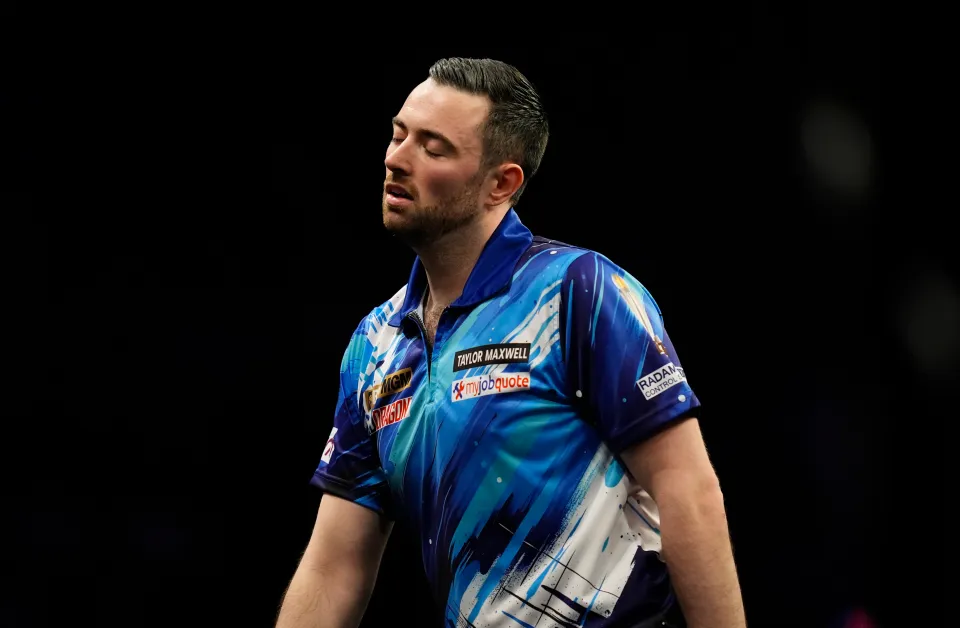
In the high-stakes world of professional darts, where every throw can define a career and the pressure to stay at the top never lets up, even the smallest off-stage habits come under scrutiny. Luke Humphries, the former world champion known as “Cool Hand,” has stepped forward to address one such talking point that’s been buzzing through the darts community. Far from pointing fingers or making excuses, Humphries has drawn a firm line in the sand about late-night gaming sessions with his close friend and fellow pro Ryan Searle, insisting they have no bearing on anyone’s commitment to practice.
The conversation kicked off when Searle, currently ranked world number 12, openly admitted that his practice routine had taken a hit since his impressive run to the semi-finals of the World Darts Championship. The honest reflection from the talented thrower sparked debate among fans and pundits alike—could something as seemingly harmless as unwinding with video games be derailing the rigorous preparation required at the elite level? Enter Humphries, who not only teams up with Searle regularly on the oche but also shares countless evenings locked in virtual battles on *Call of Duty*. His response is refreshingly straightforward and supportive, cutting through any notion that their friendship is costing either player precious time on the practice board.
“We always play. We play every week. I don’t see any difference, to be honest,” Humphries explained, his words carrying the calm authority of a player who has navigated the highs and lows of the PDC circuit. He pointed out that the structure of a typical day at home leaves ample opportunity for focused training. “I think when we are playing Call of Duty, we get all day at home. You can practise and play Call of Duty. It’s up to you whether you want to do that practising. We are not playing 12 hours a day.”
The sessions, he clarified, are far from all-night marathons that bleed into training time. Instead, they’re a deliberate wind-down, slotted neatly into the evening hours. “We are playing from 8.30pm to 11pm, sort of time. The start of the day, from when you wake up to that point, is your free time to go and practise if you want.” This boundary is key to Humphries’ philosophy: personal responsibility trumps external blame. He’s quick to emphasize that he has zero influence over Searle’s choices in the practice room. “That’s up to him. I don’t stop him from practising. We just play a bit of Call of Duty at night to have fun.”
For Humphries, those late-night games aren’t a distraction—they’re a vital escape. In a sport where the mental demands can be as grueling as the physical ones, stepping away from the darts board entirely offers a rare chance to reset. “I enjoy it. You feel like you are in a different world and you’re not thinking about darts. You are just in this crazy world of playing Call of Duty, which is why I love it.” It’s a sentiment that resonates beyond the oche. Professional athletes across disciplines often talk about the need for balance, and in darts—a game played in packed arenas under bright lights with crowds roaring—finding that mental off-switch is crucial. The camaraderie between Humphries and Searle adds another layer; these aren’t just rivals or colleagues, but mates who share the grind of life on the road, the weight of expectations, and the simple joy of competition, whether it’s on stage or in a virtual battlefield.
This isn’t the first time the darts circuit has seen players grapple with motivation and form dips. Humphries himself has been candid about his own struggles, drawing parallels to another top contender facing similar challenges. He recently backed Nathan Aspinall to rediscover his spark after Aspinall spoke publicly about a dip in drive. The two chatted on the phone just the day before Humphries’ comments, and the timing couldn’t have been better: Aspinall had just clinched a Euro Tour title in Munich, injecting fresh energy into his campaign.
Humphries reflected on his own past experiences with mental fatigue, offering empathy rooted in shared reality. “I experienced that last year when I came out and said how I was a bit mentally fatigued and tired.” For Aspinall, the issue seemed tied to the absence of the Premier League’s relentless schedule—a tournament that keeps players immersed in high-level action week after week. “Nathan’s is another way where he feels like he’s missing something, which is probably the Premier League. He’s used to having that routine. He’s at home more often than he’s not, so it’s different for him and he probably doesn’t have that drive to want to go and practise as much.”
The insight highlights a broader truth about life at the top of darts. When you’re competing in the Premier League, the constant matches and travel become a built-in rhythm that keeps the competitive edge sharp without the same need for solitary board time. Step outside that bubble, however, and the temptation to ease off can creep in. “You don’t need to practise when you are in the Premier League because you are playing all that time. Whereas when you are not in the Premier League, you can fall shy of not practising and putting the effort in.” Yet Humphries has full faith in Aspinall’s resilience. “Nathan is a fantastic player. One of the grittiest and most determined players on tour. I don’t think something will stick with him for a long time.” And after their recent conversation, the signs were already positive. “We chatted on the phone yesterday and he was buzzing about winning on the Euro Tour and that’ll probably give him that buzz back.”
At its heart, this story isn’t about controversy or finger-pointing—it’s a window into the human side of elite darts. Players like Humphries, Searle, and Aspinall aren’t machines; they’re individuals juggling world-class talent with the everyday need to recharge. The late-night *Call of Duty* battles between Humphries and Searle exemplify a healthy friendship forged in the fires of competition. They compete fiercely on the stage—Humphries as the decorated champion, Searle as the dangerous underdog who has proven he can go toe-to-toe with the best—but off it, they unwind together, laughing through virtual shootouts that clear the mind for the next big tournament.
Darts has evolved dramatically in recent years. Once viewed as a pub pastime, it now demands the fitness, focus, and discipline of any top sport. Tournaments stretch across continents, with back-to-back nights of intense pressure. Practice isn’t just about throwing darts for hours; it’s about deliberate, meaningful sessions that sharpen accuracy, build stamina, and hone mental toughness. Yet Humphries’ message is clear: downtime isn’t the enemy if it’s balanced. The real test lies in how players manage their own schedules, owning their choices rather than shifting responsibility.
As the PDC season rolls on, with major events looming and rivalries intensifying, stories like this remind fans why they love the sport. It’s not just about 180s and checkouts—it’s about the personalities behind the arrows. Humphries’ defense of his gaming buddy underscores loyalty, perspective, and a deep understanding of what it takes to thrive under the spotlight. Searle has the talent and the track record; a few extra hours on the board are his to claim whenever he chooses. And in the meantime, those evening sessions on *Call of Duty*? They’re simply two mates having fun, emerging sharper and more focused when it matters most.
In an era where athletes are under constant watch, Humphries’ approach feels refreshingly mature. No drama, no blame—just honesty, friendship, and the quiet confidence that the best players always find their way back to form. Whether it’s battling it out on the oche or teaming up in a virtual warzone, the bond between these pros proves that sometimes the best way to prepare for the big stage is knowing when to step away from it entirely. The darts world will be watching to see how Searle channels that balance, but one thing is certain: with friends like Humphries in his corner, he’s got the support to silence any doubters and return to his devastating best.
Leave a Reply