
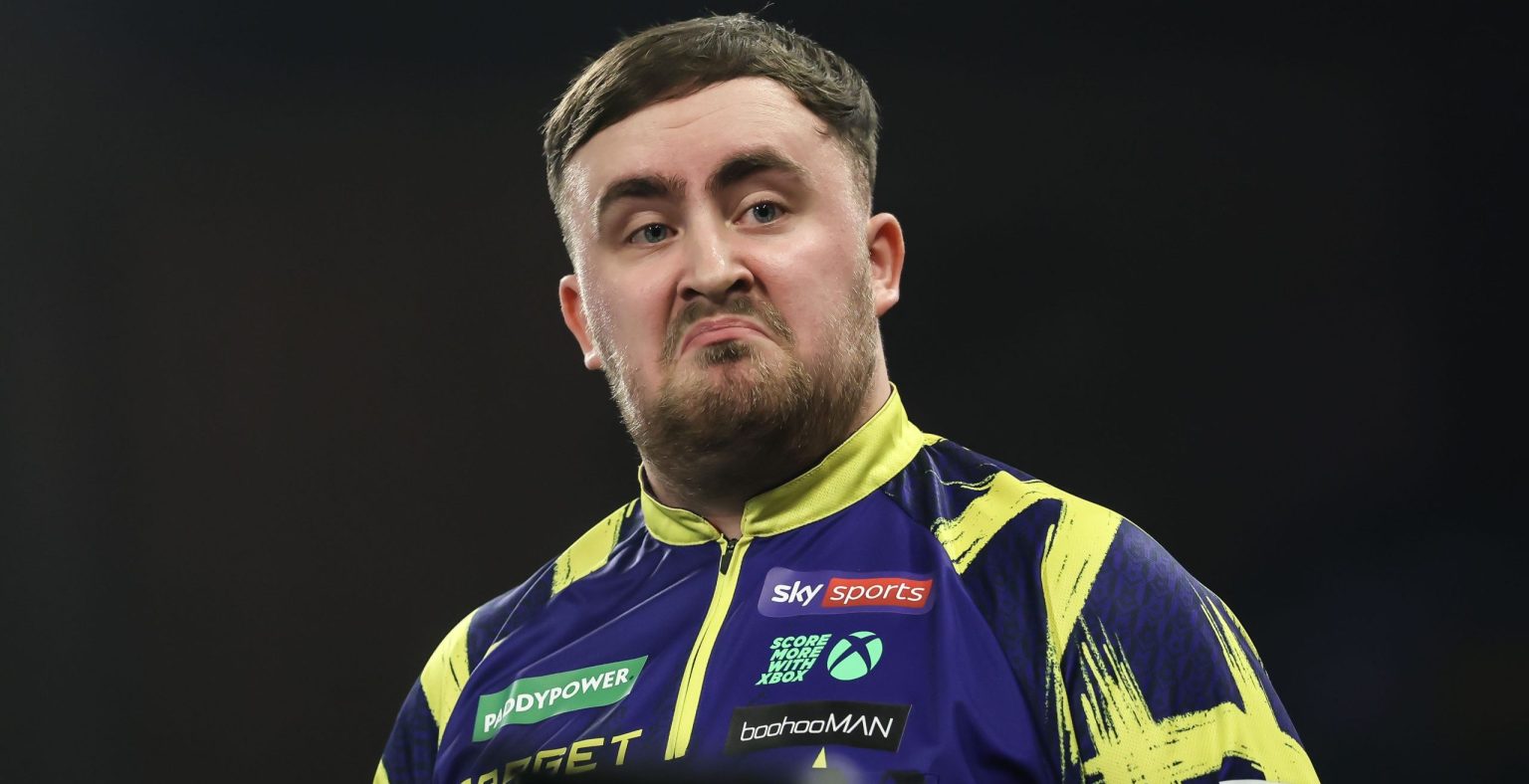
Darts icon Phil Taylor has delivered a firm and experienced piece of advice to teenage star Luke Littler, urging him to distance himself from social media as he continues to deal with the intense spotlight that comes with rapid success. The message is straightforward, but it reflects a deeper concern about how modern pressures can affect even the most talented young athletes.
Taylor, a multiple-time world champion and one of the most dominant figures the sport has ever seen, understands what it takes to succeed at the highest level over a sustained period. His career was built on relentless focus, mental toughness, and the ability to shut out distractions completely. Looking at Littler’s rise, he sees a player with extraordinary natural ability, but also someone stepping into an environment where attention, expectation, and external noise can quickly become overwhelming.
Littler’s story has already become one of the most remarkable in modern darts. Still a teenager, he has reached levels of success that many professionals spend years chasing. His rapid rise has made him a global name, attracting huge audiences, sponsorship interest, and constant media attention. With that success, however, has come a new challenge—learning how to cope with life under a microscope.
Social media sits at the centre of that challenge. While it provides a direct connection to fans and helps build a public profile, it also exposes athletes to constant feedback. Every performance is analyzed instantly, every mistake is highlighted, and every victory is dissected. For a young player still developing his identity in the sport, that environment can become mentally draining if not carefully managed.
Taylor’s warning is rooted in experience. He urged Littler to “get off social media,” emphasizing that engaging with online opinions can create unnecessary pressure. In his view, constantly checking reactions or reading comments can cloud focus and distract from preparation. At the highest level of darts, where precision and concentration are everything, even the smallest mental distraction can have a significant impact on performance.
The concern is not just about negativity. Even positive attention can become a distraction if it shifts focus away from training and competition. Praise, criticism, predictions, and debates all combine into a constant stream of information that can be difficult to filter. For someone like Littler, who is still building consistency at the elite level, maintaining a clear and stable mindset is crucial.
Taylor’s perspective highlights a growing issue in modern sport. Today’s athletes operate in an environment where they are always visible. Social media has removed barriers between players and the public, creating a world where performance is no longer confined to the arena. Instead, it continues online long after the match has finished, with opinions forming instantly and spreading widely.
For Littler, who has grown up in this digital era, social media is a familiar part of everyday life. However, that familiarity does not necessarily make it harmless. The pressure to respond, the temptation to check reactions, and the emotional impact of online commentary can all interfere with focus. Taylor’s advice suggests that stepping back may help preserve the mental clarity needed to compete at the highest level.
The young star’s rise has already placed him in situations that test both skill and mentality. Competing in packed arenas, dealing with intense crowds, and carrying the expectations of fans around the world all contribute to a demanding environment. Adding the constant presence of social media into that mix increases the complexity of managing pressure.
Taylor’s own career provides context for his warning. During his era, players were not exposed to the same level of instant feedback. While there was still pressure and scrutiny, it did not follow players everywhere they went. In contrast, modern athletes are never far from commentary, analysis, and opinion, all available at the touch of a screen. That difference, Taylor suggests, is significant when it comes to maintaining focus.
At the heart of his message is the idea of control. Taylor believes players must control what they can and ignore what they cannot. Social media, in his view, often falls into the category of uncontrollable noise. By stepping away from it, Littler can focus more clearly on training routines, match preparation, and in-game performance.
The challenge for Littler is finding balance. Social media is not entirely negative. It plays a role in building a brand, connecting with supporters, and expanding the reach of the sport. It allows fans to feel closer to players than ever before. However, without boundaries, it can easily become overwhelming. Taylor’s advice is not necessarily about complete rejection, but about understanding limits and prioritizing performance over popularity.
Another important aspect is mental resilience. In darts, matches can be decided by the smallest of margins. A missed double or a slight loss of concentration can change the outcome entirely. If a player is mentally distracted by external noise, it can directly affect results. Taylor’s message reinforces the importance of keeping the mind clear and focused on the task at hand.
For Littler, who has already shown remarkable composure under pressure, this is part of his continued development. Talent has brought him to the top level, but sustaining success requires more than just skill. It requires discipline, emotional control, and the ability to manage external pressures without losing focus.
Across professional sport, more athletes are beginning to recognize the impact of social media on performance. Some choose to limit their usage, while others delegate management to support teams. The goal is the same: reduce distractions and maintain mental clarity. Taylor’s advice aligns with this growing awareness, reflecting a shift in how modern athletes approach their public presence.
There is also a psychological dimension to consider. Online environments can amplify both praise and criticism, often in unpredictable ways. A single comment can gain traction and spread widely, creating narratives that have little connection to reality. For young athletes still developing confidence, this can create unnecessary pressure.
Taylor’s warning ultimately reflects a desire to protect Littler’s long-term potential. He recognizes the scale of his talent and the possibility of a sustained career at the top. By encouraging him to step away from distractions, he is advocating for habits that support longevity and consistency rather than short-term reactions.
As Littler continues his journey, the spotlight on him will only grow brighter. Each performance will be analyzed, each result discussed, and each moment scrutinized. Learning how to manage that attention will be just as important as improving technical skills. Taylor’s advice serves as a reminder that success is not only about what happens on the board, but also about what happens in the mind.
In the end, the message is simple but powerful. In a world full of constant noise and digital pressure, sometimes the strongest move is to step back. For Luke Littler, taking the advice of Phil Taylor could prove to be an important step in protecting his focus, strengthening his mindset, and continuing his remarkable rise in the sport.
Leave a Reply