
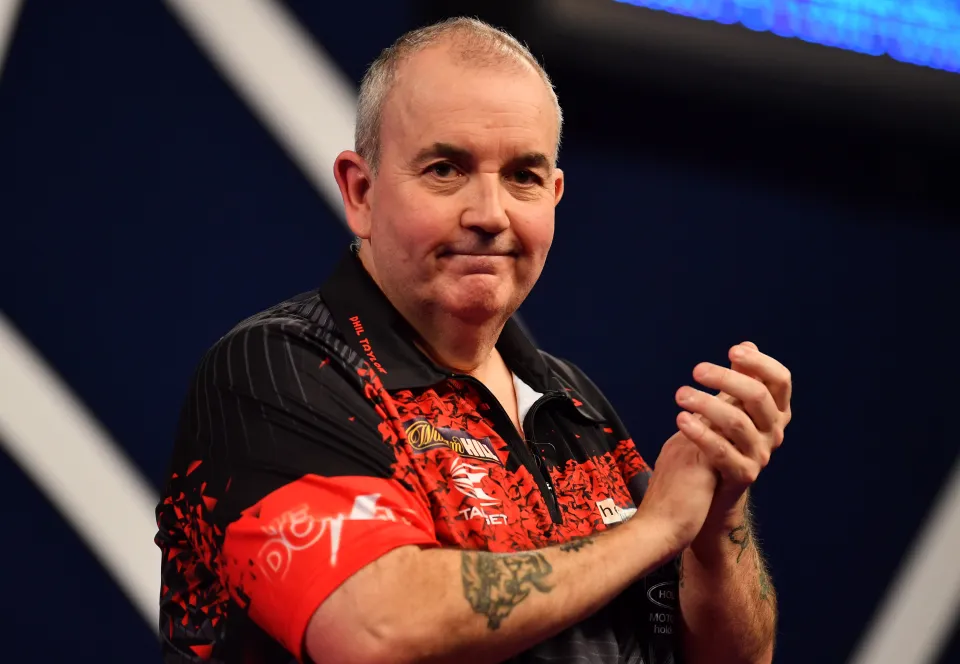
The recent struggles of Michael van Gerwen have sparked widespread debate across the darts world, with many fans and analysts trying to pinpoint exactly what has caused the noticeable dip in his once-dominant form. Among those offering insight is none other than Phil Taylor, a figure whose experience and understanding of the sport carry immense weight. Taylor has suggested that the Dutchman’s decline is not simply about what happens on the dartboard, but rather the result of significant personal and physical challenges that have altered the rhythm of his career.
For years, Van Gerwen was the standard-bearer in professional darts. His rise to the top was built on relentless determination, hours of dedicated practice, and a level of consistency that left opponents struggling to keep up. At his peak, he was widely regarded as almost unbeatable, capable of producing high averages and clinical finishes under pressure. Titles came regularly, and his dominance defined an era in the sport.
However, in recent seasons, that aura has begun to fade. While Van Gerwen remains a formidable competitor, the frequency of his victories has declined, and his performances have shown signs of inconsistency. Matches that he would once have controlled with ease have become more competitive, and there have been uncharacteristic lapses in crucial moments. For a player of his calibre, even a slight drop in performance becomes immediately noticeable.
Taylor believes that one of the most significant factors behind this shift is Van Gerwen’s personal life, particularly his divorce from his wife Daphne. The end of a long-term relationship is never easy, and in Van Gerwen’s case, it has brought about a major change in his daily routine and responsibilities. According to Taylor, this transition has had a direct impact on the Dutchman’s ability to focus entirely on his game.
“He’s had a big change in his life,” Taylor explained. “At the minute now he’s like a single parent. It’s harder to travel, and his mind is occupied by other things.”
Those comments highlight a reality that is often overlooked in professional sport. Athletes are not immune to personal challenges, and significant life changes can have a profound effect on performance. For Van Gerwen, balancing family responsibilities with the demands of a busy darts schedule has become a new and difficult challenge. The mental energy required to navigate such a situation inevitably takes away from the focus needed to compete at the highest level.
During his years of dominance, Van Gerwen’s approach to the game was almost obsessive. He was known for his rigorous practice routines, constantly refining his technique and maintaining peak sharpness. That level of dedication requires not only physical effort but also a clear and focused mind. When personal circumstances disrupt that balance, it becomes much harder to sustain the same level of intensity.
Van Gerwen himself has acknowledged the difficulties he has faced. Reflecting on the past year, he admitted that it has been one of the toughest periods of his career. “I’ve had a tough year… you have to adapt yourself,” he said, indicating that he is aware of the need to adjust to his new circumstances.
In addition to the emotional and mental challenges, Taylor also pointed to physical issues that may have contributed to Van Gerwen’s struggles. Injuries, including problems with his wrist and jaw, have affected his comfort and precision. In a sport like darts, where accuracy is everything, even minor physical discomfort can lead to significant drops in performance. A slight change in grip, timing, or confidence can be the difference between hitting a crucial double and missing it.
When these factors are combined—personal upheaval, increased responsibilities, and physical setbacks—it becomes easier to understand why Van Gerwen has not been able to maintain his previous level of dominance. It is not simply a matter of form or confidence, but a complex interplay of challenges that would test any athlete.
Despite this, Taylor does not believe that Van Gerwen’s best days are entirely behind him. Instead, he sees the current situation as part of a natural evolution in a player’s career. Even the greatest athletes experience periods where they must adapt to new realities, whether due to age, competition, or changes in their personal lives.
“I think his lifestyle’s just changed a little bit, but he will adapt to it,” Taylor said, expressing confidence that Van Gerwen can still compete at a high level.
That belief is supported by the flashes of brilliance that Van Gerwen continues to show. There have been moments in recent tournaments where he has looked like his old self, producing high-quality performances and reminding everyone of his immense talent. These glimpses suggest that the ability is still there, even if consistency has been harder to achieve.
Another important factor is the changing landscape of darts. The sport has seen a surge of new talent in recent years, with younger players bringing fresh energy and raising the overall standard. This increased competition means that even the slightest dip in form can have a significant impact on results. Matches are more competitive, and there is less margin for error.
For Van Gerwen, this means that he is not only dealing with his own challenges but also facing a stronger field of opponents. The days when he could rely on sheer dominance to carry him through tournaments are gone, and he must now find new ways to stay ahead.
Resilience will be key to his future success. Throughout his career, Van Gerwen has shown an ability to bounce back from setbacks and prove his critics wrong. This period may be one of his toughest tests, but it also presents an opportunity for growth and reinvention.
Taylor’s perspective suggests that expectations may need to shift. Rather than expecting Van Gerwen to dominate every event, it may be more realistic to see him as a consistent contender who can still win major titles. That does not diminish his achievements; instead, it reflects the natural progression of a long and successful career.
What makes this chapter of Van Gerwen’s journey particularly compelling is its human element. Behind the statistics and trophies is a player dealing with real-life challenges, trying to balance personal responsibilities with professional ambitions. It is a reminder that even the most successful athletes face difficulties that extend beyond their sport.
As Van Gerwen continues to navigate this phase of his career, the focus will be on how he adapts. Finding a balance between his personal life and his professional commitments will be crucial, as will addressing any lingering physical issues. If he can manage these aspects effectively, there is every chance that he will continue to compete at the highest level.
The darts world will be watching closely. Michael van Gerwen’s story is no longer just about dominance and titles—it is about resilience, adaptation, and the ability to overcome adversity. And while the challenges he faces are significant, his track record suggests that he is more than capable of rising to the occasion once again.