
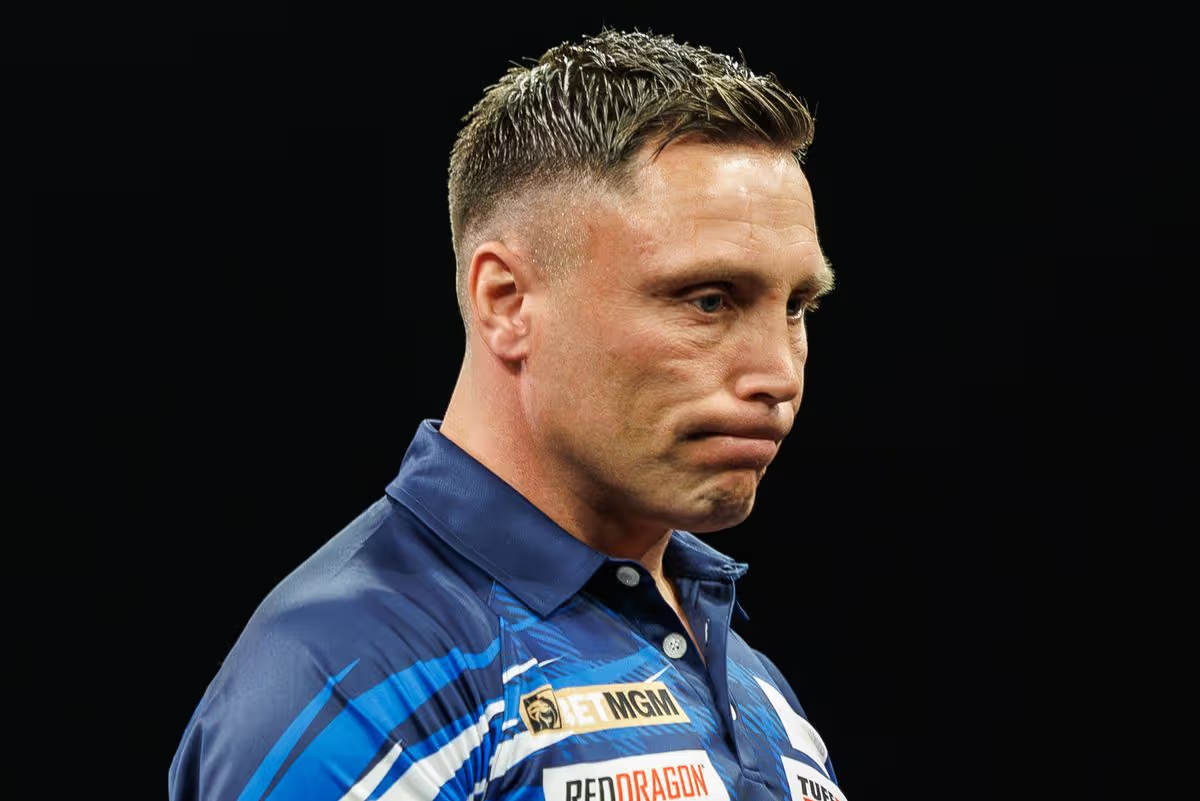
Gerwyn Price’s absence from the World Cup of Darts has sent shockwaves through the sport, with fans left asking the same question: how does a two-time champion simply step away from one of Wales’ biggest tournaments without a clear reason?
The “Iceman” was expected to once again lead Wales alongside Jonny Clayton in their bid to reclaim World Cup glory, a pairing that has delivered both dominance and drama on the international stage. Instead, just as preparations were being finalised, Price pulled out of the event, leaving a major hole in Wales’ title hopes and triggering a wave of speculation across the darts world.
What makes the situation even more intriguing is that there is still no single, confirmed explanation that fully clarifies his withdrawal. Early assumptions pointed toward ongoing health concerns, especially given Price’s well-documented struggles with form, fitness, and recent absences from several events on the PDC calendar. However, that narrative was quickly complicated when Price himself addressed the situation and made it clear that his decision was not linked to health issues.
That clarification immediately shifted attention away from injury or illness and into uncertainty territory, with fans and pundits alike left to interpret what could have prompted such a significant decision so close to a major international tournament.
In previous months, Price had openly acknowledged that he had not been in his best physical or mental condition, hinting at challenges behind the scenes while still continuing to compete at elite level. But even with that context, his decision to rule himself out of a competition where he has historically thrived still came as a surprise. The World Cup is an event he has not only won twice with Clayton but also one where Wales have built a strong identity as a powerhouse nation.
His absence therefore carries both emotional and competitive weight. Wales are not just losing a top-ranked player; they are losing one of the most experienced match-winners in the format. That immediately changes the dynamic of their campaign, forcing a reshuffle in personnel and expectations.
With Price stepping aside, Wales have had to turn to their wider player pool, with Nick Kenny stepping in as a replacement. While Kenny is a capable competitor and has earned his place in the squad through strong performances, the change inevitably alters the balance of the team. The chemistry between Price and Clayton, built over years of high-pressure doubles success, cannot simply be replicated overnight.
The impact of Price’s withdrawal extends beyond Wales alone. His absence has also influenced the tournament’s overall seedings and reshaped the competitive landscape. Wales, traditionally considered one of the favourites whenever Price and Clayton team up, are now viewed in a different light. Without their biggest name, their path through the competition becomes more uncertain, and opponents will sense an opportunity.
At the same time, the wider field of nations now looks even more open. England, led by the high-profile duo of Luke Humphries and Luke Littler, have naturally surged into the spotlight as leading contenders. Scotland, the Netherlands, and Northern Ireland also benefit indirectly from Wales losing one of their key edge players, tightening the race for the title.
Still, the biggest talking point remains not just the competitive impact, but the mystery surrounding Price himself. In modern darts, where players are increasingly open about injuries, schedules, and personal decisions, such a high-profile withdrawal without a fully detailed explanation is unusual. That vacuum has inevitably led to speculation, though nothing has been officially confirmed beyond Price’s insistence that health was not the reason.
That single statement has only deepened curiosity. If not health, then what prompted the decision? Scheduling fatigue, personal priorities, mental rest, or undisclosed professional reasons are all possibilities discussed among fans, but none have been confirmed by Price or his management team.
What is clear, however, is that his absence is not a minor adjustment for Wales — it is a major disruption. Price has been central to their World Cup identity since his rise to the top of the sport, often producing key moments under pressure and forming one of the most successful partnerships in the tournament’s recent history with Clayton.
Without him, Wales must not only adjust tactically but also mentally. The psychological edge that comes from having a former world champion in the team is significant, especially in a format where momentum and confidence play a huge role. His replacement will carry expectations, but also the weight of stepping into one of the most intimidating roles in international darts.
For Price himself, the decision may be part of a broader attempt to manage his schedule and long-term performance. The darts calendar is relentless, and top players often face difficult choices about where to compete and when to step back. Even at the highest level, managing energy and focus across multiple tournaments is becoming increasingly important.
But for now, the spotlight remains firmly on what is missing rather than what is known. Fans are left without a definitive answer, only fragments of information and a growing sense of intrigue around one of darts’ biggest names stepping away at a crucial moment.
As the World Cup begins without him, all eyes will be on how Wales cope in his absence. Every leg, every doubles match, and every result will be measured against the question of what might have been had Gerwyn Price been standing at the oche.
And until a clearer explanation emerges, his withdrawal remains one of the most talked-about storylines in the tournament — a reminder that in darts, sometimes the biggest drama happens before a single dart is thrown.