
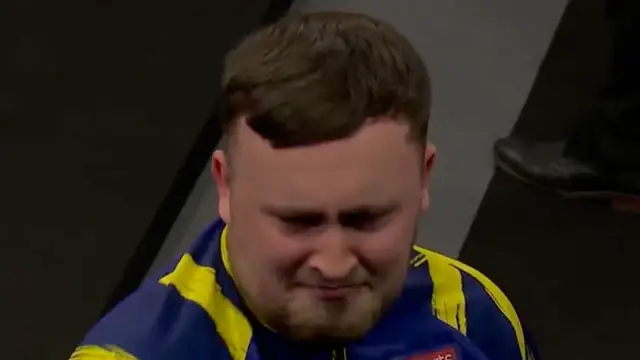
In the electric atmosphere of the Brighton Centre on Thursday night, where the Premier League Darts tour rolled into the south coast for Night 10, the usually unstoppable force known as Luke “The Nuke” Littler encountered a wave of hostility that visibly shook even the most composed young champion in the sport. The 19-year-old world number one and defending world champion stepped onto the stage to face Stephen Bunting in the quarter-finals, only to be met with heavy boos from sections of the crowd right from his walk-on. Fan footage captured the moment in raw detail, showing Littler responding with a mix of defiance and visible frustration as the jeers echoed around the arena.
As the introduction rang out and the boos intensified, Littler didn’t ignore the noise. Instead, he jokingly cupped his ear toward the crowd, a classic gesture in sports to amplify or acknowledge the hostility, before shrugging his shoulders as if to say the reaction was par for the course—or at least something he was trying to brush off. The clips, widely shared on social media and from fan angles close to the oche, reveal a young star who has grown accustomed to polarized receptions but still felt the sting in a home-nation venue. One moment shows him pointing to his ear amid the din, a subtle yet telling sign that the atmosphere had gotten under his skin early on.
The match itself unfolded as a stark departure from the explosive, high-scoring affairs that have defined Littler’s meteoric rise. Bunting, the experienced campaigner and firm fan favorite in many crowds, seized control from the outset. He claimed the first two legs with clinical checkouts on double four and double eight, leaving Littler chasing shadows. The teenage sensation managed to claw one back with a tops finish, but Bunting responded with a double nine to push the lead to 3-2, then extended it further to 4-2. Despite Littler showing glimpses of his trademark power scoring, the rhythm never fully materialized. Bunting sealed the 6-4 victory with a double six and a stunning double 16, registering the match’s highest finish of 102 in the process.
For Littler, the statistics painted a grim picture. He posted an average of just 83.94—the lowest of his entire televised PDC career. It was a far cry from the 100+ averages that have become his benchmark, and commentators were quick to note the anomaly. Sky’s Rod Studd observed dryly during the broadcast, “Littler is so under par, he’d be head of the Masters leaderboard,” a tongue-in-cheek remark highlighting just how far off the boil the world champion appeared. Bunting, while not at his absolute peak and missing several doubles himself, capitalized on the opportunities and held firm to advance.
The booing didn’t let up as the evening progressed. Littler left the stage to more jeers from the Brighton faithful, adding to what many described as his worst reception yet from a UK crowd. Fan footage circulating online captures not only the initial walk-on hostility but also the ongoing murmurs and occasional outbursts that seemed to disrupt his flow. One social media user summed up the sentiment: “Luke Littler beyond rattled by the boos, he’s never played this bad.” Another noted, “Littler can’t hide how raging he is getting booed,” while a third lamented the overall quality: “That was horrific by both. Don’t want to hear Littler saying he’s not bothered, he very clearly is.”
This latest episode comes amid a broader pattern of mixed crowd reactions for Littler in the 2026 Premier League campaign. Fresh off a fiery on-stage spat with Dutch rising star Gian van Veen the previous week, tensions appeared to linger, contributing to the frosty welcome in Brighton. Littler has faced boos in various venues before, including overseas events where he has openly expressed discomfort—most notably in Germany, where he once voiced frustration with fan behavior and even hinted at reluctance to return. At home, however, the intensity in Brighton felt particularly pointed, especially following his recent dominance and the “villain arc” narrative some fans and pundits have attached to his success.
Darts crowds are legendary for their passion, costumes, and raucous energy, turning matches into raucous spectacles that can energize or unsettle players. For a phenomenon like Littler, who burst onto the scene as a fresh-faced teenager and quickly amassed world titles, Premier League points, and adulation, the shift toward boos represents the double-edged sword of stardom. Supporters argue it’s the price of consistent winning—crowds craving underdog stories and variety in a sport where one name has dominated leaderboards. Critics of the booing point out the lack of sportsmanship, suggesting jealousy or fatigue with his excellence plays a role. Littler himself has addressed similar moments in the past with a mix of nonchalance and fire. In one memorable Ally Pally exchange after overcoming boos against Rob Cross, he fired back in an on-stage interview: “Am I bothered? Really, am I bothered?! Really not bothered!” before adding a pointed reminder about prize money and ticket sales.
Yet on this night in Brighton, the performance suggested the noise might have rattled him more than usual. Coming off a short break abroad in the sun, Littler looked flat, struggling to find the explosive rhythm that typically overwhelms opponents. The constant undercurrent of disapproval seemed to sap momentum, turning what should have been another stepping stone in his Premier League title defense into a night of rare vulnerability. Bunting, to his credit, played with composure and seized the moment, advancing while Littler reflected on a rare off-night.
The incident has already sparked debate across darts forums and social platforms. Some fans defend Littler’s ear-cupping gesture as light-hearted banter in a sport that thrives on crowd interaction, much like players in the past who have worn ear defenders or fired back verbally to reclaim control. Others see it as evidence of a young champion still maturing in handling pressure and public scrutiny. At just 19, Littler carries the weight of expectations that few in any sport have shouldered so early—world champion, Premier League contender, and a face that draws massive audiences. His talent remains undeniable; even on an 83-average night, he showed flashes of brilliance that kept the contest alive longer than the scoreline might suggest.
As the Premier League darts caravan moves forward, with nights in Rotterdam and beyond on the horizon, all eyes will be on how Littler rebounds. Will he channel the boos into extra motivation, as he has done in high-stakes World Championship battles? Or will the accumulating hostility from certain crowds require a strategic adjustment in mindset or even engagement? History in darts shows that crowd dynamics can forge legends—think of the electric atmospheres that propelled Phil Taylor or the resilience shown by modern stars navigating partisan venues.
For now, the fan footage from Brighton serves as a vivid snapshot: a gifted young athlete shrugging off jeers while his arrows failed to find their usual magic. Littler has repeatedly proven he thrives under pressure, turning doubters into believers with clinical finishes and record-breaking averages. This setback against Bunting, fueled by a hostile reception, may ultimately become another chapter in his growth story—one where the “Nuke” learns to detonate even louder amid the noise. The darts world loves a comeback, and few deliver them with more flair than Luke Littler. Whether the Brighton boos mark a temporary dip or a sign of shifting fan sentiments, one thing remains clear: the teenager who rewrote the record books isn’t going anywhere, and his next throw could silence any remaining critics in spectacular fashion.
The Premier League table remains tight, and with big names like Michael van Gerwen, Gerwyn Price, and Luke Humphries still in the mix, Littler will need to rediscover his devastating best quickly. Nights like Brighton test character as much as skill, and the response from “The Nuke” in the coming weeks will speak volumes about his championship pedigree. In the meantime, the sport’s passionate supporters will keep the atmosphere charged—cheers, boos, and all—reminding everyone why darts remains one of the most captivating arenas in world sport.