
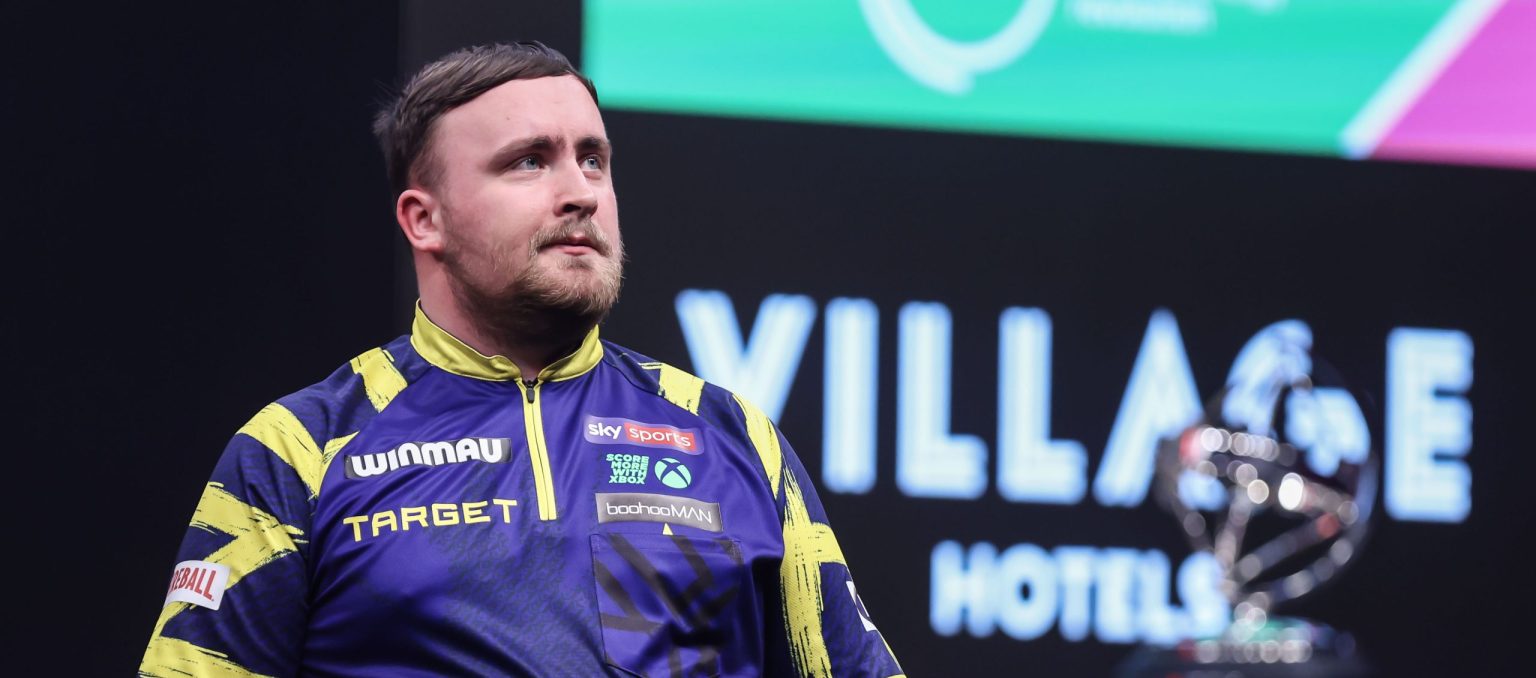
LUKE LITTLER has electrified the darts world with a rise so rapid and dominant that it feels almost unreal. At just 19 years old, the Warrington wonderkid nicknamed ‘The Nuke’ stands as the undisputed World No.1, a two-time back-to-back World Champion, and the youngest player ever to achieve such heights. His trophy cabinet already boasts an astonishing twelve major titles captured in a blistering two-year span on the professional circuit. Yet, as the cheers echo louder and the prize money flows faster, a subtle but formidable threat has emerged—not from any opponent on the oche, but from the very success that has catapulted him to global stardom: the allure of financial security and the potential erosion of raw, burning hunger.
Currently, Littler sits on nearly £2,961,000 in prize money according to the PDC Order of Merit, a figure that places him a commanding £1,754,500 ahead of his nearest rival, Luke Humphries. He is on the cusp of becoming the first player in darts history to breach the £3 million barrier from ranking events alone. This meteoric accumulation comes after a record-breaking £1 million payday for his latest World Championship triumph at Alexandra Palace, where he dismantled opponents with clinical precision. The teenager has not only rewritten personal records but also helped elevate the entire sport, drawing record crowds, boosting television audiences, and inspiring a new generation of players who dream of emulating his lightning-quick 180s and unflappable temperament under pressure.
His achievements read like a fairytale scripted for the modern era. From bursting onto the scene as a teenage qualifier to claiming back-to-back Sid Waddell trophies, Littler has shown maturity far beyond his years. Fans adore his boyish charm mixed with ruthless efficiency on stage. Social media erupts with every maximum, arenas sell out in anticipation of his arrival, and sponsorship deals pour in, offering luxury lifestyles once reserved for established veterans. Yet, this very transformation from hungry underdog to wealthy superstar raises profound questions about long-term motivation.
Former professional Scott Mitchell, speaking on the All About The Darts Podcast, delivered a candid assessment that cuts straight to the core of Littler’s potential vulnerability. “I think the biggest thing that’s going to impact on Littler’s dominance is how much money he wants,” Mitchell explained. “How much money does he need to live, or how much money do you earn to keep your hunger to want to keep winning? There has to be a motivation at some point or another.”
Mitchell drew from his own experiences to illustrate the point, noting the stark contrast between past generations and today’s top earners. “For the likes of myself, there was never enough money around for us to say. Don’t get me wrong, I’m in a better position in life now than before in my darting career by a long shot. But I’m not in a position to be going and buying Porsches and Ferraris where Luke is. You don’t have to buy them when you get that good, they give them to you.”
The former pro’s words highlight a timeless sporting truth: elite performance often thrives on necessity and desire. When financial pressures ease dramatically, the internal fire that once drove endless hours of practice in a bedroom can sometimes flicker. For Phil Taylor, the legendary 16-time World Champion, money was secondary to the pure pursuit of titles and accolades. Taylor built an empire in an era of more modest prize funds, where every victory carried visceral weight and personal stakes. Littler, by comparison, has already earned sums that many seasoned professionals could only dream of across entire careers. With luxury cars, endorsements, and a transformed lifestyle now readily available, the challenge becomes sustaining that same ferocious edge.
Littler himself has spoken ambitiously about chasing history. He sits just fourteen World Championship titles behind Taylor’s record—an unthinkable gap to close for most, yet one that seems tantalizingly within reach for a talent of his calibre. He has mused that it might take 15 or 16 years to match the Power’s tally, acknowledging the marathon nature of such a quest. Staying atop the rankings for as long as possible, surpassing Taylor’s days at World No.1, and continuing to dominate majors all feature in his vision. But as Mitchell pondered: “Could he win 16 world titles? I think he’s now saying: well, I’m two closer than I was two years ago. I’m on two and can I catch him. Will he have the hunger? For Phil, the money was never the issue, it was always the title, always the accolade that he liked. If Luke can stay like that, I think he can stay in the game an awful long time.”
The darts landscape has shifted dramatically around Littler. Prize funds have ballooned, partly thanks to his own drawing power. Travel schedules are relentless, media obligations multiply, and the weight of public expectation grows heavier with every triumph. Young challengers emerge eager to topple the king, while established names like Humphries, Gerwyn Price, and others circle for any sign of vulnerability. One momentary lapse in focus—a slight dip in practice intensity or competitive sharpness—could open doors that were previously slammed shut.
Yet, for all the concerns, Littler continues to deliver breathtaking performances. His recent deep runs and additional major wins keep widening the gap on the Order of Merit. Crowds still roar his name, and his composure remains ice-cool even in the most high-stakes moments. The teenager appears acutely aware of the need to stay grounded, focusing on the love of the game and the thrill of competition rather than the accumulating wealth.
As darts enjoys a golden era fueled by rising popularity and bigger paydays, Littler’s story stands as both inspiration and cautionary tale. Money can be a powerful ally, funding better preparation, travel, and support teams. But if it dulls the edge that made ‘The Nuke’ explode onto the scene, it could quietly become his greatest adversary. The coming seasons will test whether this generational talent can maintain the insatiable drive that has defined his early dominance.
Will Luke Littler keep chasing immortality with the same relentless hunger, treating every title as if it were his first? Or will comfort and security soften the fire that propelled him from bedroom prodigy to global phenomenon? The sporting world watches with fascination as the teenager navigates uncharted territory. One thing remains clear: his talent is undeniable, but sustaining greatness demands more than skill alone—it requires an inner resolve that no amount of prize money can guarantee. The oche awaits, unforgiving as ever, ready to reward those who refuse to let success become their silent undoing.