
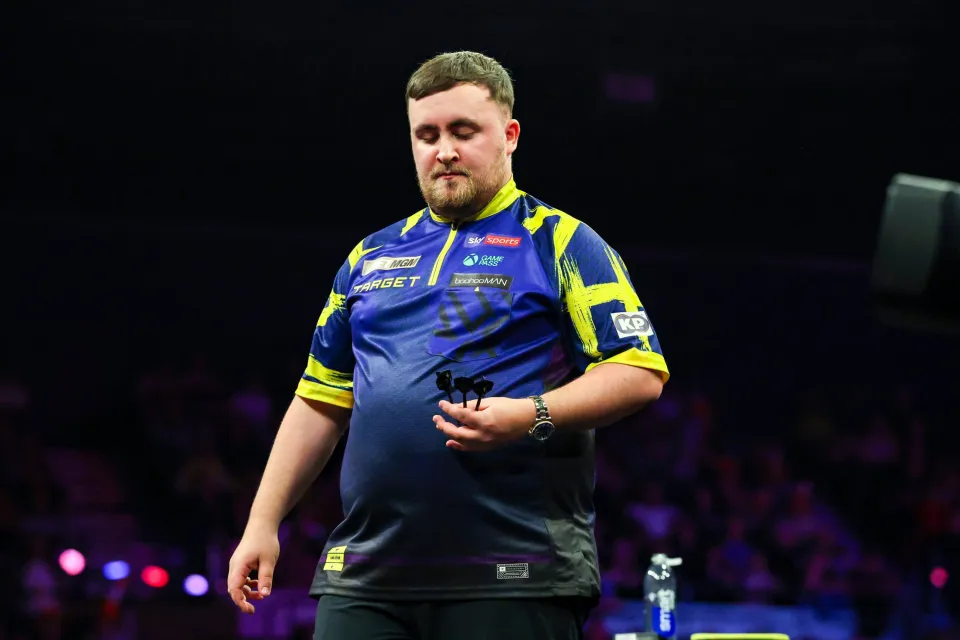
In the electric atmosphere of the Brighton Centre, the Premier League Darts delivered another night of high drama, but for world champion Luke Littler, it turned into a nightmare he will want to forget in a hurry. The 19-year-old prodigy, usually a beacon of unstoppable brilliance on the oche, suffered a shocking quarter-final exit to Stephen Bunting, slumping to a 6-4 defeat that left the crowd roaring in disbelief. It wasn’t just the loss that stung; it was the manner of it. Littler recorded his lowest-ever televised PDC average of 83.94, failed to register a single maximum 180, and looked a shadow of the darting genius who has taken the sport by storm. As he trudged off stage with a meek handshake and a shrug, the jeers that had followed him from his walk-on echoed long into the night.
The boos started early. As Littler made his entrance for the third match of the evening, the Brighton faithful let him have it, a hostile reception that only grew louder with every missed opportunity. Ironic cheers greeted his poor starts, and the pressure seemed to weigh heavy on the young star’s shoulders. Bunting, celebrating his 41st birthday on the night, capitalised ruthlessly. The world number seven hit just six of his 21 darts at double, yet it was more than enough against an opponent who gifted him chance after chance. Bunting could – and perhaps should – have wrapped it up far more comfortably. The first two legs Littler scraped were ones he had “no business winning,” as three-time world champion John Part later observed. “Stephen did what he had to do,” Part said. “It must have been off-putting watching Luke and how he played. He really was off… He didn’t look interested.”
Littler changed his darts mid-match in a desperate bid to find some rhythm, but the magic that has defined his meteoric rise simply wasn’t there. He lobbed darts rather than firing them with the usual laser-like precision and directness. There was no fire, no trademark swagger. Post-match, Bunting himself sounded almost sympathetic, acknowledging the human side of his rival. “Thankfully, he is human!” the Liverpudlian said. “It’s tough because the crowd was giving him some stick. I like Luke because he’s a fantastic lad and I don’t like to see that.”
But Sky Sports pundit and darts legend Wayne Mardle wasn’t buying the idea that this was just an off-night or crowd-related blip. He pointed squarely to events from the previous week in Manchester as the root cause – a fiery spat with Dutch sensation Gian van Veen that had dominated headlines and clearly left its mark. “I’m assuming tonight was a reaction to last week, although I don’t know,” Mardle said. “Littler looked quite flat… It would be more of a coincidence if we said it had nothing to do with last week. It was a knock-on from that. I thought he was going to be okay but he wasn’t. He’s going to have to get back on the horse soon.”
The Manchester incident had been explosive. In a quarter-final clash that replayed elements of their dramatic 2026 World Championship final, tempers boiled over on stage. Van Veen missed a crucial dart at double 15, sliding inside the wire. Littler, sensing the opening, couldn’t resist a subtle celebration – the kind of “well done” gesture famously associated with Simon Whitlock. It was meant for the crowd, but van Veen turned and caught him in the act. What followed was a heated exchange of words right there on the oche. Mardle, watching it unfold live, broke it down with forensic detail. “I know exactly what happened,” he explained. “Van Veen went inside on D15 and Luke was happy about that so kind of gave it the Simon Whitlock ‘well done’. You shouldn’t do that and as he has done that, Gian has turned around thinking ‘why did you do that?’ You’ve got to say that Gian handled it better because Luke fluffed his lines and went too aggressive at the double seven. Gian held it together really well there.”
Mardle didn’t shy away from the awkwardness of the moment. “I can lip read but I’m not repeating what Luke Littler said. I don’t want to hand in my notice!” he quipped. “He didn’t expect to get caught. He got caught with his hand in the cookie jar and he won’t be doing that again.” The Dutchman ultimately prevailed in that Manchester clash, and Littler’s response afterwards spoke volumes. He took to Instagram, posting a montage of his TV titles with the cheeky caption “goodnight, god bless, thank you Manchester” – a not-so-subtle reminder of his dominance while glossing over the defeat.
Now, a week later in Brighton, the fallout appeared all too real. The rivalry between these two young guns – both products of the sport’s exciting new wave – had added an extra layer of tension to the Premier League. Backstage, the pair were even kept apart in separate practice rooms, though Jonny Clayton, who went on to win the night, insisted there was nothing sinister about it. “They’re always in separate practice rooms,” Clayton said. “Myself, Mike [van Gerwen] and Luke Humphries were in one and usually Gian comes into that… There’s nothing in that at all.”
Yet the psychological toll seemed evident in Littler’s subdued display. The teenager who has rewritten record books, lifted the world title, and become the sport’s biggest draw suddenly looked vulnerable. Part captured the rarity of the occasion perfectly: “It is always hard work when you play the world No 1 and world champion. It is always going to be difficult. You can’t believe you are getting your chances and that they are playing badly. That is so rare.”
The rest of Night 10 rolled on with the kind of thrilling unpredictability that makes the Premier League must-watch television. In the semi-finals and final, the action cranked up several notches. Clayton produced one of the comebacks of the season to stun seven-time champion Michael van Gerwen in a gripping decider. Trailing 5-2 and staring down multiple match darts, the Welshman dug deep, firing in a majestic 140 checkout and an 84 bullseye finish to force a final leg. He sealed it with a composed 12-darter, moving three points clear of Littler at the top of the table. “Time for Littler to chase me again!” Clayton declared with a grin afterwards, injecting some light-hearted needle into the league standings.
For Littler, the night ended not with his usual fist-pumps and crowd chants, but with quiet reflection. The booing, the low average, the early exit – it all painted a picture of a champion momentarily knocked off his stride. Yet darts has a way of forging resilience in its stars, and at just 19, Littler has already shown he thrives under pressure. The Premier League format, with its weekly nights across the UK and Europe, demands consistency and mental toughness week after week. This Brighton blip, however painful, could prove the spark he needs.
Mardle’s assessment carried both critique and encouragement. Littler’s flat throwing and lack of directness weren’t the hallmarks of the player who has lit up arenas worldwide. But the former pro knows the game inside out. “He’s going to have to get back on the horse soon,” he repeated, a nod to the fact that true greats bounce back stronger. The sport’s depth was on full display too – Bunting’s gritty victory, Clayton’s heroics, van Gerwen’s relentless surge before fading. It reminded everyone that no one, not even the world number one, is untouchable.
As the Premier League caravan rolls on, all eyes will be on Littler’s next outing. Will the knock-on effect from Manchester linger, or will the teenager channel that fire into a trademark resurgence? The Brighton Centre may have witnessed his lowest ebb on TV, but the story of Luke Littler is far from over. In a league where legends are made one night at a time, this “nightmare” could simply be the prelude to another unforgettable chapter. The darts world waits with bated breath to see how the Nuke reloads and fires back.