
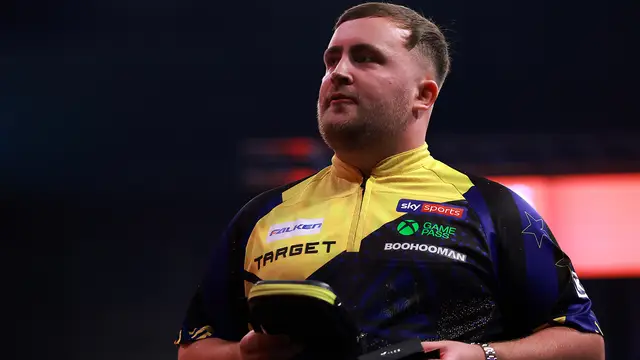
Luke Littler at risk of losing fortune after Dutch boycott stance as nightmare scenario unfolds
Luke Littler’s frustration with Dutch darts fans has now turned into something far more significant than a heated exchange with the crowd.
The 19-year-old has already followed through on part of the fallout from his threat to avoid Dutch events, withdrawing from two Players Championship tournaments in Den Bosch just days after saying he could stop playing European Tour events in the Netherlands. That decision has created a genuine financial and ranking consequence for the world number one.
Littler’s stance came after a difficult weekend at the World Series of Darts Finals in Amsterdam, where sections of the crowd repeatedly booed and whistled during his matches against Danny Noppert and Nathan Aspinall.
During the Aspinall match, referee Charlie Corstorphine was even forced to intervene and warn the crowd about its behaviour. Littler eventually survived a dramatic 10-9 contest, but his frustration was obvious.
The Dutch boycott threat
Littler did not hide his feelings after the Amsterdam experience.
Asked whether he could take the same approach with Dutch European Tour events that he has previously taken with Germany, the reigning world champion replied: “100 per cent.”
He then explained exactly where he stood.
“If the Dutch stay like this, then I’m not going to do any Euro tours over there. There’s just no point in me travelling, wasting my time whilst I’m getting booed. I just want to play my darts, obviously sign autographs.”
He also revealed that he had deliberately stopped acknowledging the crowd after his matches.
“The past two nights, I’ve done nothing, I’ve just walked off stage without thanking anybody. There’s no point thanking everyone when they are booing me.”
It is a remarkably strong position from a player who has become one of the biggest attractions in professional darts.
But there is a difference between refusing to play certain European Tour events and missing other tournaments that carry ranking or qualification implications.
That is where things have become interesting.
A costly withdrawal
Less than 24 hours after Jonny Clayton ended Littler’s hopes of completing a clean sweep at the World Series of Darts Finals, Littler withdrew from Players Championship events 29 and 30 in Den Bosch.
Those tournaments were scheduled to take place in the Netherlands, meaning the timing immediately attracted attention given his comments in Amsterdam.
The financial impact of missing individual Players Championship events is not enormous compared with Littler’s biggest paydays. Each 2026 Players Championship tournament has a £150,000 prize fund, with £15,000 going to the winner.
But the bigger issue is qualification.
Littler was sitting 125th on the Players Championship Order of Merit and £16,750 behind the final qualification position for the Players Championship Finals in Minehead.
By withdrawing from the two Den Bosch events, his chances of reaching that November tournament were effectively ended.
That is a much more tangible consequence than simply missing a trip to the Netherlands.
Littler is already earning enormous sums
It is important, though, not to overstate the financial danger.
Littler is hardly on the verge of financial trouble.
His 2026 season alone has already included enormous prize-money successes. He won the World Championship and collected £1 million, then added the World Masters, UK Open, Premier League and World Matchplay titles. His World Matchplay victory was worth another £225,000.
There is also a huge commercial side to Littler’s career.
In January, it was reported that he had signed a 10-year Target Darts agreement worth a reported £20 million, including potential bonuses and add-ons. Target described it as the largest agreement in darts history between a brand and a player.
So describing the Dutch situation as Littler literally “losing his fortune” would be misleading.
The more realistic issue is opportunity cost.
Every tournament he skips represents prize money he could potentially have earned, ranking opportunities he could have taken advantage of and competitive preparation he could have gained.
And for a player chasing records, those missed opportunities can eventually matter.
The timing is particularly fascinating
Littler’s decision comes during arguably the most successful period of his young career.
He has already won two consecutive world championships and entered the World Series Finals attempting to achieve something unprecedented: winning all 10 major televised PDC tournaments in one calendar year.
That dream ended when Clayton defeated him 10-4 in the quarter-finals in Amsterdam. Ross Smith subsequently won the tournament, defeating Gerwyn Price 11-5 in the final.
There is an interesting irony here.
The hostile Dutch atmosphere did not prevent Littler from beating Noppert or Aspinall. In fact, he produced a spectacular 12-dart finish in the deciding leg against Aspinall to escape one of the most intense matches of the tournament.
So from a purely sporting perspective, Littler demonstrated that he can perform under that kind of pressure.
But that does not necessarily mean he has to accept it indefinitely.
The Germany precedent
This is not completely new territory for Littler.
He has previously avoided European Tour events in Germany because of his experiences with hostile crowds. He has indicated that Dortmund will be another test of whether the atmosphere has changed.
The Netherlands could now become another country where Littler limits his appearances if he feels the situation continues.
That could create an unusual situation for the PDC.
Littler is not just another player. He is the sport’s world number one and one of its biggest commercial attractions. His matches generate enormous attention, and fans routinely travel to watch him.
At the same time, darts has always had a distinctive relationship with its crowds, with noise and partisan support forming part of the atmosphere.
The difficult line is determining where passionate support ends and behaviour that interferes with a player’s throw begins.
What happens next?
For Littler, the immediate focus will now shift away from the Netherlands.
The World Grand Prix begins in Leicester on September 28, followed by the European Championship and Grand Slam of Darts before the Players Championship Finals in November and the World Championship at the end of the year.
He remains capable of adding significantly to his already enormous prize-money total.
The Dutch situation, however, is unlikely to disappear completely.
Littler has made his position clear, and his withdrawal from the Den Bosch Players Championship events shows that his frustration was not simply an emotional reaction immediately after a difficult match.
Whether fans agree with his stance will probably depend on how they view the culture of darts crowds.
But there is no question that the decision carries consequences. Littler may not be seriously threatening his wealth, yet he is potentially sacrificing prize money, ranking opportunities and tournament appearances because he does not want to play in environments he considers unacceptable.
For a 19-year-old already rewriting the history of darts, that is a fascinating gamble.
And with Littler still chasing more major titles and another world championship, fans will be watching closely to see whether his decision ultimately becomes a minor footnote or a significant part of his career story.