
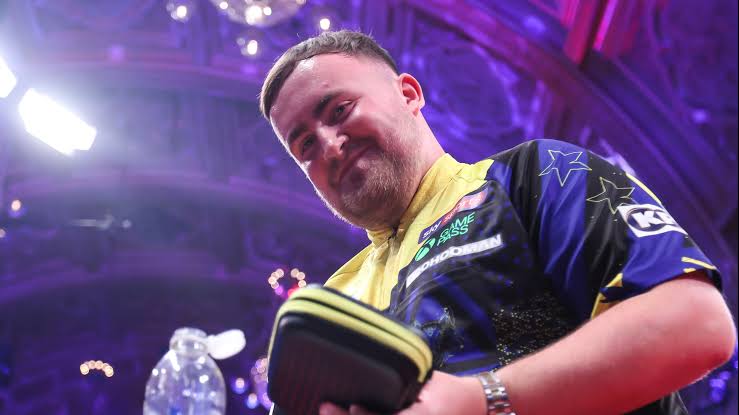
Luke Littler Can Become the Greatest Darts Player Ever — But Phil Taylor Still Sets the Standard
Luke Littler has already done something almost unthinkable in darts: at just 19, he has built a collection of major titles that most players could only dream about after decades on the professional circuit.
But the biggest question surrounding “The Nuke” is no longer whether he is great. That argument is finished. The real debate is whether he can eventually move beyond Phil Taylor, the man whose career has defined greatness in darts for more than two decades.
Stephen Bunting, one of the leading players of the modern era, has given his answer — and it is not quite the one Littler fans will want to hear.
Bunting Still Puts Taylor at the Top
Bunting has been hugely impressed by what Littler has accomplished, but he believes Taylor’s career remains the benchmark.
“16 world titles will never beaten and Taylor will never be overtaken in my opinion,” Bunting said.
There is certainly logic behind that view.
Taylor won 16 World Championships during his extraordinary career, while his dominance extended across virtually every major competition available to him. His record of 15 consecutive ranked PDC major titles between 2008 and 2010 remains one of the most extraordinary achievements the sport has seen.
Littler has nowhere near that longevity yet.
And that is the key point.
Littler Is Moving at a Completely Different Speed
The argument for Littler is not simply about the number of trophies he has already collected.
It is about how quickly he is collecting them.
Littler has won the World Championship, World Masters, UK Open, Premier League and World Matchplay during 2026. He also helped England win the World Cup of Darts alongside Luke Humphries.
His World Matchplay victory was particularly spectacular.
Littler averaged 111.04 across the tournament, breaking Taylor’s previous World Matchplay tournament record of 106.31. His 111.53 average in the final against Gerwyn Price was also the highest ever recorded in a World Matchplay final.
That is where the Taylor comparison becomes fascinating.
Bunting can point to Taylor’s unmatched collection of titles, but Littler is producing statistical performances that already stand alongside the greatest displays in the sport’s history.
And he is doing it at an age when Taylor was nowhere near his eventual peak.
The Numbers Make the Debate Complicated
This is where simply counting World Championships becomes difficult.
Littler has already shown that he can dominate an era. He had won six consecutive ranked majors heading into the World Series Finals, stretching from the 2025 Grand Slam through the 2026 World Matchplay.
That is still a long way short of Taylor’s record 15 consecutive ranked majors.
But it is already an astonishing start.
Michael van Gerwen managed seven consecutive ranked majors between 2016 and 2017, meaning Littler is already within touching distance of another extraordinary benchmark.
The frightening part for the rest of the darts world is that Littler is only 19.
He has years — potentially decades — to build on what he has already achieved.
Littler Has Already Admitted What He Wants
The interesting thing is that Littler himself has never hidden his ambition.
After winning the World Matchplay, he openly discussed his desire to become the greatest player in darts history.
“I would absolutely love to be the greatest dart player there ever has been,” Littler said.
That mentality matters.
He is not talking about simply becoming one of the best players of his generation. He is chasing Taylor’s place at the very top.
And judging by his results, he has every reason to believe that conversation could become much more serious over the next few years.
But 2026 Has Already Shown How Difficult It Is
There is an important reality check.
Littler’s attempt to win every major tournament in 2026 ended at the World Series Finals in Amsterdam, where Jonny Clayton defeated him in the quarter-finals. That ended his hopes of completing an unprecedented clean sweep of the year’s majors.
It was a reminder that even Littler is not unbeatable.
The defeat also means the pressure surrounding him may be slightly different for the remainder of the season. Instead of chasing one massive achievement, he can now concentrate on individual tournaments and longer-term records.
That might actually make him even more dangerous.
The World Grand Prix is next, beginning on September 28, followed by the European Championship, Grand Slam of Darts and Players Championship Finals later in the year.
The Biggest Challenge Is Longevity
This is ultimately where Bunting’s argument carries the most weight.
Littler can produce extraordinary averages. He can dominate major tournaments. He can break records that have stood for years.
But Taylor did it repeatedly.
For years.
That difference cannot simply be ignored.
Taylor’s career was not built on one spectacular season or even a few dominant seasons. His legacy came from maintaining an almost ridiculous level of excellence for a huge portion of his professional life.
His World Matchplay record alone demonstrates that longevity: he won the tournament 16 times and recorded 38 consecutive victories during one remarkable run.
Littler has to prove that he can maintain his current level when opponents spend years studying him, when his form inevitably dips and when younger players eventually arrive to challenge him.
That is the part of the story we simply cannot know yet.
Littler Doesn’t Need to Become Taylor
There is also another way of looking at the debate.
Perhaps Littler does not need to copy Taylor’s career to establish his own legacy.
The sport is different now. The opposition is deeper, the media attention is enormous and Littler has arrived in an era where elite players such as Humphries, Van Gerwen, Gerwyn Price and others are capable of challenging him.
Littler is also bringing a younger audience into darts and changing the profile of the sport.
That impact could become part of his legacy just as much as his trophies.
The Taylor Debate Is Only Just Beginning
So, can Bunting’s prediction eventually be proven wrong?
Right now, Taylor’s overall career record remains the standard. There is simply too much history behind those 16 World Championships and his remarkable collection of major titles.
But that does not mean Littler cannot eventually change the conversation.
At 19, he has already achieved enough to make the comparison legitimate. His World Matchplay numbers, major-winning streak and extraordinary consistency suggest that he is not merely enjoying a hot run — he is building something potentially historic.
The funniest part is that we may eventually look back at this debate and realise how early it actually started.
Taylor has the legacy.
Littler has the opportunity.
And with so much of his career still ahead of him, the darts world may have to wait many years before discovering whether “The Nuke” can finally knock “The Power” from the top of the mountain.
What do you think? Can Luke Littler eventually surpass Phil Taylor’s legacy?