
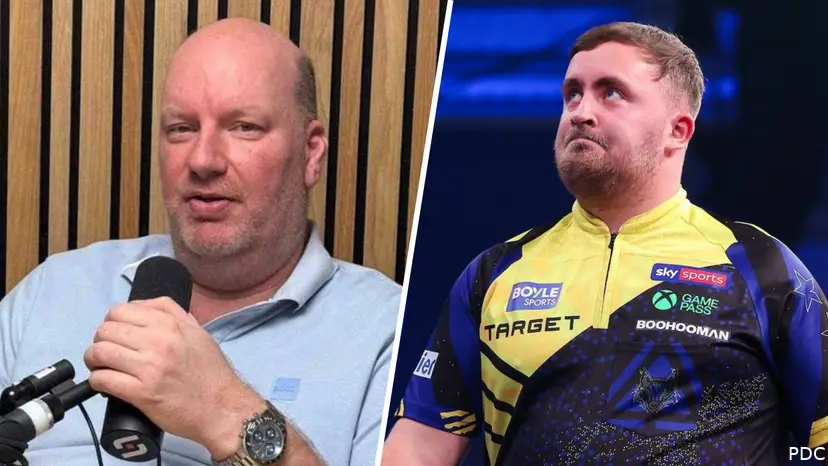
Luke Littler’s decision to potentially skip Dutch Euro Tour events has sparked another debate around the world number one, and Vincent van der Voort believes the consequences could stretch far beyond one player and one tournament.
Littler made his frustration clear after being repeatedly booed during the World Series of Darts Finals in Amsterdam. After surviving Danny Noppert and Nathan Aspinall, the 19-year-old warned that he would consider avoiding Euro Tour events in the Netherlands if the hostile reception continued. The Dutch Darts Championship in Maastricht, scheduled for October 16–18, is therefore directly in the spotlight.
That is where the situation becomes particularly interesting. Littler is not some fringe player who can quietly disappear from a tournament without anyone noticing. He is the world number one, a two-time world champion and arguably the biggest attraction in professional darts right now.
And Van der Voort understands that better than most.
Littler Draws the Line in Amsterdam
The Amsterdam controversy developed over two consecutive nights.
Littler faced Noppert in his opening match and was booed by sections of the crowd throughout the contest. Despite the hostile atmosphere, he won 6-4, although Noppert had opportunities to make the match much more uncomfortable for the reigning world champion.
The following night, Littler faced Aspinall and again found himself dealing with significant crowd hostility. He eventually won 10-9 in a deciding leg, but the experience clearly left its mark.
Afterward, Littler explained why he had stopped acknowledging the crowd after his matches.
“It has no point if you get booed the whole time. I just want to play darts and sign autographs.”
He then went further, warning that continued treatment could affect where he chooses to compete.
“If it continues like this in the Netherlands, then I won’t play Euro Tour tournaments there.”
That is a significant statement because the Netherlands is one of the sport’s most important darts markets. It is also home to some of the biggest players in the game’s history, including Michael van Gerwen and Raymond van Barneveld.
Van der Voort Defends Littler
Interestingly, Van der Voort has not treated Littler’s reaction as some outrageous overreaction.
The former professional was actually highly critical of the Dutch crowd during the World Series Finals. He argued that supporting Noppert was perfectly reasonable, but deliberately trying to distract and unsettle Littler crossed a line.
“You should be happy that Littler is here,” Van der Voort argued, pointing out just how significant Littler has become to the sport.
He also questioned why supporters were focusing so heavily on trying to disrupt Littler rather than simply backing their own player.
That is an important distinction.
Darts has always had noisy crowds. Booing, chanting and trying to create an intimidating atmosphere are part of the spectacle. Players such as Gerwyn Price have experienced it throughout their careers, and Price himself has become one of the sport’s most polarising figures.
But there is a difference between supporting your favourite and making the opponent the main target of the evening.
And in Littler’s case, the argument becomes even more complicated because his presence is a major selling point.
The Sponsor Problem
This is where Van der Voort’s comments about Littler’s decision become particularly interesting.
A major darts tournament does not exist simply for the players. There are broadcasters, venues, ticket sellers, commercial partners and sponsors all investing in the event.
If the biggest star in the sport decides he does not want to participate, that potentially affects the entire commercial package.
Van der Voort has previously highlighted exactly how important the commercial side of darts has become. When discussing the possibility of elite players skipping ranking events, he explained that broadcasters and sponsors want the biggest names involved because those players drive interest in the product.
That is why Littler’s decision is not as simple as saying, “If he doesn’t like the crowd, he should stay home.”
Of course, Littler has to accept that playing professional sport means dealing with pressure, criticism and hostile environments. But tournament organisers also have a responsibility to create an atmosphere where players can actually compete.
If the situation becomes serious enough that one of the sport’s biggest stars starts regularly avoiding certain events, everyone potentially loses.
The Dutch Fans Have a Point Too
There is another side to this story, and it would be unfair to pretend otherwise.
Dutch fans are passionate. Supporting Noppert against Littler is completely normal, especially when a home player is facing the reigning world champion.
Nobody should expect a Dutch crowd to cheer loudly for an English superstar simply because he is good for the sport.
The criticism becomes more understandable when it is focused on the behaviour rather than the allegiance. Van der Voort himself made that distinction, saying fans could fully support Noppert without constantly booing Littler.
And that is probably where the debate should sit.
Littler should expect opposition. The crowd should be allowed to make noise. But deliberately disrupting a player’s throw is a completely different issue.
Littler’s Growing Commercial Importance
The timing also matters because Littler’s influence on darts has become enormous.
He won his second consecutive PDC World Championship in January, defeating Gian van Veen 7-1 in the final and collecting a record £1 million first prize. That victory took his major title tally to 10 after only two full seasons.
Earlier this year, Littler also signed a long-term agreement with Target Darts that was widely reported as potentially worth around £20 million over ten years, although Van der Voort has questioned the idea that the entire figure should be viewed as guaranteed income.
That tells you everything about his commercial value.
Littler is no longer simply another player on the PDC circuit. He is one of the faces of the sport.
And that makes his decision to potentially skip tournaments much more significant than it would be for an ordinary professional.
What Happens Next?
The most interesting question is whether this becomes a genuine boycott or simply an emotional warning after an intense weekend.
Littler has already shown that he is willing to make decisions about his schedule based on what he considers worthwhile. Van der Voort has previously criticised the wider trend of top players missing ranking events, while also acknowledging the commercial forces involved.
The Dutch Darts Championship will provide an immediate test.
If Littler turns up in Maastricht, perhaps the Amsterdam controversy eventually becomes another chapter in the sport’s long history of crowd-player confrontations.
If he stays away, however, the issue becomes much bigger.
Sponsors will have questions. Fans will have opinions. The PDC will have to consider the atmosphere surrounding its events. And other players could potentially look at Littler’s decision and decide they are willing to take similar action.
For me, that is what makes this story so fascinating.
Littler cannot expect every crowd to love him, and Dutch supporters absolutely have the right to back their own players. But if the atmosphere becomes so hostile that the world’s biggest star decides he would rather not compete, the sport needs to take notice.
Van der Voort clearly believes Littler’s presence should be appreciated rather than targeted.
Now the question is whether the Dutch darts scene can convince Littler that returning is worth it — or whether the world’s number one really will start leaving the Netherlands off his schedule.