
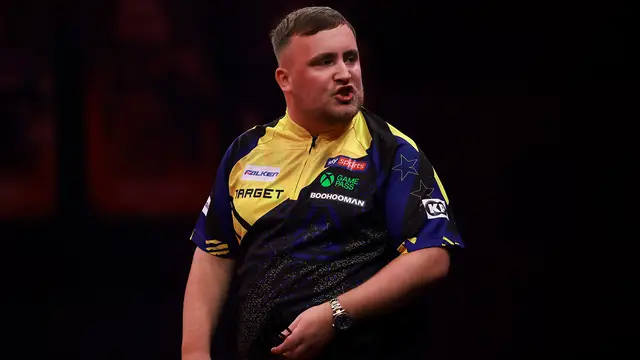
Luke Littler will be one of the biggest names missing when the Dutch Darts Championship arrives in Maastricht this weekend, and his absence has already created a talking point that goes far beyond the tournament itself.
The reigning world champion will not compete at the European Tour event running from October 16 to 18. With several of the sport’s biggest names heading to the Netherlands, Littler’s decision raises an uncomfortable question: should the world’s best player be expected to keep turning up when he has legitimate reasons to reconsider where and when he competes?
For me, the answer is simple. Littler has earned the right to make decisions about his own career. And if darts wants to benefit from his talent, personality and ability to attract attention, the sport should be careful about treating every tournament he misses as a controversy.
Why is Luke Littler missing the Dutch Darts Championship?
Littler’s absence comes after a difficult weekend at the World Series of Darts Finals in Amsterdam in September, where he faced boos and whistles from sections of the crowd during matches against Danny Noppert and Nathan Aspinall.
The reaction was particularly contentious during his closely contested victory over Aspinall. Littler subsequently made it clear that he was not interested in repeatedly travelling to the Netherlands if the reception continued to be hostile.
“If the Dutch stay like this, then I’m not going to do any Euro Tours over there,” Littler said.
He also complained that there was little point in travelling to events only to be booed when he wanted to play darts and sign autographs.
Those comments now look particularly significant because Littler is absent from the Dutch Darts Championship entry list. He has also withdrawn from the Players Championship events in Den Bosch scheduled for later in October.
However, there is an important distinction here: although the timing has fuelled speculation that his absence is connected to the crowd reaction, no definitive explanation from Littler or the PDC has established that this was the sole reason for his decision. That distinction matters, and it should not be ignored simply to create a more dramatic story.
Littler should not have to accept everything thrown at him
Here is where the debate gets interesting.
Darts has always thrived on passionate crowds, noisy atmospheres and rivalries that make matches feel bigger than the scores on the board. Players should expect opposition support, pressure and the occasional hostile reception.
But there is a difference between supporting your favourite player and making another competitor feel unwelcome.
Littler is not asking every spectator to cheer for him. He is a professional, and he understands that playing away from home means dealing with an unfriendly crowd. Yet that does not mean he must automatically accept every atmosphere without questioning whether an event is worth his time.
The teenager has already delivered extraordinary moments for the sport. His performances have helped make darts a bigger talking point, particularly among younger audiences who might never previously have watched a full tournament.
So why should the response to his absence automatically be criticism?
If a player believes a particular event does not fit his plans, he should be allowed to make that choice within the rules. Being world number one does not mean surrendering control over every decision on his calendar.
And if fans want to see Littler competing in their country, perhaps the better approach is to make the occasion one he wants to return to rather than turn his absence into another argument about his attitude.
The scheduling debate is not going away
Littler’s decision also comes amid wider discussions about the number of tournaments elite darts players are expected to enter.
In September, he defended his right to choose his schedule, arguing that his achievements had earned him some control over how he manages his commitments. That stance followed concerns from darts chief Barry Hearn about top players regularly missing events.
There is a legitimate counterargument. Tournaments need star names, promoters have commitments to fulfil, and supporters who buy tickets want to see the best players in the world.
Those concerns should not be dismissed.
However, professional sport cannot depend entirely on the assumption that its biggest stars must appear everywhere. Players have to consider form, workload, travel and the long-term demands of remaining competitive. Different players will make different choices, and that is part of managing a professional career.
Littler is only 19, yet the attention surrounding him can make every decision appear like a major statement. If he enters a tournament, people discuss his chances of winning. If he skips one, people debate his commitment.
That level of scrutiny comes with being a superstar, but it does not mean every criticism is justified.
The sensible approach is to judge him on his performances and respect the fact that he has to make decisions about his own future.
The Dutch Darts Championship still has plenty at stake
Littler’s absence will undoubtedly disappoint fans hoping to see him in action, but the tournament should still deliver an intriguing weekend.
Michael van Gerwen, Gian van Veen, Luke Humphries, Gerwyn Price and Jonny Clayton are among the leading names expected to compete in Maastricht.
The event is also the final tournament of the 2026 European Tour season, giving players one last opportunity to improve their positions ahead of the European Championship in Dortmund.
The competition begins on Friday, October 16, with the first round, before the seeded players enter on Saturday. The title will be decided on Sunday, October 18.
UK fans can watch the tournament live on PDCTV, with a subscription required.
There will be no shortage of quality, and the players who do compete deserve their share of the spotlight. But there is little point pretending Littler’s absence will not be noticed. He remains one of the biggest attractions in the sport.
Littler’s absence could make an even bigger statement
Ultimately, the Dutch Darts Championship will go ahead without the reigning world champion. The remaining field will have a chance to claim the title, while Littler will continue to manage his own schedule.
The biggest mistake would be to assume that missing one tournament automatically means he is disrespecting darts or its supporters.
Criticism is part of professional sport, and Littler should not be immune to it. But the same standard should apply to everyone: decisions should be judged on the available facts, not on assumptions about a player’s motives.
His absence is significant, particularly after the events in Amsterdam. Whether it represents a direct response to the crowd reaction or a broader scheduling decision has not been conclusively established.
One thing is certain, though: darts has a superstar whose every move attracts attention. If the sport wants to keep that superstar engaged, it needs to understand that respect works both ways.
Littler does not need to play every tournament to prove his status. His record already speaks loudly enough. The more interesting question is whether the sport can handle a world champion who is prepared to make his own choices.