
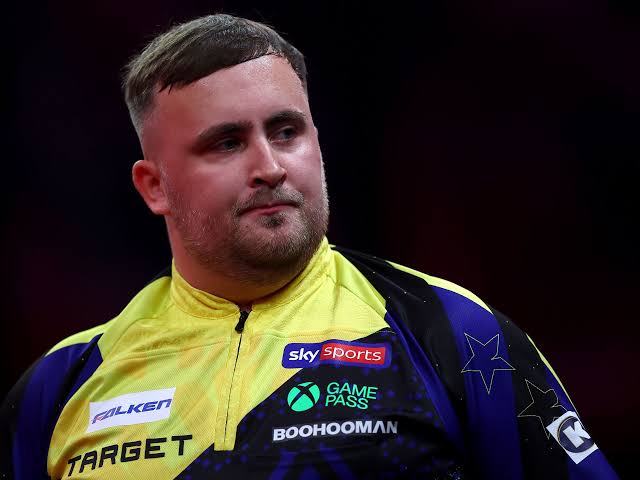
Luke Littler is once again at the centre of a darts debate, but this time the biggest talking point has nothing to do with a missed double, a disappointing defeat or a rival celebrating in his face.
Instead, the world number one has made headlines because he will not be competing at the Dutch Darts Championship in Maastricht from October 16 to 18. And given what happened during his previous visit to the Netherlands, it is difficult to separate his absence from the growing debate surrounding his treatment by sections of the crowd.
Littler has never been afraid to speak his mind, and his decision to stay away has already raised questions about his schedule, his relationship with Dutch supporters and the pressure placed on the sport’s biggest superstar.
But here is the question people should be asking: why should Littler be expected to keep putting himself in an uncomfortable situation simply because fans want to see him play?
For a player who has already achieved so much at just 19, there is a strong argument that he has earned the right to make his own decisions.
Littler’s absence comes after a heated weekend in Amsterdam
The controversy surrounding Littler’s Dutch Darts Championship absence can be traced back to the World Series of Darts Finals in Amsterdam in September.
The teenage sensation received a hostile reception from sections of the crowd during his matches against Dutchman Danny Noppert and England’s Nathan Aspinall.
The atmosphere became particularly uncomfortable during his dramatic victory over Aspinall, with Littler visibly unhappy about the reaction coming from the stands.
Rather than simply ignoring the situation, he made his feelings clear.
“If the Dutch stay like this, then I’m not going to do any Euro Tours over there,” Littler said.
He also questioned the point of travelling to tournaments if he was going to be booed while trying to do his job and sign autographs.
Those were strong words, but can anyone honestly say they came out of nowhere?
Professional darts depends on passionate crowds. Players are supposed to embrace the atmosphere, handle the pressure and deliver when it matters most. However, there is a difference between a noisy crowd supporting its favourite and spectators making a player feel unwelcome.
Littler is competitive enough to understand that not everybody will support him. He has experienced hostile receptions before, and he knows that being one of the sport’s biggest names automatically makes him a target.
That does not mean he must accept every situation without expressing his frustration.
Has Littler made the right decision?
His absence from Maastricht, following his withdrawal from the Players Championship events in Den Bosch, suggests he is serious about reconsidering his participation in Dutch tournaments.
According to reports, Littler is not listed in the Dutch Darts Championship field, while Gary Anderson and Josh Rock are also among the players who have withdrawn. <Cite refs={[“turn832162search6″,”turn832162search11”]}/>
The timing makes the crowd controversy impossible to ignore. However, it is important not to claim that every detail of Littler’s decision has been officially explained.
What we do know is that he had already warned that he might stop playing certain events in the Netherlands if the treatment continued.
In my opinion, standing by that position is not necessarily an act of arrogance. It could simply be a player deciding where he wants to spend his time and energy.
There is a tendency in sport to expect the biggest names to show up everywhere, regardless of the circumstances. Promoters want star power, broadcasters want familiar faces, and supporters want to watch the best players compete.
All of that is understandable.
But professional players are not machines. They have to manage their schedules, prepare for important tournaments and decide which commitments make sense for their careers.
If Littler believes an event is not worth the trip, he should be entitled to make that decision within the rules.
The fact that he is the reigning world champion should not mean he loses control over his own calendar.
Barry Hearn’s concerns deserve attention, but so does Littler’s argument
The debate becomes more complicated when the business side of darts enters the picture.
PDC president Barry Hearn has expressed concern about leading players regularly missing tournaments. There is a reasonable argument that fans who pay for tickets deserve to see the stars advertised as attractions, while organisers need reliable participation from the sport’s biggest names.
Littler’s reduced schedule has therefore become part of a much wider discussion about the responsibilities of elite players.
However, there is another side to this argument.
Littler has previously defended his right to choose which tournaments he enters, saying he has earned the ability to manage his own commitments. <Cite refs={[“turn832162search2″,”turn832162search0”]}/>
That is not an unreasonable position.
The teenager has already brought enormous attention to darts. His performances have attracted new viewers, created fresh rivalries and made him one of the most recognisable figures in the sport.
Expecting him to sacrifice every personal preference for the sake of tournament organisers is hardly a sustainable way to manage a long career.
Of course, Littler must accept that skipping events can have consequences. He may miss opportunities to win prize money, strengthen his record or entertain supporters who genuinely want to see him play.
But those are consequences he can weigh up himself.
If the PDC wants its biggest players to participate more regularly, the answer should involve a sensible discussion about the calendar, player commitments and tournament incentives rather than simply criticising a star for exercising his choices.
The Dutch Darts Championship will miss a major attraction
There is no denying that Littler’s absence is a blow for the tournament.
The Dutch Darts Championship is the final European Tour event of the 2026 season, with the action scheduled for October 16 to 18 in Maastricht.
Players including Michael van Gerwen, Luke Humphries, Gerwyn Price and Jonny Clayton will provide plenty of quality, ensuring the competition remains worth watching.
Yet Littler brings something different.
He is not merely another name on the draw sheet. His matches attract attention from casual viewers as well as dedicated darts supporters, and his presence can turn an ordinary tournament fixture into a major talking point.
That is precisely why his absence matters.
However, Dutch fans should not assume that the tournament is doomed without him. The remaining players have an opportunity to make their own headlines, and the title is still there to be won.
If anything, the situation should remind everyone how important Littler has become to the sport’s appeal.
Littler’s next move will be watched closely
The biggest question now is whether this absence represents a temporary decision or the beginning of a longer-term change in how Littler approaches tournaments in the Netherlands.
For now, there is no need to invent a dramatic prediction about a permanent boycott. His current absence is clear, but what happens next will depend on his future decisions and the circumstances surrounding upcoming events.
One thing is certain: the debate over his schedule is unlikely to disappear.
Some supporters will argue that a world champion should compete more often. Others will insist that he has every right to prioritise his career and avoid tournaments where he feels unwelcome.
I lean towards the latter argument, provided the rules are respected and the consequences are understood.
Littler should not be immune to criticism, but neither should every decision he makes become evidence that he is doing something wrong.
At 19, he has already achieved what many professional players spend their entire careers chasing. He deserves the freedom to decide how he manages the next stage of that journey.
The Dutch Darts Championship will go ahead without Luke Littler, but the controversy surrounding his absence may prove almost as significant as anything that happens on the oche.
And if the sport wants its biggest star to return to these events, perhaps the conversation should focus on how to make that happen rather than why he has chosen to stay away.