
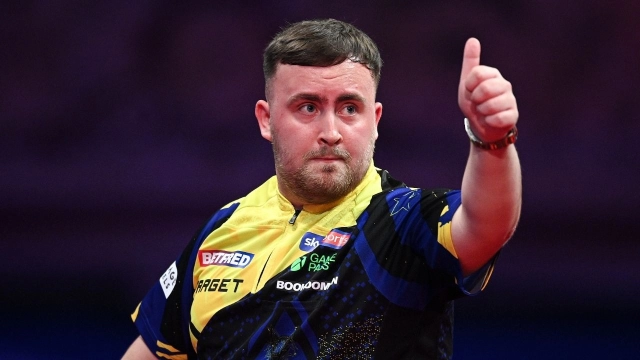
Luke Littler’s Dutch Darts Championship Absence Has Created a Story Bigger Than One Player
Luke Littler does not need to throw a single dart at the Dutch Darts Championship to remain one of the biggest talking points surrounding the tournament. The world number one is missing from the Maastricht event, but his absence has added an intriguing subplot to the final European Tour tournament of the 2026 season.
The reason goes beyond a simple decision to skip another competition. Littler’s withdrawal follows a turbulent weekend in Amsterdam, where sections of the Dutch crowd booed and whistled him during the World Series of Darts Finals. His response raised questions about how the sport’s biggest stars should deal with hostile audiences, and whether crowd behaviour could influence which tournaments they choose to play.
There is an important distinction, though: while the timing of Littler’s withdrawal has fuelled speculation about a boycott, his absence from Maastricht does not, by itself, establish every detail behind his decision. What is clear is that the reigning world champion is not competing, and fans are left watching a tournament shaped partly by the controversy surrounding him.
Why Luke Littler Is Missing From Maastricht
The Dutch Darts Championship takes place at the MECC in Maastricht from October 16 to 18, bringing together leading players on the PDC European Tour. Littler is not in the field, despite his position at the top of the sport and the attention his participation would normally attract.
His absence follows his decision to withdraw from two Players Championship events in Den Bosch in September. Those withdrawals came after his difficult experience at the World Series of Darts Finals in Amsterdam, where the crowd reaction became a major talking point.
Littler had already warned that continued hostility could affect his willingness to compete in the Netherlands. After receiving boos and whistles during matches against Danny Noppert and Nathan Aspinall, he made his frustration clear.
“If the Dutch stay like this, then I’m not going to do any Euro Tours over there,” he said.
That statement gave the subsequent withdrawals a different meaning. Instead of being viewed only as routine scheduling decisions, they became part of a wider discussion about whether the sport’s biggest attraction should keep travelling to tournaments where he feels unwelcome.
For supporters, it is a fascinating situation. Littler has helped bring enormous attention to darts, yet his growing profile also makes him a target for crowds eager to unsettle the favourite.
A Tournament With Plenty of Questions to Answer
Littler is not the only major name missing from Maastricht. World number two Luke Humphries also withdrew, while former world champion Rob Cross pulled out shortly before the tournament began, citing personal reasons.
Those absences have changed the complexion of the competition. Gian van Veen, Gerwyn Price, Michael van Gerwen, Jonny Clayton and other established names were among the players expected to make their mark, but the early rounds have already delivered some major surprises.
The most eye-catching performance came from Van Veen, who defeated Sebastian Białecki 6-0 with a three-dart average of 120.24. That set a new European Tour record, surpassing the previous mark held by Dave Chisnall.
Van Veen then beat Brendan Dolan 6-1 on Sunday to reach the quarter-finals. Meanwhile, defending champion Clayton suffered a 6-1 defeat to Damon Heta, and home favourite Van Gerwen lost 6-5 to William O’Connor.
These results underline an important point: the tournament has its own compelling sporting story, even without Littler. The remaining contenders have an opportunity to seize the spotlight, and Van Veen’s extraordinary scoring has given fans a performance worth talking about on its own merits.
Still, it is difficult to ignore the attention that Littler’s absence generates. When the world’s leading player misses a major event, the conversation inevitably turns to what his presence might have added.
Is This Really About the Dutch Crowd?
The crowd controversy is the most interesting part of this story because it touches on the relationship between players and supporters.
Darts has always thrived on atmosphere. Chants, celebrations and partisan audiences help make the sport distinctive, especially at major televised events. Players are expected to handle pressure, and a hostile crowd can sometimes become part of the challenge.
But there is a difference between supporting a favourite and deliberately trying to disrupt an opponent. Littler’s complaints suggest he felt the reaction went beyond the kind of competitive atmosphere he should have to accept.
After the Amsterdam event, he explained his frustration, saying there was little point in travelling if he was going to be booed rather than enjoying the experience of playing and meeting fans.
From a fan’s perspective, there are arguments on both sides. Supporters pay for tickets and naturally want to create an atmosphere that helps their preferred players. At the same time, professional darts depends on players being willing to compete in front of those audiences, and sustained hostility towards one individual can become an issue for the sport itself.
Littler is not above criticism simply because he is world number one. However, his achievements and popularity make it worth asking whether tournaments benefit when their biggest attractions feel reluctant to attend.
It would be unfair to blame every Dutch supporter for the behaviour of some spectators. Equally, dismissing Littler’s concerns because he is successful would miss the point.
Could His Absence Become a Bigger Problem?
The immediate consequence is straightforward: Dutch fans do not get to watch one of the sport’s biggest names compete in Maastricht. The longer-term implications are less certain.
Littler has reduced his schedule in 2026, arguing that he has earned the right to choose which tournaments he plays. His decision to skip events has also prompted discussion about the responsibilities attached to being one of darts’ leading players.
There is a delicate balance here. Players need time to recover, prepare and maintain their best form across a demanding calendar. But tournaments also need star names to attract attention, sell tickets and give broadcasters compelling match-ups.
If Littler continues avoiding Dutch events, organisers could lose the opportunity to feature him in front of those crowds. On the other hand, the tournament’s early results show that other players can deliver spectacular performances and create their own headlines.
There is also no guarantee that his absence will become a permanent arrangement. The situation could change if relations improve, although no resolution has been confirmed. For now, it is better to treat future appearances as uncertain rather than assume he will either return immediately or stay away indefinitely.
Littler Is Missing, but the Debate Is Only Growing
The Dutch Darts Championship has developed into an intriguing weekend of darts, with Van Veen’s record-breaking average and several unexpected exits providing plenty of sporting drama.
Yet Littler’s absence adds another layer. His withdrawal follows a very public disagreement with sections of the Dutch crowd, raising questions about player welfare, fan behaviour and the expectations placed on the sport’s biggest stars.
Personally, I think darts needs passionate crowds, but that passion should not come at the expense of the players who make the competition worth watching. Littler must still accept the pressure that comes with being a leading figure in the sport, while supporters should recognise that atmosphere and persistent hostility are not necessarily the same thing.
The bigger question is whether this episode eventually leads to a better relationship between Littler and Dutch audiences, or whether the divide grows further.
What do you think? Is Littler justified in staying away after the treatment he received in Amsterdam, or should the world number one be expected to face hostile crowds and prove himself on the stage?