
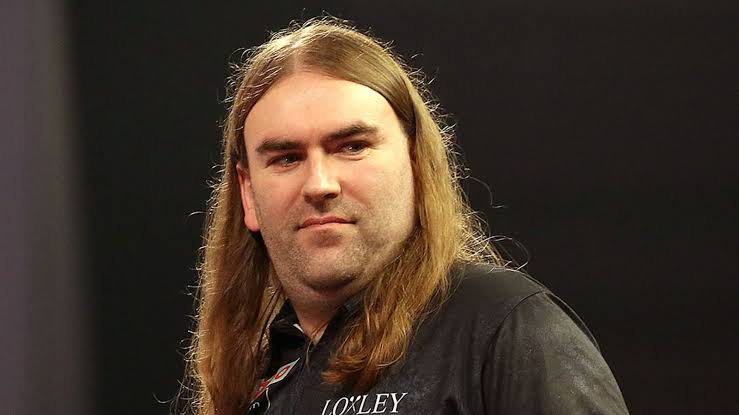
Ryan Searle might not attract the same headlines as Luke Littler, but his performance at the Dutch Darts Championship has given darts fans something worth talking about.
While Littler’s ongoing problems with hostile Dutch crowds have become one of the sport’s biggest talking points, Searle walked into a difficult atmosphere, kept his focus and knocked out home favourite Dirk van Duijvenbode in a deciding leg.
And honestly, Searle deserves far more credit for what he achieved.
The Englishman won 6-5 in Maastricht despite the whistles and vocal support for his opponent. Referee Kirk Bevins even had to intervene during the contest, but Searle refused to let the atmosphere dictate the outcome.
His response was revealing. Rather than treating the crowd as an obstacle he could not overcome, he used the noise to sharpen his concentration.
That is precisely why his performance deserves attention, especially with Luke Littler continuing to face questions about how he handles hostile supporters.
Could Searle have just demonstrated a quality that separates good players from genuine sporting greats?
Ryan Searle turned hostility into motivation
Searle’s victory was not simply a case of an English player beating a Dutch opponent in front of an unfriendly crowd.
The 38-year-old had to survive a tense contest against Van Duijvenbode, who was determined to take advantage of his home support. Searle eventually held his nerve in the deciding 11th leg to secure the win.
Even more impressively, he was playing with a new set of darts that he had used for only five days.
Speaking after the match, Searle explained that the crowd actually helped him focus more as he tried to quieten the spectators.
According to DartsNews, Searle accepted that professional players have to deal with difficult atmospheres and do their best.
That attitude deserves respect.
It would have been easy for Searle to complain about the whistles, blame the conditions or allow the frustration to affect his performance. Instead, he concentrated on the job in front of him and delivered when it mattered.
His approach offers a valuable lesson for any player who wants to compete consistently in front of passionate, unpredictable crowds.
Is Luke Littler facing a different kind of pressure?
Littler’s situation is complicated because his success has transformed him into one of darts’ biggest attractions.
When he first emerged as a teenage sensation, fans were fascinated by his extraordinary scoring and fearless performances. But winning changes the relationship between a sporting star and the public.
Some supporters will always cheer for the underdog. Others become increasingly eager to see a dominant champion lose.
Littler has experienced that change at an astonishingly young age.
During the World Series of Darts Finals in Amsterdam in September, he faced boos and repeated whistling in matches against Danny Noppert and Nathan Aspinall. The referee intervened during his dramatic 10-9 victory over Aspinall, and Littler subsequently threatened to boycott Dutch events if the treatment continued.
He has now continued that absence by skipping the Dutch Darts Championship.
According to Sky Sports, darts legend Phil Taylor and promoter Barry Hearn have both offered Littler advice about learning to deal with boos.
That tells us something important: handling the crowd is becoming part of Littler’s challenge as a leading player.
But should we really compare his response with Searle’s and conclude that one has greater mental strength than the other?
Not necessarily.
Searle’s performance deserves praise, but it would be unfair to declare Littler mentally weak simply because he has publicly expressed frustration. Both players face different circumstances, and neither should be judged on a single reaction.
Nevertheless, Searle has shown that a difficult atmosphere does not have to become the main story.
The uncomfortable truth Littler’s critics need to hear
Here is where I believe some darts fans are getting this debate completely wrong.
There is a growing temptation to treat Littler’s frustration as evidence that he cannot handle pressure. That argument is far too simplistic.
Littler has already won enormous matches under intense pressure. His 10-9 victory over Aspinall in Amsterdam, despite the hostile atmosphere, is evidence that he can still produce when the stakes are high.
You cannot fairly describe a player as incapable of handling pressure when he has just survived a deciding-leg thriller in those conditions.
At the same time, Searle deserves recognition for showing a different response to a similar type of challenge.
The lesson is not that Littler should stop speaking out. It is that he could benefit from finding ways to prevent hostile supporters from becoming part of his competitive battle.
Imagine Littler returning to a hostile Dutch arena, ignoring every attempt to provoke him and producing a brilliant performance. There would be no argument about whether the crowd had affected him. The darts would provide the answer.
That would be a powerful statement from the world champion.
However, supporters who deliberately whistle during a player’s throw should not escape criticism just because the player manages to win. Darts requires concentration, and referees should not have to repeatedly intervene to maintain basic standards of fair competition.
Mental strength should not become an excuse for poor spectator behaviour.
Why Ryan Searle deserves more recognition
Searle may not command the same attention as Littler, but his performance showed the value of composure, determination and adaptability.
He changed his equipment shortly before the tournament, faced a partisan crowd and still found a way to win a match that went down to the final leg.
That is the kind of performance that deserves more attention than it sometimes receives.
Too often, darts coverage revolves around the biggest names, the loudest controversies and the most dramatic reactions. Meanwhile, players who quietly demonstrate resilience can be overlooked.
Searle’s victory deserves to be discussed on its own merits, not merely as a comparison with Littler.
And yet, the comparison is difficult to ignore.
Littler is the sport’s biggest young superstar, but he is also discovering that fame brings uncomfortable challenges. Searle has offered a timely example of how a professional can respond when the atmosphere turns against him.
Whether Littler chooses to learn from that example is another question.
Littler can learn from Searle without accepting abuse
Ultimately, Ryan Searle deserves enormous credit for turning a difficult atmosphere into motivation and defeating Van Duijvenbode in front of his own supporters.
Littler, meanwhile, has every right to expect referees and organisers to protect players from deliberate interference.
Those positions are not contradictory.
The world champion can continue speaking out against unacceptable behaviour while also developing a calmer, more detached response to hostile crowds. Searle’s performance provides an example of what that composure can look like.
Perhaps the biggest lesson is that mental strength does not mean pretending the pressure does not exist. It means finding a way to perform despite it.
Searle did exactly that in Maastricht.
Now the question is whether Littler can turn his own crowd controversy into an opportunity to show the same composure.
Do you think Ryan Searle deserves more credit for his mental strength, or are fans being too harsh on Luke Littler for standing up to hostile crowds?