
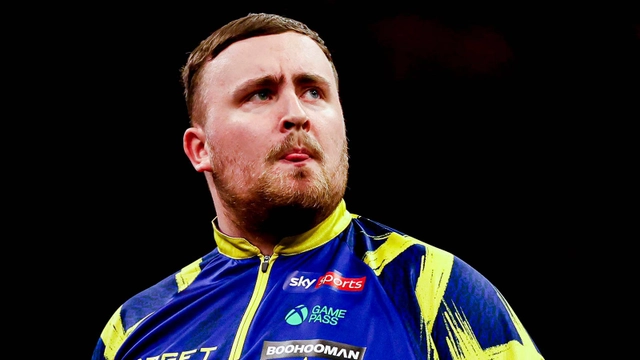
Luke Littler Hits Back at Rotterdam Crowd With Pointed Dig After Hostile Reception
Luke Littler has never been a player who needs much encouragement to produce something special on the darts stage. But in Rotterdam, the two-time reigning world champion discovered that even his extraordinary talent could not win over an entire arena.
The teenage sensation found himself at the centre of an uncomfortable atmosphere during Night 11 of the 2026 Premier League Darts campaign, with Dutch supporters making their feelings clear following his recent confrontation with Gian van Veen.
However, Littler refused to allow the hostile reception to derail his evening. Instead, he delivered another impressive performance, reached the final and later made his feelings known with a pointed message that suggested he was not particularly impressed with what he had experienced.
And while he ultimately missed out on the nightly title, there was plenty for darts fans to discuss beyond the result.
Why Rotterdam Turned Against Luke Littler
The tension surrounding Littler’s appearance in Rotterdam had been building for weeks, with his disagreement with Dutch star Gian van Veen providing the background.
The two players had clashed during Night Nine of the Premier League in Manchester on April 2. Their quarter-final encounter became heated after Van Veen missed two match darts, with the Dutchman believing Littler had celebrated towards him.
Van Veen subsequently criticised the teenager’s behaviour, while Littler offered his own explanation, insisting that his gesture had been directed towards his girlfriend, Faith, and her father.
The incident generated considerable discussion among darts supporters, particularly in the Netherlands, where Van Veen enjoys strong backing.
Consequently, Littler was always likely to face a difficult reception when he travelled to Rotterdam.
And that prediction proved correct.
The crowd began booing when Littler appeared on the big screen, with his walk-on receiving an especially hostile response. The jeers continued throughout the evening, including whenever he missed important doubles or trebles.
It was hardly the sort of welcome any visiting player would want, particularly when competing in a tournament where concentration is everything.
Littler Delivers His Response on the Oche
Despite the hostility, Littler showed exactly why he remains one of the most dangerous players in professional darts.
He opened his evening with a 6-3 victory over Gerwyn Price before producing another impressive performance to edge past Luke Humphries 6-5 in the semi-final.
The most entertaining moment came during his clash with Humphries.
After checking out 75 to level the match at 2-2, Littler turned towards sections of the crowd and appeared to signal for them to calm down. He then added some extra showmanship with his darts, seemingly embracing the atmosphere rather than allowing it to intimidate him.
It was a fascinating response from a player who had previously suggested he would not react to the supporters.
Sky Sports commentator Wayne Mardle noticed the change immediately, saying:
“Littler said he will not react [to the crowd], but he has just reacted there – and they don’t like it!”
Mardle added:
“I think he’s had enough of not reacting. He is strutting and really giving it now.”
There is something particularly interesting about that response. Littler is at his most dangerous when he plays with confidence and swagger, and the Rotterdam supporters arguably gave him another reason to demonstrate his personality.
However, there is also a difference between enjoying the atmosphere and allowing hostile supporters to influence your concentration.
For Littler, the important thing was that he continued winning.
Jonny Clayton Delivers the Final Blow
Unfortunately for Littler, his impressive run eventually came to an end in the final against Jonny Clayton.
The Welshman had already established himself as one of the strongest performers in the 2026 Premier League campaign, and Rotterdam provided another opportunity to demonstrate his quality.
Littler actually started the final brilliantly, taking the opening two legs and threatening to finish the evening with a statement victory.
However, Clayton recovered and eventually secured a 6-4 win.
It was Clayton’s fourth nightly victory of the campaign and his second consecutive triumph after winning in Brighton the previous week.
The result extended his advantage over Littler to five points at the top of the Premier League standings.
Nevertheless, Littler still collected three valuable points from the evening, meaning Rotterdam was far from a complete disappointment.
Clayton was also generous in his assessment of the teenager after their final.
“I’ve got total respect for Luke. He’s absolutely amazing.”
He continued:
“This guy has got years ahead of him, an amazing darts player – and he’s shown us all the level we need to be to beat him.”
Those comments were significant because they demonstrated that the hostility coming from sections of the crowd was not necessarily shared by the players competing against Littler.
Clayton understood the challenge of playing against someone of Littler’s ability and clearly appreciated the standard he brings to the sport.
Littler’s Instagram Message Had a Point
The biggest talking point after the Rotterdam final was arguably Littler’s response on social media.
Rather than launching into a lengthy criticism of the Dutch supporters, the teenager chose a relatively short message.
“To play in them circumstances, I’ll take three more points on the board,” he wrote on his Instagram story.
He also congratulated Clayton, adding:
“Well played Jonny Clayton Liverpool next week.”
However, another post attracted particular attention.
After repeating his congratulatory message to Clayton, Littler simply added:
“Thanks Rotterdam.”
It was a pointed way of signing off after an evening in which he had received such a hostile reception.
There was no need for a lengthy argument or an angry statement. Those two words were enough to communicate his feelings.
Personally, I think Littler handled the situation reasonably well. He acknowledged the atmosphere, got on with his job and still managed to collect important points.
However, it would be wrong to suggest that supporters should never express their disappointment or cheer against a particular player.
Darts has always benefited from passionate crowds, and that atmosphere is one of the reasons the sport has become such an entertaining spectacle.
But there should surely be a line between supporting your favourite and deliberately attempting to disrupt an opponent while they are throwing.
That distinction matters.
The Rotterdam Incident Was Part of a Bigger Problem
What made the Rotterdam reception particularly interesting was that it was not an isolated incident.
Littler had already experienced hostile reactions at several tournaments during the 2026 campaign.
His disagreement with Van Veen in Manchester had changed the atmosphere around him, while his status as the sport’s biggest attraction also made him an obvious target for supporters who wanted to see somebody else win.
PDC chief executive Matt Porter had also acknowledged that the teenager had been dealing with a difficult relationship with sections of the crowd.
And the situation became more serious later in the Premier League season.
In May, Littler admitted that the repeated booing had affected him emotionally and that he had even considered quitting the competition.
Speaking after winning the Premier League title, he revealed that he had told his partner Faith:
“I don’t want to do it anymore, just the crowd every week.”
That admission showed that the Rotterdam incident was about more than a few unpleasant moments during a darts match. The constant hostility had started taking an emotional toll.
Nevertheless, Littler finished the campaign by winning the Premier League title for the second time, defeating Humphries in a memorable final.
The issue resurfaced in September when Littler was again booed in Amsterdam during the World Series of Darts Finals.
After beating Nathan Aspinall 10-9, he even threatened to avoid future European Tour events in the Netherlands if the treatment continued.
That development demonstrated that the Rotterdam reception had not been the end of the story.
Can Littler Turn the Hostility Into Motivation?
There is no question that Littler has the ability to silence hostile supporters with his performances.
He has already demonstrated that he can win major tournaments under enormous pressure, and his achievements at such a young age suggest that he has plenty more success ahead.
However, the bigger challenge is finding the right balance between entertaining supporters and protecting his own concentration.
His personality is part of what makes him such a fascinating player. The celebrations, confidence and occasional exchanges with opponents all contribute to his appeal.
But he also needs to understand that not every crowd will support him, particularly when he is competing against popular local players.
For now, Littler has every reason to remain focused on winning trophies rather than becoming distracted by those who want to see him lose.
And perhaps that is the biggest message from Rotterdam.
He walked into an arena where thousands of supporters appeared determined to make life difficult for him, reached the final anyway and left with valuable points.
Clayton got the trophy, but Littler certainly gave the Rotterdam crowd something to remember.
What do you think? Were the Dutch supporters justified in booing Littler after his disagreement with Van Veen, or did they go too far?