
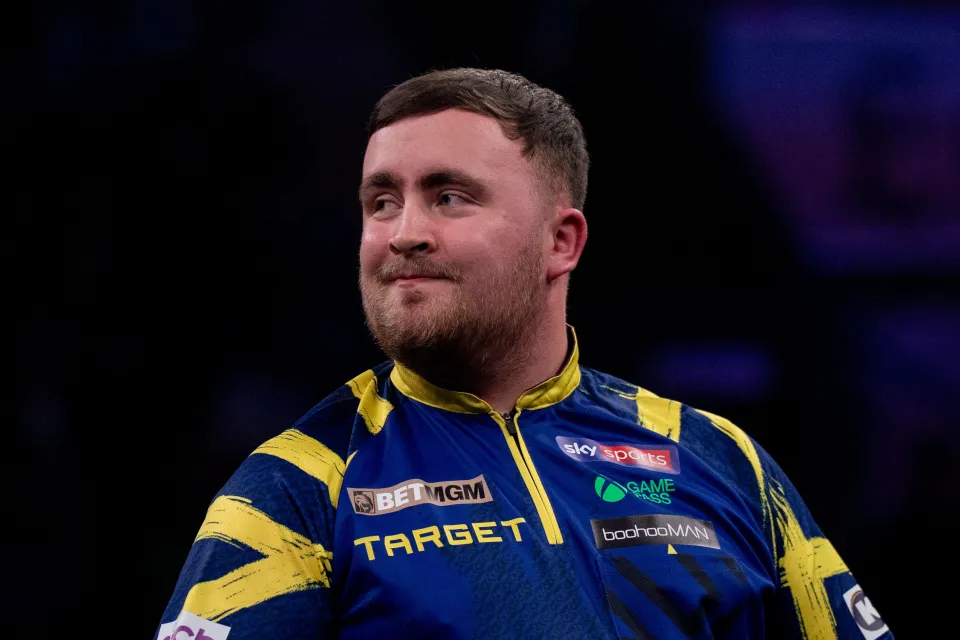
In the high-octane realm of professional darts, where precision meets pandemonium and every dart can ignite euphoria or heartbreak, 19-year-old sensation Luke Littler continues to dominate headlines and scoreboards alike. Nicknamed “The Nuke” for his explosive talent, the world number one has transformed the sport into his personal playground, stacking major victories with relentless consistency. Yet, as his trophy cabinet overflows, a surprising chorus of discontent has emerged from parts of the fanbase. Some spectators claim his near-unbeatable run is stripping the game of suspense, branding matches as predictable and even “boring.” Darts experts and former pros are quick to dismiss these criticisms as misguided, arguing that Littler’s supremacy mirrors the most captivating eras in other sports—like Manchester City’s reign in the Premier League—and is actually elevating the entire competition.
Now 19, Littler has already secured back-to-back PDC World Championship titles, a feat that cements his place among the greats. His unbeaten streak spans an remarkable 30 major and European Tour events, with his most recent premier tournament loss dating back to October at the European Championship. Since then, he’s collected silverware at a ferocious pace, turning what was once a wide-open battlefield into a masterclass in excellence. This dominance has fans divided: while many revel in witnessing history unfold, others lament the lack of frequent upsets on social media and in arena chatter.
A former professional offered a pointed rebuttal to the naysayers. “I’m seeing one word regularly associated with Luke Littler most of the time in a playing capacity,” he noted. “It is either ‘champion’ or ‘winner.’ Across social media now, I am starting to see a lot of comments saying ‘boring.’ It’s quite interesting because we are getting those two Lukes who dominated the sport the last two years now not really picking up anything in the Premier League. Which kind of negates the point it is boring, which, by the way, I 100 per cent don’t agree with. That Luke Littler winning is boring. I like having the team to beat. I liked having Man City in the Premier League the last few years. I like having the man, the team. Like the women’s series when Beau Greaves gets beat. There is your headline. There is your story.”
The Manchester City analogy resonates deeply. During City’s peak under Pep Guardiola, their clinical dominance didn’t dull the Premier League—it intensified it. Rivals raised their standards, underdog stories multiplied, and the pursuit of toppling the giants became the season’s defining narrative. Littler’s era delivers the same thrill in darts: he serves as the ultimate benchmark, spurring challengers to dig deeper and create compelling rivalries. True greatness, proponents insist, lies not in perpetual chaos but in a star whose brilliance compels others to evolve.
Another pundit dismantled the “boring” label with clear-eyed analysis. “Luke Littler is not boring,” he asserted. “The opposition, apart from Gerwyn Price, when they come up against Luke Littler, they just can’t handle it. They fade away and fizzle out. They just don’t play their best game. We just said about Gary Anderson averaging 11 points less against him. It probably is boring that he wins them. But if other people put up a fight against him and play their best darts, they can match it. It is not like he is averaging 125 and people are averaging 110. They are just not able to match his performances. He has a lot of good timing as well, does Luke Littler. At the UK Open, I was like, how has he not got beat there? What does it take to beat Luke Littler? We saw it last night with Luke Humphries, but again, it wasn’t that much of an important game. If it was, I think a switch would have been flipped.”
These insights spotlight the core dynamic: Littler’s opponents often wilt under his pressure, but when they rise to the occasion—like Humphries’ 6-5 semi-final win over him in Nottingham—the sport sparkles. In crucial moments, Littler elevates further, flipping an internal switch that turns close calls into decisive triumphs.
Fresh off defending his UK Open title with a commanding 11-7 final win over James Wade in Minehead, Littler remains in peak form. In the 2026 Premier League Darts, he’s surged into strong contention. After claiming Night Five in Cardiff with a stellar performance—beating Jonny Clayton 6-4 in the final—he sits second in the table, trailing leader Jonny Clayton by eight points following Night Six in Nottingham. There, Humphries edged him in the semis before Clayton crushed Humphries 6-1 in the final to extend his advantage. This Thursday in Dublin, Littler faces Stephen Bunting, a matchup brimming with potential as he aims to narrow the gap and build momentum toward the playoffs.
Arenas pulse with energy whenever Littler steps up, boosting viewership and injecting vitality into darts. His dominance echoes legends like Phil Taylor and Michael van Gerwen at their zenith—periods that propelled the sport forward rather than held it back. Far from draining excitement, Littler’s run fosters gripping pursuits, underdog heroics, and the raw thrill of watching a prodigy chase immortality while the field scrambles to keep pace.
Critics calling his success “boring” overlook the bigger story: eras of transcendent talent are the fuel for legends. Embrace the chase, because in darts—just as in football—the spectacle of a giant striding ahead, with challengers rising to meet him, is pure drama. With Littler still a teenager and years of brilliance ahead, the oche promises endless fireworks. The excitement isn’t fading—it’s only building toward something extraordinary.
Leave a Reply