
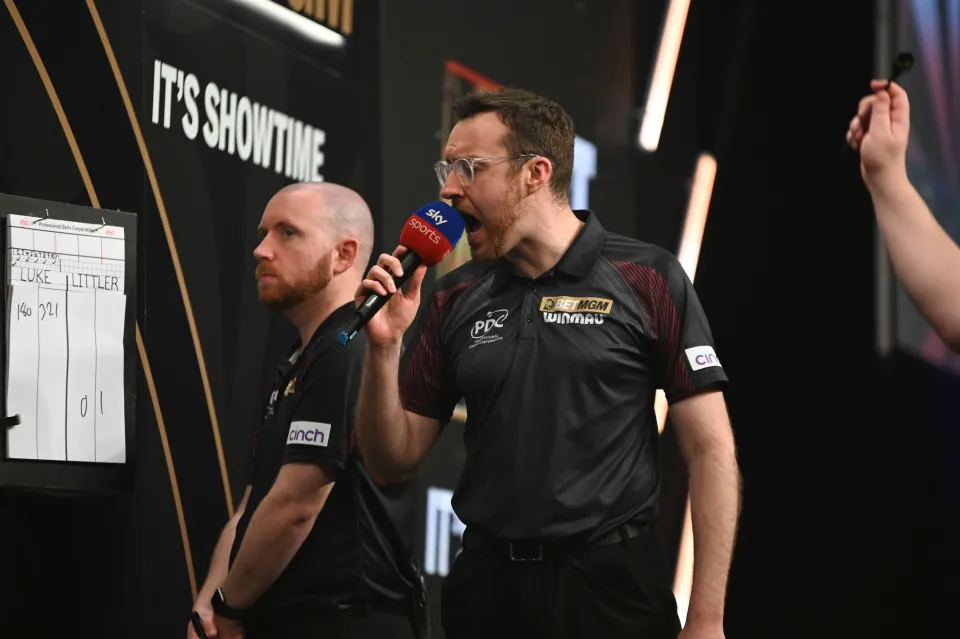
The tension inside the Glaspalast arena in Sindelfingen, Germany, reached boiling point during the second round of the European Darts Grand Prix. What began as a high-stakes showdown between two powerhouse players quickly became overshadowed by unruly crowd behavior that threatened to spoil the spectacle. Persistent whistling and jeering from sections of the audience created a disruptive atmosphere, forcing referee Huw Ware to take decisive action in a moment that has since sparked widespread discussion across the darts world.
The match pitted Dave Chisnall against Gerwyn Price, a contest brimming with competitive intensity and skill. At that stage, Chisnall held a narrow 3-2 lead, but the growing noise from the stands was beginning to distract both competitors and undermine the focus required for elite-level darts. Whistling echoed through the venue at critical moments, timing itself awkwardly with throws and adding an unwelcome layer of chaos to the proceedings. Ware, a highly experienced PDC official known for his no-nonsense approach, had clearly reached his limit.
In a dramatic intervention, the referee strode to the edge of the stage, dropped to one knee for added emphasis, and issued a firm directive to security staff. His words cut sharply through the arena. Ladies and Gentlemen I just told security if you carry on whistling please do, but you’ll be thrown out the venue immediately. The savage threat left no ambiguity. It was a bold, authoritative stand designed to restore order instantly and allow the players to concentrate on the darts rather than battling external interference. Ware then returned to his position without further delay, and the match continued, but the incident had already injected an extra dose of drama into the evening.
Price ultimately emerged victorious, battling back to claim a 6-4 win over Chisnall. The Welsh star delivered a commanding performance, posting an impressive average of 99.71 while slamming home five maximum 180s. His ability to rise above the distractions and maintain composure under pressure highlighted the mental toughness demanded at this level of the sport. For Chisnall, the defeat was disappointing, yet the real headlines from the night centered on the referee’s intervention and the ongoing battle against disruptive crowd elements.
This was not the first time Huw Ware had found himself addressing similar issues. Just weeks earlier at the European Darts Trophy in Göttingen, he had confronted crowd noise during a second-round thriller between Stephen Bunting and local favorite Niko Springer. In that deciding leg, Ware had paused proceedings to appeal directly to the audience. I’ve asked politely once and I’ll say it politely, shut up please. We’re trying to have a game of darts up here, make this sound better please. His measured yet firm request helped calm the situation then, much as his stronger warning did now in Sindelfingen. These repeated incidents point to a pattern of vocal, sometimes overzealous support in German venues, where passionate home crowds bring energy but occasionally cross into territory that affects play.
Darts has enjoyed remarkable global growth in recent years, drawing larger audiences and bigger prize funds than ever before. European Tour events like the Grand Prix, held from April 17 to 19 in 2026, showcase top talent in intimate yet raucous settings that amplify the sport’s unique atmosphere. Chants, cheers, and lively reactions are part of what makes darts so entertaining. However, targeted whistling and jeering at key moments represent a different challenge. They can break a player’s rhythm, particularly during the delicate setup for a throw, and risk turning matches into contests of endurance rather than pure skill.
The PDC and its officials continue to grapple with this evolving issue. Earlier in the season, concerns about crowd behavior had already prompted warnings from darts chiefs, who described certain trends as a scary problem that could threaten the sport’s incredible boom. Players themselves have spoken out on multiple occasions. Luke Littler, the young world number one, has faced hostile receptions in various away venues, including boos and whistles that greet his entrance and key shots. Despite the pressure, he has shown remarkable maturity, often brushing off the negativity and focusing on his game. His poise serves as an example to others navigating similar situations.
Stephen Bunting, who experienced the Göttingen disruption, later expressed genuine hurt over how a minority of fans had impacted the match. He argued that booing or whistling during important moments crosses an important line. To boo and whistle at important times through any match isn’t acceptable and if you want to do that then go to a football match. Such comments reflect a broader sentiment among professionals who dedicate their lives to mastering the sport and expect a fair environment in return.
Ware’s latest intervention earned appreciation from many observers for its clarity and effectiveness. By involving security and spelling out immediate consequences, he prevented the situation from escalating while keeping the match flowing. The referee’s role extends far beyond calling scores and enforcing rules. In moments like these, officials become protectors of the game’s integrity, ensuring that talent and preparation determine outcomes rather than external noise.
Following the win, Price advanced to face Chris Dobey in the next round, maintaining his strong form on the European Tour. Other results across the event delivered plenty of excitement, with stars like Michael van Gerwen progressing and delivering memorable moments on stage. The Glaspalast crowd, despite the whistling controversy, contributed to the vibrant backdrop that makes these tournaments special for fans and players alike.
As the sport continues its upward trajectory, balancing passionate atmospheres with respectful conduct remains essential. Most supporters attend to enjoy high-quality darts and cheer their favorites in a positive way. The minority engaging in disruptive whistling, however, risks spoiling the experience for everyone, including fellow fans who simply want to witness thrilling competition. Solutions under discussion include clearer pre-match announcements, enhanced security measures, and ongoing dialogue between the PDC, players, and venue organizers.
In the end, the dramatic scenes at the European Darts Grand Prix served as a reminder of darts’ raw emotional appeal. Huw Ware’s firm stand ensured the focus returned swiftly to the oche, where it belonged. Price’s victory and the high-standard darts on display proved that even in testing conditions, the best players can deliver excellence. The incident may have added an edge of controversy, but it also sparked valuable conversations about maintaining the sport’s positive momentum.
Looking ahead, events like the European Grand Prix highlight both the challenges and the enormous potential of professional darts. With growing international interest and passionate fanbases, the goal is to nurture environments where skill shines brightest. Referees like Ware play a crucial part in that mission, stepping up when needed to safeguard the spectacle. As the tournament progressed through its later stages, the hope remained that future matches would be remembered for breathtaking 180s, dramatic finishes, and sporting excellence rather than distractions from the stands.
The Glaspalast ultimately hosted another memorable chapter in the European Tour calendar, blending intense competition with the lively energy that defines darts. While Ware’s savage threat to the whistling crowd grabbed attention, it also reinforced an important principle: the game deserves respect from all involved. Players, officials, and fans each have a role in preserving the magic that continues to draw millions to the sport worldwide. With strong performances lighting up the board and decisive actions keeping order, the European Darts Grand Prix delivered plenty to celebrate despite the brief storm in the stands.
Leave a Reply