
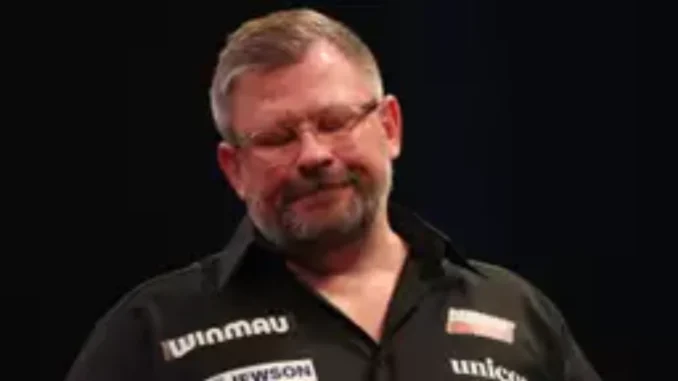
James Wade has once again found himself at the centre of attention, but this time the spotlight extends beyond his performance on the oche. His opening match at the Winmau World Masters delivered not only a gripping contest but also a wave of controversy that has sparked debate across the darts world.
Wade, famously known as “The Machine,” edged past Madars Razma in a tightly contested first-round encounter in Milton Keynes. The match itself was a classic display of tension and resilience, with both players trading legs and momentum throughout. It ultimately went the distance, requiring a deciding leg before Wade sealed a narrow 3–2 victory. For many, it was a reminder of Wade’s enduring ability to grind out results under pressure, a hallmark of his long and successful career.
However, while the match itself was compelling, the events that followed quickly took centre stage. Shortly after the contest concluded, Razma took to social media to express his disappointment, raising concerns about both the crowd’s behaviour and Wade’s conduct during and after the match. His comments, though measured, carried a clear sense of frustration and emotional weight.
Razma suggested that he felt disrespected following the defeat, pointing to what he described as a lacklustre handshake on stage and a cold interaction backstage. While he stopped short of making any direct accusations, the implication was clear: the experience had left him feeling undervalued and uncomfortable. He also referenced the crowd’s reaction, questioning whether the level of negativity he received was justified.
In his statement, Razma acknowledged his position within the sport, noting that he represents a smaller darts nation and is not among its biggest stars. Even so, he questioned whether that should result in a different standard of treatment, particularly in terms of crowd support and player interactions. His words resonated with many fans who believe that respect should be universal, regardless of a player’s ranking or profile.
Despite his disappointment, Razma made it clear that he was determined to move forward. He pointed ahead to upcoming tournaments, particularly events in Germany, as his next focus. His response struck a balance between honesty and professionalism, ensuring that while his concerns were heard, they did not overshadow his commitment to the sport.
The incident has since ignited widespread discussion within the darts community. Questions around sportsmanship, respect, and the role of crowd behaviour have come to the forefront, highlighting the evolving dynamics of modern darts. As the sport continues to grow in popularity, the atmosphere at major events has become increasingly intense, with louder and more partisan crowds adding to the pressure players face.
For Wade, the situation has added another layer to his campaign at the World Masters. In his own post-match comments, he chose to focus primarily on the result and its significance. The victory marked an important step for him as he looks to rebuild confidence and momentum following a difficult end to the previous season.
Wade openly admitted that the latter stages of his 2025 campaign were below his expectations. Early exits in key tournaments, including the World Championship, combined with the disappointment of not being selected for the Premier League, left him with a sense of unfinished business. Despite those setbacks, he maintained that his overall performances throughout the year were strong and deserving of recognition.
The omission from the Premier League, in particular, appears to have had a lasting impact. Wade had previously shared his feelings on the matter, expressing both frustration and pride. He felt that his consistency over the season had not been fully acknowledged, a sentiment echoed by many fans who value experience and reliability alongside emerging talent.
At the same time, the controversy involving Razma has reignited conversations about Wade’s reputation as one of the sport’s most uncompromising competitors. Over the course of his career, he has built a legacy defined by mental toughness, focus, and an unwavering determination to win. These qualities have been central to his success, enabling him to remain competitive at the highest level for many years.
Yet, those same traits have occasionally drawn criticism. In high-pressure situations, Wade’s intensity can be perceived as cold or overly aggressive, particularly when emotions run high. Supporters argue that this is simply the mindset required to succeed in elite sport, where margins are fine and composure is everything. Critics, however, suggest that moments like this highlight the need for a clearer balance between competitiveness and sportsmanship.
For Razma, the episode has also shone a light on the broader challenges faced by players from smaller darts nations. Competing against established names in front of large, often partisan crowds can be a daunting experience. Recognition and support are not always evenly distributed, and players can sometimes feel isolated in high-profile environments.
His comments have prompted calls from sections of the fanbase for greater awareness and respect. Many believe that as darts continues to expand globally, it is important to ensure that all competitors feel valued and supported, regardless of their background or ranking. The growth of the sport depends not only on its biggest stars but also on the diversity and inclusivity of its field.
As the World Masters progresses, attention will remain firmly on Wade. His performances on the oche will be closely scrutinized, but so too will his interactions off it. Whether this controversy fades quickly or continues to follow him throughout the tournament remains to be seen.
What is certain is that this episode has added an extra layer of intrigue to his campaign. Every match will now carry additional context, with fans and analysts watching not just for results but for signs of how Wade responds to the scrutiny. His ability to channel the situation positively could prove crucial in determining how his tournament unfolds.
More broadly, the incident has reignited an important conversation about the nature of professional darts. The balance between passion, pressure, and professionalism is becoming increasingly delicate as the sport grows. Players are expected to perform at the highest level while also navigating complex emotional and social dynamics, both on and off the stage.
In that sense, the clash between Wade and Razma may serve as a reflection of the sport’s current evolution. It highlights the challenges faced by players, the influence of crowds, and the fine line between competitive edge and mutual respect. As darts continues to develop, these issues are likely to remain central to its narrative.
For now, Wade’s journey at the World Masters continues under heightened scrutiny. Whether he can let his darts do the talking or whether the controversy lingers will shape not only his tournament but also the broader discussion surrounding his place in the modern game.
Leave a Reply