
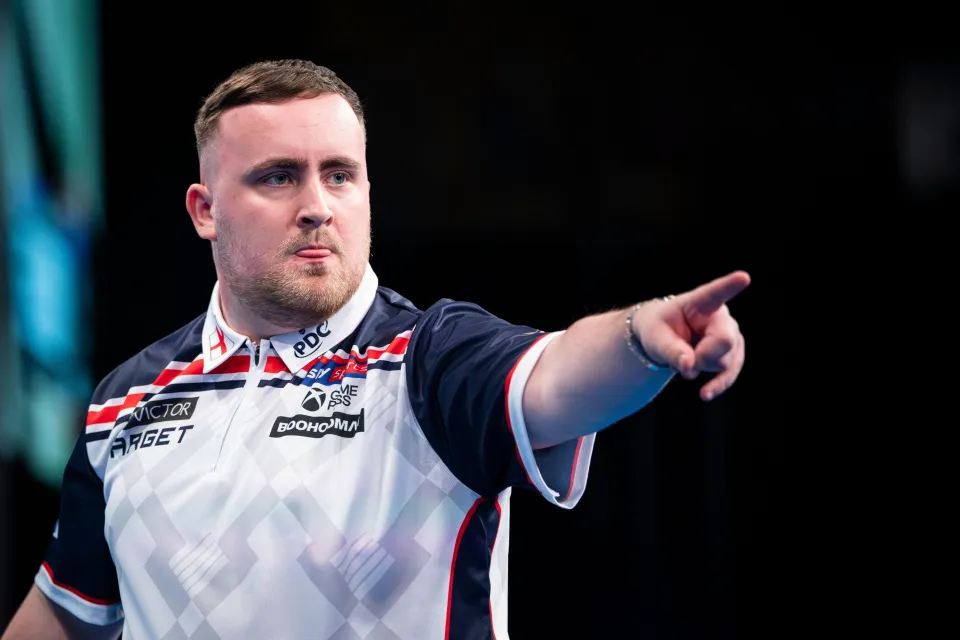
The US Darts Masters is back, and once again all eyes are heading to New York — where Luke Littler arrives not just as a rising star, but as the man everyone expects to beat.
But that expectation is exactly what makes this event so dangerous.
Because the US Darts Masters at Madison Square Garden isn’t a slow build or a comfortable ranking grind. It’s a fast, brutal knockout where one bad leg can end your week, no matter who you are or what you’ve won before.
Set for June 25–26, the 2026 edition brings together eight of the PDC’s biggest names and eight North American challengers, all fighting across a short, high-pressure format designed to punish slow starts and reward fearless finishing.
The structure is simple: best of 11 legs in the opening rounds, building towards a best-of-15 final. There’s no room for error, no second chances, and no hiding once the crowd in New York starts reacting to every dart.
For Luke Littler, this is becoming familiar territory — but also increasingly complicated.
He is no longer just “a young talent” or “a breakout story.” He is now the headline act. The player fans expect to win. The name opponents circle on the draw sheet. And the man every broadcaster leans on to drive attention.
That changes everything.
Because in darts, hype doesn’t win matches. Timing does. Composure does. And the ability to survive momentum swings in front of a loud, global audience matters more than raw scoring power alone.
What makes Littler so fascinating is that he’s already proven he belongs at the very top of the sport. But staying there is a completely different challenge — especially in events like this, where established champions and dangerous outsiders collide in a format that refuses to respect reputations.
Luke Humphries, Gerwyn Price, and other top names will see this as an opportunity just as much as Littler does. They know that in a short-format tournament, the “best player” on paper often isn’t the one lifting the trophy. It’s the one who handles the pressure better on the day.
And Madison Square Garden adds another layer to that pressure.
It’s one of sport’s most famous venues, and darts has increasingly leaned into its atmosphere — loud, unpredictable, and emotionally charged. That environment can lift players into unforgettable performances, but it can just as easily break rhythm and expose nerves.
From my perspective, that’s why this tournament stands out compared to many others on the calendar. It doesn’t reward patience. It rewards nerve.
And Littler, whether people admit it or not, is still learning how to carry the weight of expectation that now follows him everywhere he goes. That’s not a criticism — it’s just the reality of becoming the face of a sport at such a young age.
The schedule is tightly packed into two days, meaning players have to switch from preparation to execution almost instantly. There’s no time to recover from a poor session or slowly build form across the week. You either arrive ready, or you’re gone early.
That intensity is what makes the US Darts Masters so compelling. It strips everything back to the basics: scoring power, finishing, and mental strength under pressure.
And in that kind of environment, anything can happen.
Personally, I think this event is less about whether Littler “should” win it, and more about what his performance says about where he is in his development. A title would reinforce the idea that he is already dominating across formats and continents. But even a deep run would still show he’s adapting to the unique pressure of international stage events.
What cannot be ignored is how quickly darts is evolving around him. The level across the PDC has risen sharply, and there are no easy matches anymore — especially in a condensed, knockout-heavy format like this.
That’s why tournaments in New York feel different. They don’t just test skill; they test identity. Who can handle being the favourite? Who thrives when everything is on the line? Who folds when the crowd swings against them?
Littler is at the centre of all those questions now.
And whether he lifts the trophy or not, the 2026 US Darts Masters will add another chapter to the growing story of a player who is no longer chasing a breakthrough — but trying to stay ahead of the sport itself.
Because in modern darts, getting to the top is hard.
Staying there might be even harder.