
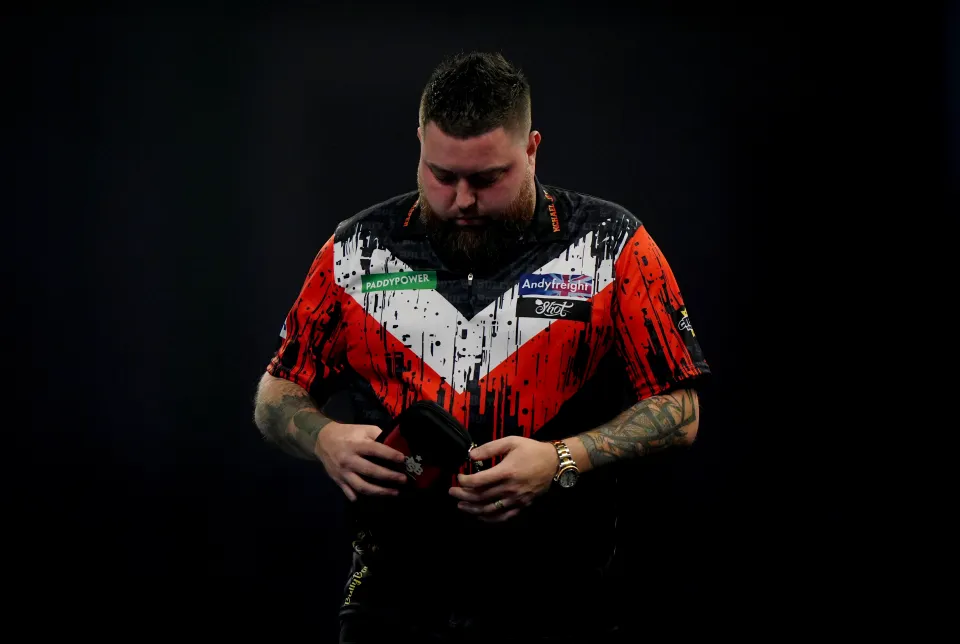
He was once the standard everyone else chased. Now he’s chasing survival on the rankings.
A former world darts champion has suffered a stunning fall from grace after dropping out of the PDC top 32 for the first time since 2013 — a brutal milestone that underlines just how quickly the sport can move on, even from its biggest names. What makes it even more striking is the timeline: just three years ago, he stood at the very summit of darts as world number one. Now, he finds himself on the outside looking in, no longer guaranteed the privileges that come with elite ranking status.
That kind of drop doesn’t happen overnight. It’s the result of years of fine margins swinging the wrong way — missed doubles in crucial legs, early exits in major tournaments, and the relentless rise of younger, hungrier competitors who refuse to slow down for anyone.
In darts, the rankings are unforgiving. There is no reputation buffer, no legacy protection. If the results don’t come, the numbers don’t lie. And for a player who once dominated stages and lifted the sport’s biggest trophies, falling out of the top 32 feels less like a dip and more like a shift in era.
What stands out most is how fast the landscape has changed. Not long ago, this player was being discussed as a consistent title contender, someone expected to remain in the elite conversation for years. But darts has entered a new phase — one defined by depth, youth, and relentless competition. The emergence of players like Luke Humphries and Luke Littler has raised the overall standard, pushing established names further down the pecking order simply by existing at an elite level week after week.
From my perspective, this isn’t just about decline — it’s about evolution. The sport has become more brutal at the top. Even solid performances are no longer enough to maintain status. You need consistency across every major event, every floor tournament, every televised stage. One bad weekend can cost ranking points, but a season of inconsistency can reshape a career entirely.
There’s also the psychological side that often gets overlooked. Once a player drops out of the elite bracket, everything changes. Draws become tougher earlier. Confidence takes hits in unexpected ways. Opponents no longer see a former world number one — they see someone beatable. And in professional darts, perception matters almost as much as performance.
Fans will inevitably debate whether this is the beginning of the end or just another chapter in a long career. Some will point to experience, saying a player of that calibre always has the ability to rebuild and fight back. Others will argue that modern darts is too competitive now for aging champions to simply “return” to the top tier without a major resurgence in form.
The truth probably sits somewhere in the middle. History shows that darts careers rarely end cleanly. They fade, they rebound, they surprise, and sometimes they redefine themselves in unexpected ways. A player dropping out of the top 32 doesn’t automatically mean they’re finished — but it does mean the safety net is gone.
What makes this moment particularly significant is the contrast with just a few years ago. Being world number one is the peak of the sport — a position that suggests dominance, control, and inevitability. To move from that status to outside the top 32 in such a short span is a reminder of how fragile sporting success can be.
It also raises a broader question about legacy in darts. How should fans remember players like this? Is it defined by the peak — the titles, the ranking, the moments of brilliance — or by the longer arc of decline that inevitably follows?
My view is that the peak should always matter more. Reaching world number one in darts is not luck; it is sustained excellence against the best in the world. But at the same time, the sport’s modern era doesn’t allow careers to rest on past achievements. Every season is effectively a reset.
There is still time for a comeback. Darts has seen enough revivals to know that form can return suddenly — sometimes after years of struggle. A couple of deep runs in majors can change everything again. The margins are that small.
But for now, the headline is unavoidable: a former world champion, once the best in the world, is no longer among the top 32. And in a sport built on precision and pressure, that drop will echo louder than most.
If anything, it’s a reminder that in darts, nobody stays at the top forever — no matter how high they once climbed.