
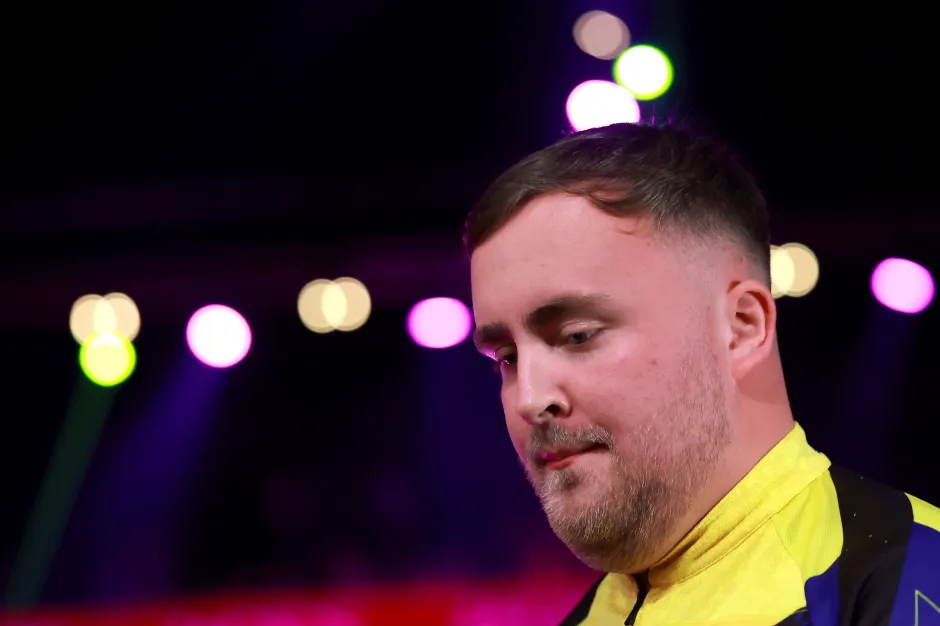
Barry Hearn has delivered a warning that could make the rest of the darts world sit up and take notice: Luke Littler might not have the next generation of players to worry about just yet, but they are coming.
The Matchroom chairman believes the extraordinary rise of the teenage superstar has inspired a new generation of young players who could eventually challenge his position at the top of the sport.
And two teenagers have already caught the attention of Hearn. Mitchell Lawrie and Archie Self are among the names being watched closely, with both youngsters showing why the future of professional darts could be even more competitive than it is today.
Barry Hearn identifies the next generation of darts stars
Hearn believes there is a growing group of teenage players preparing to make their mark on the professional circuit.
As many as a dozen young players are expected to pursue PDC Tour Cards at January’s Q-School, highlighting just how much interest has developed among the next generation.
That is an encouraging sign for darts, but it could also be a warning for established professionals.
Hearn has repeatedly spoken about the impact Littler has had on the sport, particularly among younger audiences. The 19-year-old has shown children around the world that it is possible to start playing darts seriously and dream of competing against the biggest names.
However, the interesting part is that Littler’s success could eventually create the very competition that makes his own career more difficult.
Mitchell Lawrie is one of the youngsters attracting attention. The 15-year-old has already established himself as a highly regarded name in youth darts, having reached a WDF World Championship final and become the WDF’s world number one.
Archie Self, meanwhile, is another teenager generating excitement. The 16-year-old became the youngest player to hit a televised nine-darter and has also enjoyed success in the MODUS Super Series.
Self has already qualified for the 2027 PDC World Championship, and Hearn believes he has the potential to earn a PDC Tour Card.
Those are impressive achievements for players still at the beginning of their careers.
Mitchell Lawrie and Archie Self could be names to remember
Lawrie’s progress is particularly interesting because he has already demonstrated that he can compete against experienced opposition.
Reaching a WDF World Championship final at just 15 is no ordinary achievement. Becoming the organisation’s world number one at that age makes his development even more impressive.
There is still a huge difference between succeeding in junior and WDF competitions and establishing yourself on the demanding PDC professional circuit. But Lawrie has given himself an excellent platform to build on.
Self’s story is equally exciting.
Becoming the youngest player to hit a televised nine-darter is the sort of achievement that immediately attracts attention. A perfect leg requires nine darts to complete 501, and even some of the most experienced professionals struggle to produce one on television.
His MODUS Super Series success and qualification for the 2027 World Championship suggest that he is already moving beyond simply being an exciting junior prospect.
The important thing now is how both players handle the next stage of their development.
Darts has produced plenty of talented youngsters who have struggled to translate early promise into consistent success at the highest level. Lawrie and Self will need patience, experience and the ability to perform under pressure if they are going to become genuine contenders.
Nevertheless, having two teenagers attracting this level of attention is another indication of how much the sport is changing.
Luke Littler has completely changed the picture
It is difficult to discuss the future of darts without mentioning Littler.
His breakthrough at the 2024 World Championship was one of the biggest sporting stories of that year. Reaching the final at just 16 before returning to win the title as a 17-year-old made him an international superstar.
Since then, he has continued collecting major trophies and establishing himself as the player everyone wants to beat.
Littler has won 30 PDC titles, including 14 major trophies and consecutive World Championship titles.
Those numbers are extraordinary for someone who is still only 19.
What makes Littler particularly dangerous is that he does not appear to be intimidated by the biggest occasions. Some players need years to become comfortable performing in front of thousands of spectators, but he has consistently demonstrated an ability to deliver when the pressure is highest.
His success has also changed expectations.
Before Littler arrived, a teenager becoming a serious contender against established professionals was considered an exceptional occurrence. Now, young players have a modern example of what is possible.
That is arguably his biggest contribution to the sport beyond the trophies.
He has made professional darts look like a realistic career option for children who might previously have considered it nothing more than a hobby.
Hearn has been warning established professionals for years
This is not the first time Hearn has spoken about the threat coming from younger players.
In a December 2024 interview with Sky Sports, he warned established professionals that they needed to rethink their approach because of the emerging generation.
“If I was what I call an existing top player, I would be going back to the dartboard and starting again, because they are going to be put under the cosh by these kids.”
Hearn also explained why younger competitors could be particularly difficult opponents.
“They’ve got used to their lifestyle, they’ve got used to their big cheques coming in and suddenly they’re playing someone who hasn’t got any fear.”
That is an interesting observation.
Established professionals have rankings to protect, sponsorship commitments and expectations to meet. Youngsters entering the professional game often have much less to lose.
They can play with freedom, take risks and put pressure on opponents who are expected to win.
Hearn has also described the emerging talent as a tsunami, suggesting that Littler’s arrival was only the beginning rather than a one-off phenomenon.
There is a strong argument that he could be right.
Darts is attracting more attention, prize money is increasing and the opportunities available to talented young players are becoming more appealing.
The professional game is no longer something youngsters necessarily have to wait until adulthood to pursue seriously.
The challenge for Littler is only going to get harder
For now, Littler remains the player everyone is chasing, but the arrival of more talented youngsters could eventually make his position much harder to maintain.
The interesting question is whether someone like Lawrie or Self can develop quickly enough to become a genuine rival while Littler is still dominating the biggest tournaments.
There is no guarantee either teenager will reach that level. However, the fact that Hearn is already highlighting their potential suggests they are worth watching.
Littler will also have to keep improving. Being the best young player in the world is one thing, but remaining at the top when several ambitious teenagers are developing their games is a completely different challenge.
His immediate focus will be the Grand Slam of Darts in Wolverhampton, running from November 14 to 22, where he will pursue a third consecutive title.
He will then turn his attention towards another World Championship campaign, beginning on December 11 at Alexandra Palace.
These tournaments will provide another opportunity to demonstrate why he remains the standard everyone else must try to reach.
But Hearn’s warning should not be dismissed. The next generation is already making progress, and the youngsters coming through could eventually create some fascinating rivalries.
Is Luke Littler about to face a new generation of rivals?
There is no doubt that Littler has transformed darts, but one of the most fascinating consequences of his success could be the emergence of players capable of challenging him.
Mitchell Lawrie and Archie Self are two teenagers with the potential to become important names in the sport. Their journeys are only beginning, and there is plenty of development still required before either can be considered a serious threat to Littler.
However, the direction of travel is clear. More youngsters are taking up darts, more talent is emerging and the competition is becoming increasingly interesting.
Littler should still be the favourite against almost anyone, but he cannot afford to assume that his position will remain unchallenged.
And perhaps that is exactly what darts needs.
The sport benefits when one superstar attracts millions of new fans, but it becomes even more exciting when genuine challengers arrive to test that superstar.
Do you think Mitchell Lawrie or Archie Self could eventually become serious rivals for Luke Littler, or will The Nuke remain untouchable for years to come? Share your thoughts.