
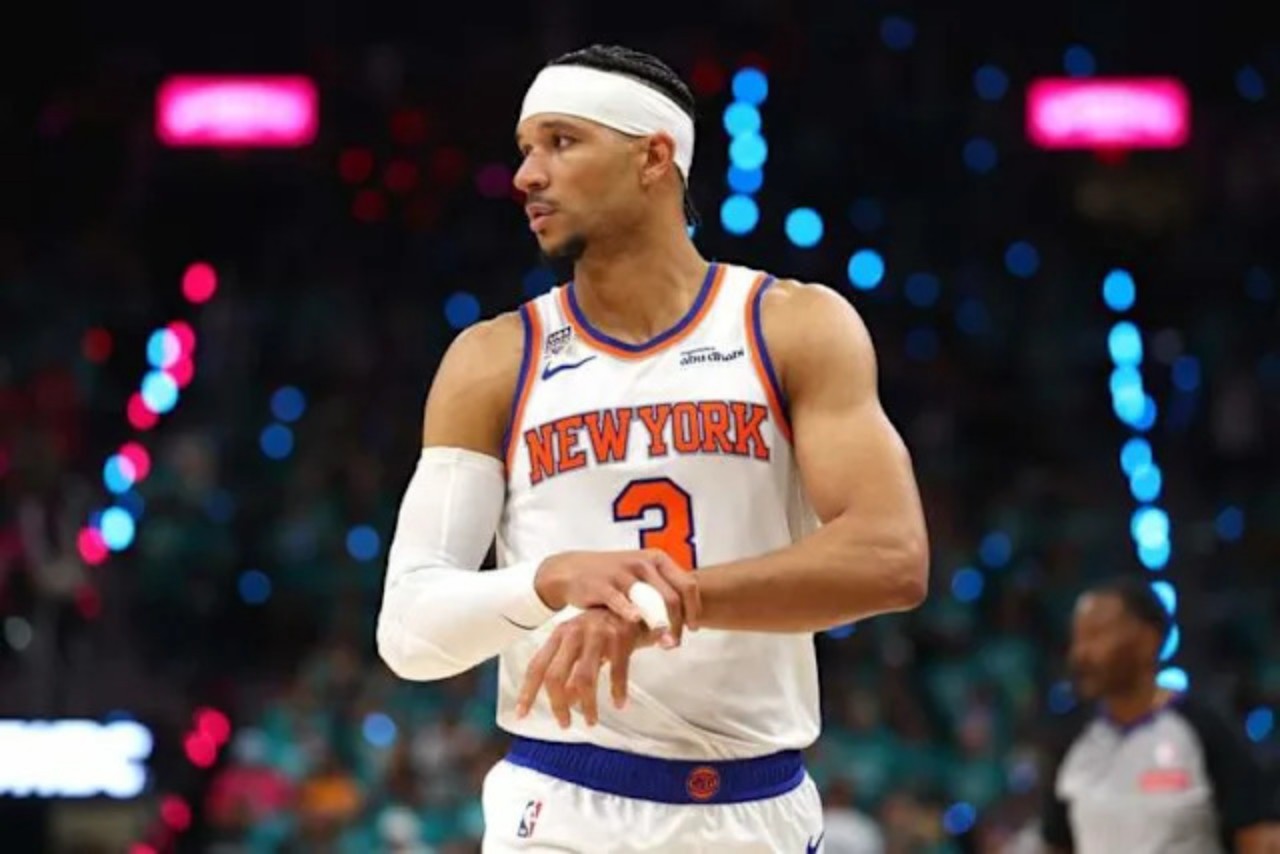
The New York Knicks’ return to the NBA Finals has brought back memories of the franchise’s golden hopes and long years of frustration, but it has also exposed a growing divide between the spectacle on the court and the reality in the stands. While the team battles for a championship on basketball’s biggest stage, one of its key players, Josh Hart, has raised concern about something happening far away from the hardwood: the escalating cost of being part of the moment.
Hart has openly expressed frustration that many of the Knicks’ most loyal supporters are being priced out of attending Finals games at Madison Square Garden, where demand has surged to historic levels. The arena, already one of the most iconic venues in global sport, has become a hotspot for record-breaking ticket prices as the Knicks’ deep playoff run has captured the imagination of fans across New York and beyond.
Speaking candidly about the situation, Hart acknowledged the emotional conflict that comes with it. “I wish the ticket prices weren’t as crazy as they are,” he said, reflecting a sentiment that has been echoed by many fans who have followed the Knicks through years of rebuilding, disappointment, and false dawns. His words cut through the excitement of the Finals run, drawing attention to a quieter but very real issue surrounding modern professional sports.
Hart also recognized the economic forces behind the spike, admitting that the market is driven by demand. “I understand that the prices are this high because people continue to pay them,” he added, pointing to the simple but powerful reality of supply and demand. As the Knicks advanced deeper into the postseason, anticipation grew rapidly, and with it came an explosion in resale values, pushing tickets into ranges that only a small fraction of fans can realistically afford.
At the heart of Hart’s comments is a broader concern about who gets to experience defining sporting moments in person. For decades, the Knicks have represented not just a basketball team, but a cultural institution rooted in New York’s identity. Madison Square Garden has hosted generations of fans who stuck with the team through highs and lows, from championship glory days to long stretches of mediocrity. Now, as the franchise finally returns to the NBA Finals, many of those same supporters are finding themselves locked out by soaring prices.
Reports surrounding ticket demand have highlighted just how extreme the situation has become. Courtside seats are reportedly reaching extraordinary figures, while even the cheapest available tickets are priced far beyond what the average fan can comfortably afford. The result is a Finals atmosphere that feels both electric and exclusive, where access has become as much a status symbol as the game itself.
Inside Madison Square Garden, the energy remains undeniable. The Knicks’ playoff run has reignited the city’s passion for basketball, with fans flooding the streets, gathering in bars, and turning New York into a city-wide celebration. The team’s success has created a sense of unity that stretches far beyond the arena walls. Yet, at the same time, the composition of the crowd inside the building tells a different story—one increasingly shaped by wealth, corporate allocations, and high-end resale buyers.
For Hart and his teammates, that contrast is hard to ignore. The Knicks have built their identity on grit, resilience, and a connection to their fan base. This season, that identity has been central to their success, with the team leaning heavily on the energy of a fan base that has waited decades for this moment. But the Finals stage has introduced an uncomfortable contradiction: a team that thrives on accessibility and emotional connection now performing in an environment where many of its core supporters cannot afford entry.
The issue is not unique to New York, but the scale of Madison Square Garden and the global appeal of the Knicks amplify it significantly. The Finals are one of the most in-demand events in sports, and in a city like New York—where tourism, celebrity presence, and corporate influence intersect—the pricing dynamics become even more intense.
Hart’s willingness to speak about the issue stands out in a league where players often avoid commenting on ticket economics. His remarks reflect a genuine connection to the fan base, particularly those who have supported him and the team through difficult seasons. For many Knicks fans, this Finals run represents more than just a competitive achievement—it is the culmination of years of waiting, hoping, and enduring disappointment.
That emotional weight makes the pricing issue even more sensitive. Season-ticket holders who have invested in the team for years are now competing with global buyers and secondary markets that move prices far beyond original face value. Younger fans, many of whom grew up watching the Knicks struggle, are also finding themselves priced out of witnessing history in person. The result is a Finals atmosphere that feels simultaneously communal and divided.
Still, outside the arena, the excitement remains overwhelming. New York has embraced the Knicks’ return to the Finals with full force, turning streets into gathering points for celebrations and watch parties. Massive screens, packed public spaces, and spontaneous fan gatherings have created a parallel experience for those unable to enter Madison Square Garden. In some ways, the city itself has become an extension of the arena, even if the official seats remain out of reach for many.
Inside the team, focus remains firmly on the championship chase. The Knicks have fought their way through a demanding postseason to reach this stage, and the opportunity to bring a title back to New York carries enormous significance. Yet Hart’s comments serve as a reminder that the story of this Finals run is not only about basketball, but also about the changing nature of access in modern sports.
As long as demand continues to soar, ticket prices are unlikely to fall. The Knicks’ success, combined with the global visibility of the NBA Finals, ensures that Madison Square Garden will remain one of the most expensive arenas in the world during this period. But Hart’s message highlights something that statistics cannot measure: the emotional importance of shared experience.
For him, and for many fans, the hope is simple—that when moments like this arrive, the people who stood by the team through years of struggle are not left outside looking in.