
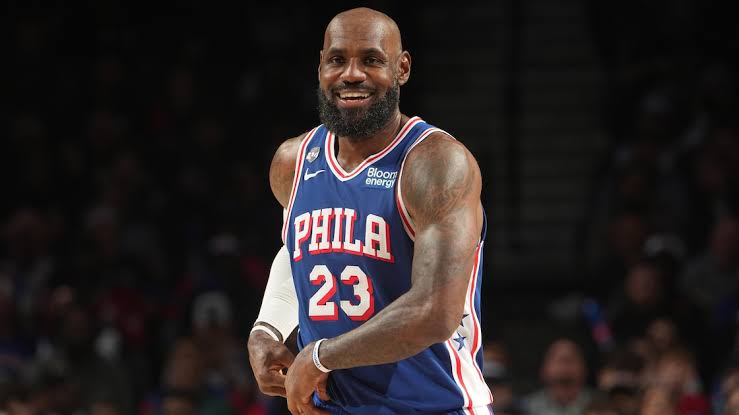
There are very few athletes who get the opportunity to look back at their careers and genuinely compare themselves with the player they were 12 years earlier. For LeBron James, however, that opportunity comes with a remarkable reality: even after more than two decades in the NBA, he can still do many of the things that made him one of basketball’s greatest players.
At 41, James is now playing a record-extending 24th NBA season, and his understanding of the game has clearly evolved. The explosive superstar who dominated opponents during his prime is still there in many ways, but the Philadelphia 76ers forward understands that surviving at the highest level requires knowing when to take control and when to let others shine.
During a recent episode of his Mind the Game podcast with former NBA star Steve Nash, James offered an interesting scouting report on two different versions of himself: the 30-year-old player who returned to Cleveland in 2014 and the veteran still competing at the highest level in 2026.
His comments offered a fascinating look into how one of basketball’s greatest careers has developed.
LeBron James Reflects on His 2014 Cleveland Cavaliers Return
James discussed the player he was during the 2014-15 campaign, following his decision to leave the Miami Heat and return to the Cleveland Cavaliers.
At 30, he was entering another important chapter of his career. His four seasons in Miami had provided valuable experience, including four consecutive NBA Finals appearances and two championships.
Returning to Cleveland meant something different. He was no longer simply a superstar joining an established championship team. He was returning home with enormous expectations and the responsibility of helping restore the Cavaliers to championship contention.
Looking back, James was relatively positive about that version of himself, although he acknowledged that his shooting was not particularly impressive.
“I played pretty well. Didn’t shoot the ball particularly well, but that guy was one who went off to college, learned a lot on everything that he wanted, everything that he knew he wanted, he was able to go and find it and then bring that mentality and that knowledge back home,” James said.
That description is interesting because it highlights how much his Miami experience influenced his approach to basketball.
James had entered Miami as an already established superstar, but playing alongside Dwyane Wade and Chris Bosh helped him develop different dimensions of his game. He returned to Cleveland with more experience, a better understanding of championship basketball and a clearer idea of what it took to lead a team.
The Cavaliers eventually reached the NBA Finals that season, although they lost in six games to the Golden State Warriors.
It was another reminder of how difficult winning a championship can be, even when a team has one of the greatest players in basketball history.
The Advice LeBron Would Give His Younger Self
Perhaps the most revealing part of the conversation came when James considered what he would tell his younger self if he could go back to 2014.
At that stage of his career, he was already a four-time MVP, two-time NBA champion and one of the most dominant players the league had ever seen. Yet he admitted that he did not fully appreciate how limited the opportunities to compete for championships could become.
“I guess the only thing that I would say to him is that, you don’t really understand or know how many more cracks at it, at this level, how many more cracks you got at being in the Finals… I was just living in the moment,” James said.
That is a powerful reflection from someone who has experienced almost everything basketball has to offer.
When you are 30 and playing at an elite level, it is easy to assume there will always be another opportunity. James had already established himself as a perennial championship contender, so his focus was understandably on the immediate challenge in front of him.
Now, with 24 NBA seasons behind his name, he understands just how special those opportunities were.
His comments also provide an interesting perspective on the pressure that comes with competing for championships. Fans often judge legendary players by the number of titles they win, but James’ reflection suggests that even reaching the Finals repeatedly is something worth appreciating.
How LeBron Has Changed His Game at 41
The difference between the 2014 version of James and the player competing today is not simply about age.
It is about understanding how to manage his responsibilities.
During the podcast, James explained that he has adapted his approach to remain effective while playing alongside other established stars.
“Now it’s just more like picking my spots,” James said. “I’m able to do pretty much everything I was doing 12 years ago, but it’s more in spurts, and picking my spots.”
That statement should interest every basketball fan.
James is no longer expected to dominate every possession or carry the offensive responsibility for an entire team. Instead, he can use his experience, passing ability and basketball intelligence to influence games without constantly forcing the action.
He also acknowledged that his usage has decreased compared with his Cleveland days.
“My responsibility, my usage is a lot lower than it was 12 years ago, and rightfully so,” James said. “That’s just a borderless growth mindset. Still being able to do all the things, but I don’t have to force the action or feel like I have to carry the load of the action. I can be more of a table setter.”
That is arguably one of the most important developments in his career.
Superstars sometimes struggle to accept that their responsibilities must change as younger players emerge. There can be a temptation to hold onto the same role regardless of the circumstances.
James appears comfortable with a different approach.
Rather than demanding that everything revolves around him, he can help create opportunities for teammates and take over when the situation requires it.
For Philadelphia, that flexibility could prove extremely valuable.
His Numbers Show He Still Has Plenty to Offer
Although his role has changed, James’ production suggests he remains an important contributor.
According to Bleacher Report, he averaged 16.2 points on 45.1 percent shooting through his first six games of the 2026-27 season. He also recorded seven rebounds, 7.3 assists and 1.5 steals per game while averaging 33 minutes.
Those numbers demonstrate that his influence extends beyond scoring.
His ability to distribute the basketball and create opportunities for teammates remains a major part of his game. The seven assists per contest are particularly interesting because they underline the playmaking responsibility he described during the podcast.
Meanwhile, Tyrese Maxey has emerged as Philadelphia’s leading offensive weapon and ranked third in the NBA in scoring at the time of Bleacher Report’s report.
The combination has helped the 76ers make an impressive start, reaching a 7-1 record and moving to the top of the Eastern Conference standings.
James does not necessarily need to be the team’s leading scorer every night if his teammates are producing offensively.
That is the advantage of having a player with his experience. He understands when to become more aggressive, when to facilitate and how to make the game easier for those around him.
Philadelphia will need that balance as the season progresses, particularly when the competition becomes tougher and the pressure increases.
LeBron’s Longevity Continues to Challenge Expectations
James entering his 24th NBA season is an achievement that deserves enormous recognition.
According to NBA.com, he already holds the league’s career records for points, games played, minutes, field goals and field-goal attempts.
His 24th season extends a record that previously seemed almost impossible to imagine.
Even more impressive is the fact that he is still contributing meaningful performances rather than simply remaining on a roster to extend his career.
There is a legitimate conversation about how much longer he can maintain this level, but his willingness to adapt has helped him remain relevant in a league that constantly gets younger and more athletic.
The 2014 version of James was a physically dominant superstar who could take over games through his scoring, strength and explosiveness.
The 2026 version is a more calculated player who understands that experience and decision-making can be just as valuable.
Neither version should be underestimated.
James Is Still Finding Ways to Evolve
What makes this conversation particularly interesting is that James is not looking back at his younger self with regret.
Instead, he recognises the lessons that came from different stages of his career and appears comfortable with the player he has become.
His comments also offer a reminder that greatness is not necessarily about maintaining exactly the same playing style forever. Sometimes, the ability to evolve is what separates legendary careers from ordinary ones.
Philadelphia will hope that James’ willingness to embrace a different role helps the franchise achieve something special this season.
And while the 76ers have several talented players capable of carrying the offensive workload, having a veteran who understands championship basketball could make a significant difference when the postseason arrives.
One thing is certain: LeBron James is still writing his basketball story, even after 24 seasons.
But which version would fans rather have on their team: the explosive 2014 superstar or the experienced 2026 playmaker who knows exactly when to take over? Share your thoughts.