
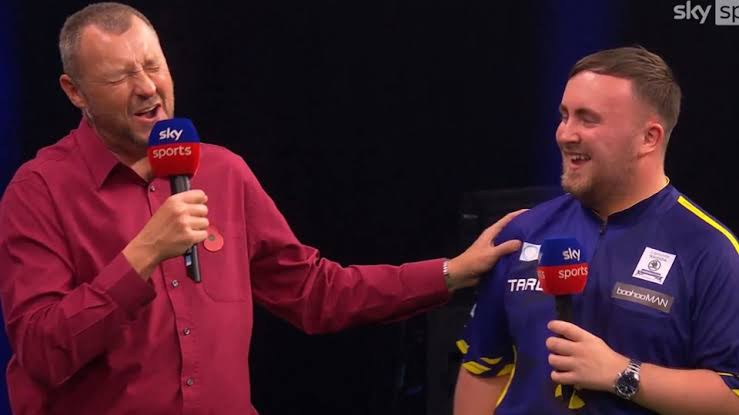
Luke Littler Faces an Unusual Test as Wayne Mardle Questions His Recent Performances
Luke Littler has spent much of 2026 making the impossible look routine, collecting major titles and reminding the darts world why he sits at the top of the sport. But even the most gifted players eventually encounter difficult spells, and the last few weeks have offered a rare reminder that Littler is not invincible.
After a shock defeat at the World Series of Darts Finals, an early exit from the World Grand Prix and another disappointing result at the World Youth Championship, questions are beginning to emerge about his recent performances. Sky Sports darts pundit Wayne Mardle believes the results could leave the young superstar “slightly bothered”, and that is an interesting development for a player who has become accustomed to winning.
The important question is whether this is simply a temporary dip or a sign that Littler needs to make adjustments. His achievements remain extraordinary, but the latest setbacks have given his rivals something they desperately needed: a reason to believe he can be beaten.
Wayne Mardle Raises Questions About Littler’s Form
Mardle’s comments are particularly interesting because they come from someone who understands the demands of elite-level darts. The former professional has watched countless players experience brilliant runs before struggling to maintain the same standards, and he knows how quickly confidence can change in a sport where tiny mistakes carry enormous consequences.
The phrase “slightly bothered” is important because it does not necessarily suggest that Littler is in serious trouble. Instead, it points towards the possibility that these results could be playing on his mind, particularly after a season in which winning has become the expectation rather than the exception.
Littler has built his reputation on extraordinary scoring power, fearless finishing and an ability to recover when opponents threaten to take control. When those elements do not come together, however, even he can look vulnerable.
And that is exactly what makes this spell worth watching.
The Defeat That Started the Questions
Littler’s recent difficulties became impossible to ignore at the World Series of Darts Finals in Amsterdam in September. His defeat to Jonny Clayton in the quarter-finals ended his hopes of winning every major PDC title in 2026.
Clayton won 10-4, handing Littler his first defeat in a major tournament for 335 days. That was a remarkable run by any standard, and it demonstrated just how difficult the world number one had become to stop.
But the loss also showed that opponents could exploit opportunities when Littler was not operating at his usual level.
The result was followed by another surprise at the World Grand Prix, where Littler was defending his title. Facing Luke Woodhouse in the opening round, he won the first set but could not maintain his advantage, eventually losing 2-1.
According to Sporting Life, Littler struggled particularly with his finishing doubles as Woodhouse recovered and took control of the deciding set.
The numbers told an interesting story. Littler averaged 82.41, while Woodhouse recorded 82.51. The near-identical averages highlighted how the match was decided by small moments rather than a huge difference in overall scoring.
Woodhouse held his nerve when it mattered. Littler did not find enough of his usual clinical finishing to escape.
For a player who has spent much of the year overwhelming opponents, two major defeats in quick succession were bound to attract attention.
The World Youth Championship Adds Another Twist
Littler then made the decision to enter the World Youth Championship in Wigan rather than travel to Basel for the Swiss Darts Trophy.
The decision attracted criticism, including from Mardle, who questioned what the world number one stood to gain from competing in a tournament designed for younger players.
Littler was eligible for the event at 19 and had previously won it in 2023. However, his return ended in disappointment when Cam Crabtree defeated him 6-5 in the semi-finals.
That result was another reminder that reputation does not guarantee victory, even against opponents who may have less experience on the biggest stages.
There is an important distinction here, though. Losing a close match does not automatically mean Littler is struggling badly. Crabtree still had to produce the darts required to beat him, and the narrow scoreline showed that the contest was competitive.
Nevertheless, three notable disappointments in a short period naturally invite questions about whether Littler has lost some of his rhythm.
For someone who has been so dominant, the contrast is striking.
Was Entering the Youth Event the Right Decision?
This is where the debate surrounding Littler becomes particularly interesting.
Mardle questioned the logic of entering the World Youth Championship after Littler had previously missed events to preserve his freshness. In comments reported by SportBible on October 5, he said: “I don’t get it. No, I don’t. I was going to say I don’t think it’s fair on the others, but he got beat last year.”
He also questioned what Littler hoped to gain from the tournament, adding: “But I don’t know what he wants to gain from it. He can only lose. Unless he wants competitive practice before the Worlds.”
Those comments raise a legitimate question about scheduling and priorities.
Littler has already established himself among the sport’s leading players. Every additional tournament brings opportunities to compete, but it also demands time, preparation and concentration.
At the same time, there is nothing inherently wrong with wanting more competitive action. Match practice can be valuable, and a player should generally have the freedom to decide which tournaments suit his development.
The problem is that every decision attracts greater scrutiny when you are the world’s best.
Had Littler won the youth title comfortably, critics might have questioned why he entered an event he was expected to dominate. After losing, others can point to the result as evidence that his form is slipping.
That creates an uncomfortable situation in which almost any outcome invites criticism.
Why Rivals Will Be Watching Closely
Littler’s recent defeats could be encouraging news for the rest of the field, but they should not be mistaken for proof that his dominance is over.
His record in 2026 remains exceptional. He has collected major titles, maintained his position at the top of the rankings and demonstrated an ability to deliver under enormous pressure.
One difficult run cannot erase those achievements.
However, rivals will have noticed that opportunities exist when Littler misses doubles or struggles to establish his rhythm. Players who previously approached him with too much respect may now believe they have a better chance of causing an upset.
That psychological shift matters in darts.
When a player becomes almost impossible to beat, opponents can start matches feeling that they need something extraordinary just to compete. A couple of defeats can change that perception, giving challengers the confidence to stay patient and punish mistakes.
Woodhouse has already demonstrated what can happen when someone takes their opportunity.
The challenge for Littler is to make sure those results remain isolated setbacks rather than the beginning of a longer spell of inconsistency.
What Happens Next for The Nuke?
The biggest test will be how Littler responds at his next major opportunities. The Grand Slam of Darts, scheduled for November 14-22, provides another stage on which he can demonstrate his quality.
Littler is the reigning champion and will be targeting a third consecutive title, an achievement that would put him alongside Phil Taylor as the only player to win the competition three years running.
That is a reminder of how quickly the conversation can change. A few disappointing results have raised questions, but the next big performance could silence much of the criticism.
Littler does not need to prove that he is a great player. His achievements have already established that. What he needs to show is that he can respond when the results stop going his way.
Mardle’s assessment that Littler may be “slightly bothered” is therefore worth considering, but it should not be mistaken for a prediction of collapse.
The best players are not defined by never losing. They are defined by what they do after losing.
Littler has set extraordinary standards, and that inevitably makes every setback a major talking point. Now the question is whether these defeats become a minor interruption in another remarkable season or the start of a more challenging period.
What do you think? Is Littler simply experiencing a normal dip in form, or should he reconsider his schedule and priorities before the biggest tournaments arrive?