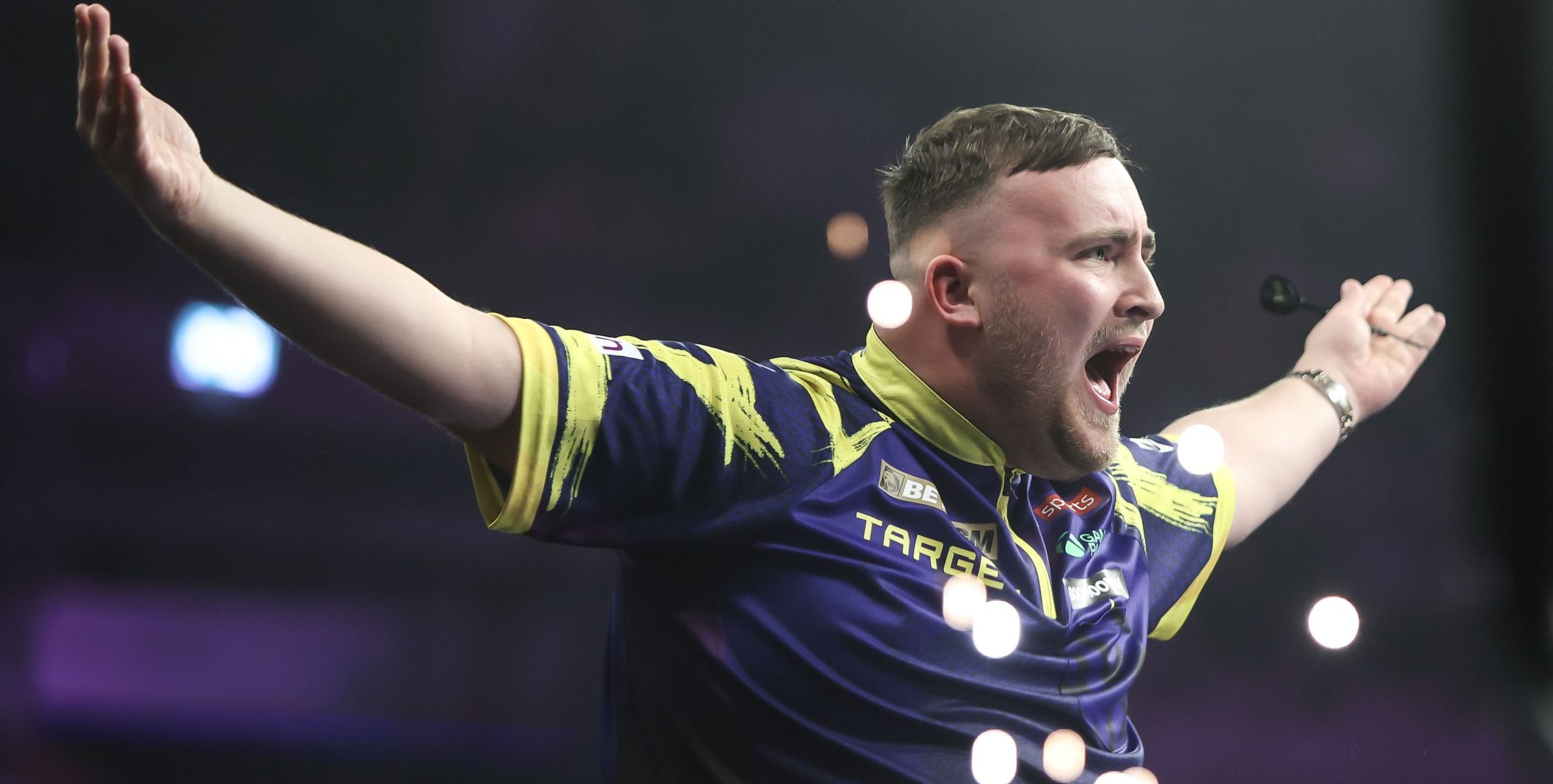
Luke Littler is no longer just the headline act in darts — he’s becoming the voice of its future. And when the sport’s biggest young star starts pointing toward “the next big thing,” people tend to pay attention.
At just 19, Littler has already changed how darts is viewed. He’s taken major titles, dominated big stages, and forced comparisons with legends who defined entire eras. But what makes him even more interesting right now isn’t only what he’s winning — it’s what he’s saying about what comes next.
Littler recently highlighted young Scottish talent Mitchell Lawrie as one of the brightest prospects in the game, suggesting he could develop into a major force if his progress continues. Lawrie has been impressing in youth competitions with strong scoring power, composure under pressure, and a winning mentality that stands out for his age.
That kind of recognition from Littler carries weight. In darts, praise from elite players isn’t handed out freely, especially not to teenagers still climbing through the ranks. So when someone who is already operating at world-class level identifies a future star, it naturally raises eyebrows across the sport.
What makes this even more interesting is the context. Littler himself is still very early in what could be a long era at the top of darts. Yet he’s already being discussed as a generational figure, someone capable of shaping the sport for years. Now he’s also pointing toward the next wave behind him — almost like he can see the cycle of talent rotating in real time.
This reflects something bigger happening in darts. The sport is entering a phase where young players are no longer waiting years to break through. They are arriving early, competing with established names, and in some cases winning major titles before they even reach their twenties. Littler was the first major example of that shift, but he’s clearly not going to be the last.
Still, opinions on early hype remain divided. Some fans and analysts believe it’s too soon to label teenagers as future superstars, pointing out how many promising players have failed to transition from youth success to senior dominance. Others argue that modern darts has changed — and that the gap between junior and professional level is smaller than it used to be.
Littler’s comments also reveal something about his mindset. Having broken through so young himself, he understands the pressure and expectations that come with early attention. That might be why he seems more willing than most to highlight young talent — he knows what it feels like to be thrown into the spotlight before most people are ready.
Mitchell Lawrie’s name is now firmly part of that conversation. Whether he becomes a world-level competitor remains to be seen, but the traits being discussed — confidence, scoring ability, and maturity under pressure — are exactly what coaches look for in future champions. The challenge, as always, is sustaining that development when the level rises.
Because darts history is full of players who looked like the next big thing at 15, 16, or 17, only to fade before reaching the top tier. The difference now is the attention arrives faster, the expectations are higher, and the spotlight is much brighter than it used to be.
And that’s where Littler’s influence becomes important. A single mention from him doesn’t just create discussion — it accelerates it. Suddenly, a young player isn’t just performing on youth circuits; they’re being tracked as a future contender, with fans and media watching every result more closely.
From a wider perspective, this is exactly what keeps darts evolving. Every era needs its breakthrough names, and every superstar eventually starts looking at who might follow. Littler is still building his own legacy, but he’s already shaping the narrative around the next generation at the same time.
If Lawrie or another young player does eventually rise to the top, this moment will be looked back on as an early signal — not a prediction set in stone, but a glimpse of where attention was beginning to shift.
In the end, Littler revealing the “next big thing” is less about naming one player and more about showing how quickly darts is changing. The future isn’t waiting its turn anymore — it’s already stepping onto the stage while the present is still playing.
Leave a Reply