
Luke Littler Eyes Grand Slam History as 2026 Tournament Undergoes Major Change
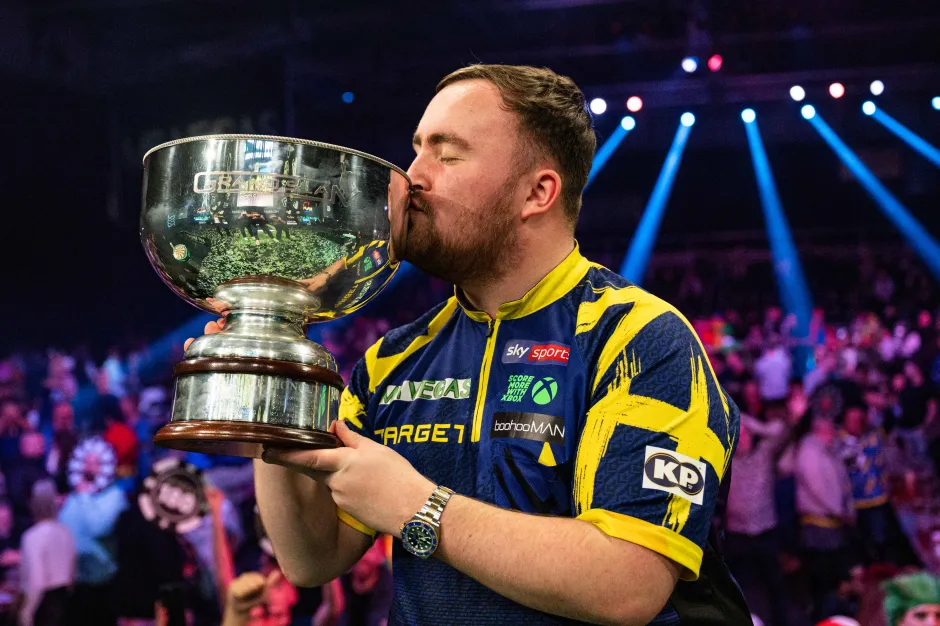
The Grand Slam of Darts is about to enter a new era, and Luke Littler has the opportunity to make even more history in a tournament where he has been virtually untouchable.
The reigning champion returns to Wolverhampton looking to win the prestigious title for a third consecutive year. However, this year’s competition will be unlike anything he has experienced before, with organisers introducing significant changes to the format, expanding the field and increasing the prize money.
There is plenty at stake for Littler, but the biggest talking point might be the new tournament structure. More players will get an opportunity to compete, while the route to lifting the trophy has become considerably different.
With some of the world’s biggest darts names expected to challenge him, the 2026 edition promises to be one of the most interesting Grand Slam tournaments in recent memory.
A historic opportunity for the teenage sensation
Littler has already established himself as one of the most successful young players the sport has ever seen. His Grand Slam achievements are another example of how quickly he has moved from being a teenage prospect to becoming the man everyone wants to beat.
In 2024, he announced himself on the Grand Slam stage by defeating Martin Lukeman 16-3 in the final. Rather than treating that victory as a one-off achievement, he returned the following year and successfully defended his crown.
His 2025 triumph was particularly impressive. Littler defeated Danny Noppert 16-9 in the semi-finals before overcoming Luke Humphries 16-11 in the final.
That victory also helped him move above Humphries to become world number one for the first time. He achieved that milestone at just 18 years old, making his rise even more remarkable.
Now, the challenge is to make it three titles in a row. Winning back-to-back tournaments is difficult enough, but completing a hat-trick against an increasingly competitive field would be another statement of his dominance.
There is also a fascinating historical angle. Littler is chasing a third successive title, something previously achieved by the likes of Phil Taylor and Michael van Gerwen. His opportunity to join that exclusive group makes this year’s competition particularly significant.
The Grand Slam introduces a major format change
The biggest development surrounding the 2026 tournament is the expansion from 32 players to 48.
For the first time in the competition’s history, 16 groups of three will replace the traditional eight groups of four. Every player will face the other two competitors in their group, with only the group winner progressing to the last 16.
That means there is considerably less room for mistakes.
Under the previous arrangement, players had three group matches and the top two progressed. A defeat did not necessarily end someone’s hopes of reaching the knockout stages.
This time, a player has just two opportunities to secure qualification. Losing the opening match could leave a competitor facing elimination before they have even settled into the tournament.
It also creates an interesting tactical challenge. Players will need to approach every leg with the importance of the group standings in mind, rather than simply concentrating on getting through the match.
For spectators, the new arrangement should make the opening stage more unpredictable. There will be more players involved, but fewer opportunities for the favourites to recover from a disappointing performance.
The 16 group winners will advance to the knockout rounds, where the tournament becomes a straight elimination competition.
It is a significant change, and there will undoubtedly be debate about whether the new structure improves the competition. However, one thing is certain: the pressure on the biggest names will be enormous.
When is the 2026 Grand Slam of Darts?
The tournament will take place between Saturday, November 14 and Sunday, November 22 at WV Active Aldersley in Wolverhampton.
The venue remains familiar to darts supporters, having hosted the competition for many years. However, the expanded field means this year’s event will have a different feel.
The opening weekend will feature afternoon and evening sessions, while the competition continues with evening sessions during the week.
The semi-finals and final are scheduled for the closing Sunday, November 22, when the new champion will be crowned.
The group draw is scheduled to take place on Monday, November 9. Consequently, the exact group combinations and individual match-ups are the major details fans are waiting to discover.
With 48 players competing, the draw could have a considerable influence on the tournament. A difficult group could put even an established major champion under pressure from the opening night.
The top-ranked players will be seeded, while the remaining competitors will be distributed according to the tournament’s ranking-based draw arrangements.
Which players will challenge Littler?
Although Littler will understandably attract most of the attention, he will face competition from some of the biggest names in professional darts.
Humphries remains one of his biggest rivals and will be desperate to reclaim the title after losing the 2025 final. The former world champion has the scoring power and experience to make another deep run.
Michael van Gerwen is another major threat. The Dutchman has won the Grand Slam three times and knows exactly what it takes to succeed in Wolverhampton.
Gerwyn Price, Gian van Veen, James Wade and Nathan Aspinall are also among the established names in the field.
There is plenty of interest beyond the usual favourites, too. Beau Greaves will be one to watch, while young talents Cam Crabtree and Jan Schmidt have earned their places through the qualification routes.
Stephen Bunting, Joe Cullen, Ricky Evans and Niko Springer are among the players who secured their places through the Tour Card Holder Qualifier in Leicester on November 6.
Other qualifiers include Maik Kuivenhoven, Tom Sykes, Rusty-Jake Rodriguez, Carl Sneyd, Bradley Brooks and Alan Soutar.
One notable absentee is Gary Anderson, who will miss the competition after withdrawing from the qualifying event. Peter Wright and Michael Smith also failed to secure places.
That adds another interesting dimension to the tournament, particularly given the experience and reputation of some of the players who will not be competing.
£1 million prize money up for grabs
The financial rewards have also received a significant boost.
The total prize fund has increased from £650,000 in 2025 to an impressive £1 million for the 2026 edition.
The winner will receive £200,000, an increase on the £150,000 Littler collected last year. The runner-up will take home £100,000, while both losing semi-finalists will receive £60,000.
Here is the full prize money breakdown:
-
Winner: £200,000
-
Runner-up: £100,000
-
Semi-finalists: £60,000 each
-
Quarter-finalists: £35,000 each
-
Last 16: £20,000 each
-
Second in group: £12,500 each
-
Third in group: £5,000 each
The increased prize fund makes this an even more attractive competition for the players.
For Littler, however, the biggest motivation will arguably be the opportunity to cement his place in the tournament’s history. Another victory would bring a third consecutive Grand Slam crown and further underline his position at the top of the sport.
How to watch the Grand Slam of Darts 2026
Darts supporters in the UK will be able to watch the competition live on Sky Sports, with coverage across its relevant channels.
Sky’s streaming service, Sky Go, and NOW will also provide viewing options for eligible subscribers.
International viewers can follow the competition through their local broadcast partners, with PDCTV providing coverage in territories where the service holds the relevant rights.
The tournament will also receive updates and coverage through talkSPORT’s platforms, giving supporters another way to follow the action.
Can Littler make history again?
There is no question that Littler enters the 2026 Grand Slam of Darts as one of the biggest attractions in the competition.
His previous performances suggest he has the ability to handle the pressure, but the expanded field and revised group structure introduce new challenges that even the world’s best players cannot afford to underestimate.
Humphries, Van Gerwen and Price will all have ambitions of stopping him, while the new format could provide an opportunity for an outsider to produce a memorable run.
Personally, it would be difficult to bet against Littler making another serious challenge for the trophy. However, winning this competition for a third consecutive year would be a different kind of achievement, especially with so many players competing.
Will Littler continue his remarkable Grand Slam run, or is this finally the year another superstar takes the trophy away from him?
Darts fans will certainly have plenty to discuss when the action gets underway in Wolverhampton.