
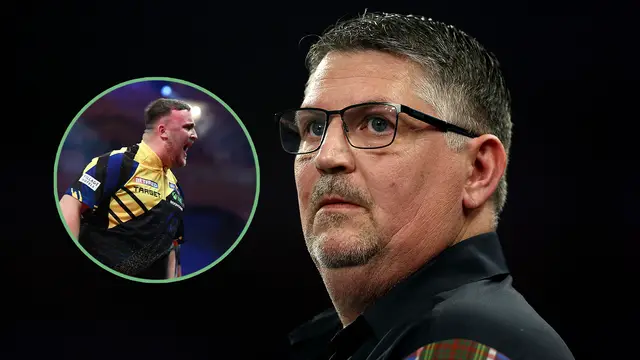
Luke Littler has become the biggest name in darts, but lately there is another sound following him around the sport: boos.
The 19-year-old world No. 1 has spent much of 2026 collecting major trophies, breaking records and establishing himself as the face of the next generation. Yet at several tournaments, sections of the crowd have seemingly been just as determined to unsettle him as his opponents are.
Now two-time world champion Gary Anderson has stepped into the argument with a blunt warning: if fans continue treating Littler this way, they could eventually be the ones who lose out.
Anderson’s comments arrive after a particularly ugly atmosphere surrounding Littler at the World Series of Darts Finals in Amsterdam, where whistles and boos followed the teenager through multiple matches. During his last-16 encounter with Nathan Aspinall, referee Charlie Corstorphine was even forced to intervene and warn the crowd about the whistling.
So why has one of darts’ biggest stars become such a target?
The Amsterdam Booing Went Too Far for Littler
Littler’s relationship with hostile crowds is nothing new.
Darts has always had a unique atmosphere. Supporters sing, shout, celebrate missed doubles and sometimes try to distract players. In many ways, that chaos is part of what makes the sport so entertaining.
But Littler has increasingly found himself on the receiving end of sustained booing and whistling, particularly in the Netherlands and Germany.
The situation reached another level in Amsterdam earlier this month.
Littler faced home favourite Danny Noppert in his opening match at the World Series Finals and was booed by sections of the crowd. Against Aspinall in the next round, the atmosphere became sufficiently disruptive for the referee to stop play and address the spectators.
Littler still won the match 10-9, producing a 12-dart finish in the deciding leg.
But the victory did not end the controversy.
After later losing 10-4 to Jonny Clayton in the quarter-finals, Littler made it clear that he was seriously considering avoiding future Dutch European Tour events.
Why Are Fans Booing Him?
There isn’t one simple explanation.
One factor is the traditional darts mentality of supporting the underdog. Littler is no longer the teenage outsider trying to shock established champions. He is the world No. 1, a multiple major champion and the player everyone wants to beat.
When the best player walks onto the stage, some supporters naturally want to see him lose.
That alone isn’t unusual.
Phil Taylor experienced similar treatment during his dominant years, while Michael van Gerwen also became a regular target of opposition crowds during his peak.
Littler’s own rise has also created moments that have influenced how some supporters perceive him.
At the 2025 World Championship, he was booed during his match with Rob Cross as fans backed the 2018 champion. After winning, Littler responded defiantly.
“I’m not bothered [by the booing]. Really not bothered. You guys pay for tickets and you pay for my prize so thanks for booing me.”
He then added:
“No-one wanted me to win but I proved them wrong yet again.”
For some fans, that was simply a young champion giving it back to the crowd.
For others, it contributed to a perception that Littler is arrogant.
The Gian van Veen Incident Added Fuel
There was another flashpoint involving Dutch star Gian van Veen during the Premier League earlier this year.
Littler was involved in a tense contest with Van Veen in Manchester, and after Van Veen missed a match-winning double, Littler celebrated the miss. Van Veen eventually won the match and later criticised Littler’s behaviour.
That incident became particularly significant because Van Veen is one of the Netherlands’ leading players.
From that point, the hostility from some Dutch supporters appeared to become more personal.
Littler has since suggested that he could stop playing European Tour events in the Netherlands if the treatment continues. He had already taken a similar approach to Germany after previous experiences with hostile crowds there.
Littler Says He Just Wants to Play Darts
After the Amsterdam tournament, Littler explained his frustration in unusually direct terms.
“With the Germans, I haven’t been for a long time, we will have to see in Dortmund whether it changes or stays the same,” he said.
“If the Dutch stay like this, then I’m not going to do any Euro tours over there. There’s just no point in me travelling, wasting my time whilst I’m getting booed.”
He also explained what he wants from tournaments:
“I just want to play my darts, obviously sign autographs.”
Littler said the reception had affected his willingness to interact with supporters after matches.
“The past two nights, I’ve done nothing, I’ve just walked off stage without thanking anybody. There’s no point thanking everyone when they are booing me.”
That is an important part of the debate.
Booing a player because you want the underdog to win is one thing. Constantly whistling while a player is throwing is another, because it can interfere directly with the contest.
Gary Anderson Has Had Enough
Anderson, one of the most respected players of his generation, has now made his position very clear.
“The one thing I can say, he’s been getting a bit of dog’s abuse at tournaments. It’s vile. It is bad.”
Anderson believes fans need to appreciate what they are watching rather than trying to drive Littler away.
“Now one thing people have got to realise, this young lad, what is he now? 19? He’s got a gift from God.”
He went even further.
“It could be another 50 years before they see a youngster turn up and play darts like this kid.”
That is obviously Anderson’s opinion, but there is no question that Littler’s achievements have been extraordinary for someone so young.
By September 2026, he had already won 14 PDC major singles titles and established himself as the dominant figure at the top of the sport.
Could Littler Really Walk Away From International Events?
This is where the situation gets interesting.
Littler has already demonstrated that he is willing to be selective about his schedule. If certain tournaments become more trouble than they are worth, he has options that many professional players simply don’t have.
Anderson pointed directly at that reality.
“Luke’s clever. He’s got a lot of things going on and if it got to a stage where he goes, ‘that’s it, I’m finished with darts,’ that’s not going to make any difference.”
He added:
“He’s going to have a big income coming in from what else he is doing.”
Anderson’s argument is simple: Littler doesn’t necessarily need to endure hostile environments if he decides the experience isn’t worth it.
That doesn’t mean Littler is about to quit darts. There is no evidence of that.
But the possibility of him reducing his international appearances is no longer hypothetical.
The Fans Could Be The Ones Losing Out
This is perhaps the strangest part of the whole saga.
Darts is desperate to grow internationally, and Littler is arguably the biggest attraction the sport has produced in years. His personality, age and remarkable ability have brought a new generation of fans into the game.
If hostile crowds eventually persuade him to avoid certain countries, those fans lose the opportunity to watch one of the sport’s most extraordinary talents live.
Anderson summed up his position bluntly:
“People giving grief need to back off because this kid is something special.”
There is still room for rivalry, noise and passionate support. That is part of darts.
But there is also a line between creating an intimidating atmosphere and deliberately making it difficult for a player to compete.
Littler’s response will be fascinating to watch as the season continues. He has already shown that boos can motivate him, but nobody knows how long that attitude can realistically last.
The bigger question now is whether darts fans want to be remembered as the crowd that helped create the atmosphere — or the crowd that helped drive away one of the sport’s biggest stars.
What do you think: is the booing simply part of darts culture, or have some fans taken it too far?