
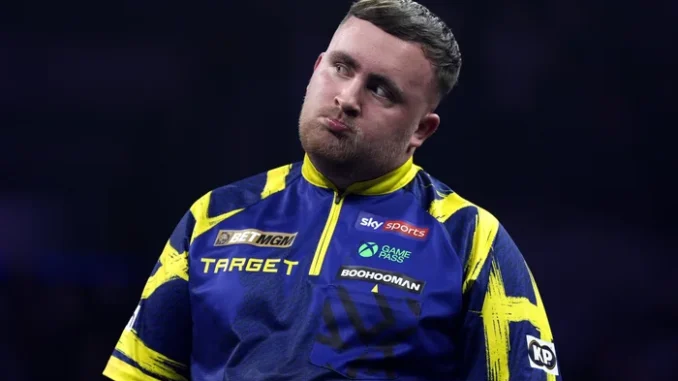
The rise of Luke Littler has been one of the most talked-about stories in modern darts, with the teenager quickly establishing himself as a dominant force on the biggest stages. But away from the bright lights and roaring crowds, Littler has offered a refreshingly honest look into a part of his life that is far less polished—his diet, his fitness goals, and his almost non-existent cooking skills.
While fans have become used to seeing Littler deliver near-perfect performances under pressure, the young star has admitted that he is still very much a work in progress when it comes to life off the oche. In particular, his recent comments about food and cooking have struck a chord, revealing a side of him that is both relatable and surprisingly candid.
Speaking openly, Littler did not try to dress things up or exaggerate his abilities. Instead, he admitted plainly that cooking is not something he has mastered. “Cooking? I know absolutely nothing about it,” he said. “I’ve really no idea how to make anything. Maybe some toast, but that’s about it.” It is the kind of admission that might seem unusual for a professional athlete, but it reflects the reality of a teenager who has spent much of his recent life traveling, competing, and adjusting to a rapidly growing career.
The topic of his diet and lifestyle came into sharper focus when Littler spoke about his desire to improve his physical condition. Despite his success, he has acknowledged that there is room for improvement when it comes to fitness. In a light-hearted but revealing comment, he said, “Obviously let me lose a bit of timber and I’ll be good to go,” signaling an intention to shed some weight as part of his ongoing development.
That remark may have been delivered with a smile, but it highlights a broader truth about professional darts. Unlike many other sports, darts does not always place a strong emphasis on physical conditioning, at least historically. However, the modern game is changing, and players are increasingly recognizing the benefits of improved fitness, both in terms of performance and longevity.
For Littler, the challenge lies not just in motivation but in practicality. The life of a professional darts player involves constant travel, late-night matches, and a schedule that makes maintaining a consistent diet extremely difficult. As he explained, “It’s very tempting for us. At those times there’s nothing healthy to eat.” This insight sheds light on a side of the sport that fans rarely see—the logistical challenges that come with competing at the highest level.
Fast food and convenience meals often become the default option during tournaments, especially when matches run late into the night. For a young player like Littler, who is still adjusting to the demands of the professional circuit, these habits can be difficult to avoid. While he makes an effort to eat better when he is at home, consistency remains a challenge.
“At home you can make up for it a bit,” he said. “We just eat standard meals, or we go out and choose something relatively healthy, like chicken with rice.” It is a simple approach, but one that reflects an awareness of the need to balance indulgence with healthier choices.
The contrast between Littler and some of his fellow professionals is particularly striking. Luke Humphries, for example, has become known not just for his success on the board but also for his commitment to fitness and nutrition. Over recent years, Humphries has undergone a significant transformation, losing weight and adopting a much more disciplined lifestyle.
Unlike Littler, Humphries has embraced cooking as part of his routine. He has spoken about the importance of preparing his own meals and making conscious decisions about what he eats. For him, food is not just about convenience—it is a key part of maintaining peak performance. His approach represents a growing trend within darts, where players are beginning to treat their bodies with the same level of care and attention as athletes in more physically demanding sports.
At the other end of the spectrum is Jonny Clayton, who embodies a more traditional attitude. Clayton has openly admitted that he takes a relaxed approach to food, prioritizing enjoyment over strict discipline. “My diet isn’t great. If something looks good, I’ll eat it,” he said. “But I’m at an age now where if I fancy something, I just eat it. I love food, I love kebab.”
These differing perspectives highlight a sport in transition. On one hand, there is a new generation of players like Littler who are becoming increasingly aware of the importance of fitness, even if they have not fully embraced it yet. On the other hand, there are experienced players who rely more on instinct and personal preference, maintaining a more laid-back approach to diet.
Littler finds himself somewhere in between. He clearly recognizes the need to improve, but he is still figuring out how to make those changes part of his daily routine. His honesty about his limitations—particularly in the kitchen—makes his journey all the more relatable.
There is also an element of realism in his comments. Learning to cook, maintaining a balanced diet, and staying fit are all challenges that take time and effort, especially for someone whose primary focus has been on developing elite-level skills in a highly competitive sport. Littler’s priorities have understandably been centered on his performance, and the results speak for themselves.
However, as his career continues to evolve, it is likely that these off-the-board factors will become increasingly important. The demands of professional darts are only growing, with longer seasons, more tournaments, and higher expectations. Players who can combine technical excellence with physical and mental resilience will have a clear advantage.
Littler’s willingness to address these issues publicly suggests that he is already thinking about the bigger picture. Acknowledging the need to “lose a bit of timber” is not just about appearance—it is about ensuring that he can sustain his level of performance over the long term.
For fans, these insights offer a deeper understanding of who Littler is beyond the headlines. He is not just a prodigious talent dominating the sport at a young age; he is also a teenager navigating the complexities of professional life, learning and adapting as he goes.
His admission about only being able to make toast may have raised a few smiles, but it also underscores his authenticity. In an era where athletes often present carefully curated images, Littler’s openness is both refreshing and engaging.
As he continues to grow, both as a player and as a person, it will be fascinating to see how these aspects of his life develop. Will he embrace cooking and take control of his diet? Will he commit fully to a fitness regime? Or will he find his own unique balance that works for him?
Whatever the outcome, one thing is certain—Luke Littler’s journey is still just beginning. And if his performances on the dartboard are anything to go by, he has all the determination needed to improve every aspect of his game, both on and off the stage.
Leave a Reply