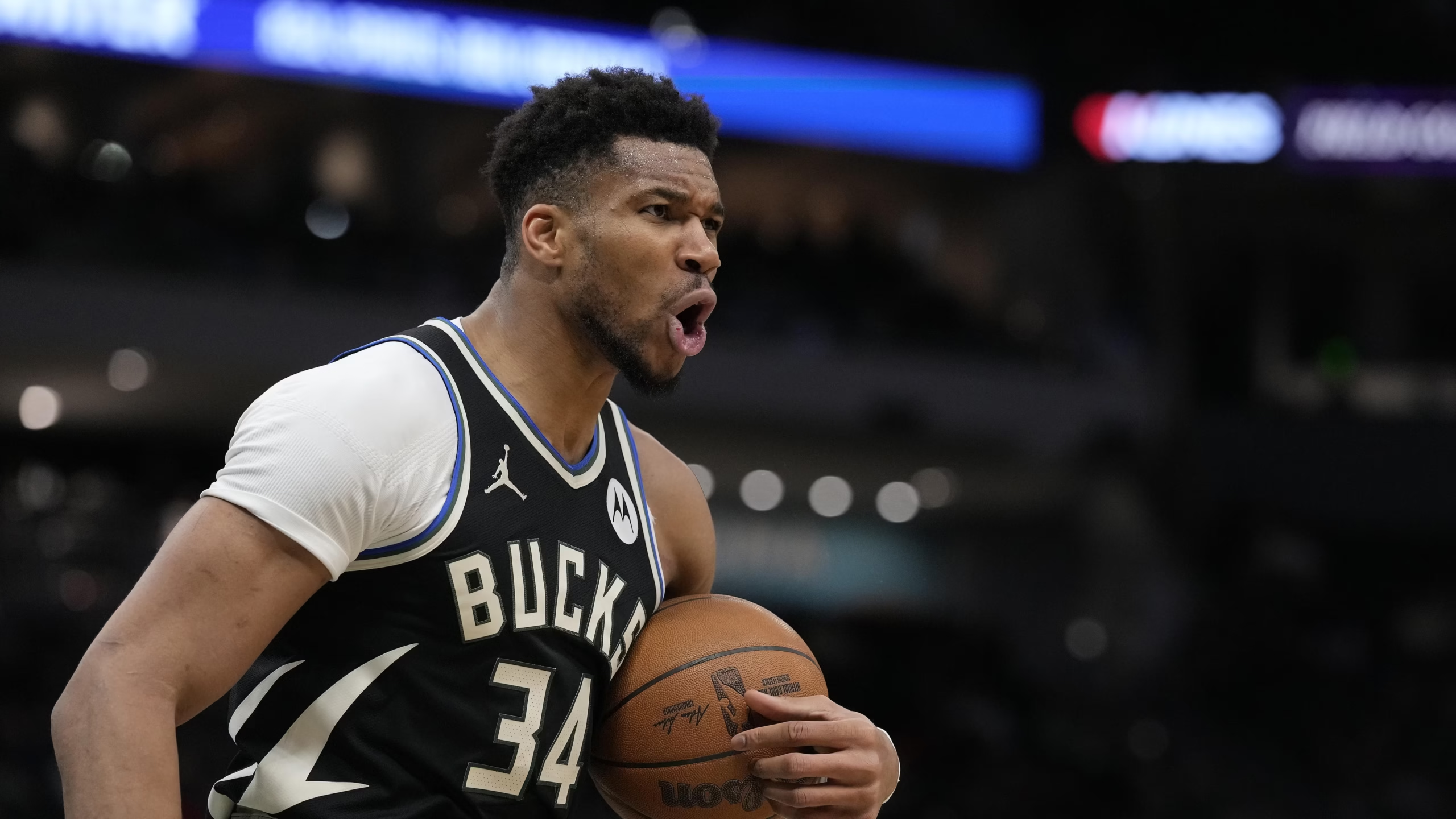
How a Surprise Team Could Win the Giannis Antetokounmpo Trade
The NBA offseason hasn’t officially exploded yet, but everyone can feel it coming.
Every rumor, every insider report, every cryptic comment seems to point toward one possibility: Giannis Antetokounmpo could be on the move. And if the two-time MVP is actually traded, the deal won’t just reshape one franchise—it could completely alter the balance of power across the league.
Most discussions have focused on the obvious contenders. The Miami Heat have been heavily linked with Giannis, while the Boston Celtics continue to appear in speculation surrounding potential blockbuster offers. Reports suggest Miami remains one of Giannis’ preferred destinations, while Boston has emerged as another serious contender.
But what if the biggest winner isn’t the team that lands Giannis?
What if a surprise franchise walks away from the chaos with the best long-term outcome?
That’s where things get interesting.
History shows that blockbuster trades rarely have just two winners and one loser. Sometimes the third team involved quietly steals the spotlight years later. Fans remember the superstar changing jerseys, but they often forget the secondary pieces that can transform another franchise.
Recent speculation has highlighted the possibility of multi-team trades involving franchises such as the Detroit Pistons, Atlanta Hawks, and other young teams looking to capitalize on the situation.
The Detroit Pistons, in particular, stand out as a fascinating dark horse.
Detroit has spent several years building around Cade Cunningham, Ausar Thompson, and Jalen Duren. They aren’t necessarily one Giannis trade away from contention, but they could benefit enormously from the ripple effects of a blockbuster deal. Reports have already linked them to scenarios where they acquire additional talent while helping facilitate a larger transaction.
That is often where smart front offices make their money.
While everyone else is focused on the superstar, opportunistic teams focus on value.
Imagine a scenario where Miami acquires Giannis, Milwaukee receives a massive package of players and draft picks, and Detroit lands an All-Star-level scorer at a discounted price because they helped make the numbers work.
Suddenly, the Pistons might not be the headline team, but they could be one of the biggest winners.
The same argument can be made for teams like Atlanta.
One recently proposed three-team framework suggested Atlanta could end up with Jaylen Brown if Boston successfully pursued Giannis. While hypothetical, it demonstrates how a franchise not initially considered a Giannis destination could emerge from negotiations with a franchise-changing player.
These are the kinds of opportunities smart organizations dream about.
The reason surprise winners emerge is simple: desperation creates leverage.
Teams chasing a superstar become willing to sacrifice depth, future picks, and flexibility. Other franchises can exploit that urgency.
We’ve seen it repeatedly throughout NBA history.
When blockbuster trades happen, the public tends to focus on the biggest name involved. Years later, analysts often revisit the deal and discover that another team quietly benefited the most.
That’s why the Giannis situation feels different from a traditional superstar sweepstakes.
Milwaukee isn’t dealing with a normal player.
Giannis is one of the most accomplished stars of his generation. The former MVP and NBA champion remains one of basketball’s most dominant forces whenever healthy.
Because of that, any deal involving him could require multiple teams, numerous draft picks, and several high-level players.
The larger a trade becomes, the greater the chance for an unexpected winner to emerge.
From Milwaukee’s perspective, the challenge is obvious.
The Bucks cannot afford to lose a player of Giannis’ caliber without receiving an enormous return. Reports indicate they are evaluating multiple possibilities while trying to maximize value.
If Milwaukee decides to move forward with a trade, their goal won’t simply be finding the team Giannis prefers.
Their goal will be finding the package that best positions the franchise for the next decade.
That could open the door for creative trade structures involving several organizations.
My opinion is that fans are too focused on identifying where Giannis will play next season and not focused enough on which team could quietly transform its future because of the deal.
The obvious destinations carry enormous pressure.
If Miami acquires Giannis, expectations immediately become championship-or-bust.
If Boston somehow lands him, anything less than a title will be viewed as a disappointment.
Those teams would be taking massive risks.
A younger surprise team, meanwhile, could improve significantly without carrying those expectations.
That’s why I believe the real winner of a Giannis trade could ultimately be a franchise nobody is talking about today.
A team like Detroit, Atlanta, Portland, or another emerging organization could use the situation to acquire talent, draft assets, or financial flexibility that accelerates its rebuild.
Those moves rarely dominate television coverage.
They rarely generate the biggest social media reactions.
But they often age better than the headline-grabbing superstar acquisition.
The other factor worth considering is timing.
Several reports suggest the Giannis situation could become one of the defining stories of the offseason, with league executives monitoring every development closely.
That means teams across the NBA are likely preparing contingency plans.
Some are targeting Giannis.
Others are preparing to capitalize if another contender empties its roster to acquire him.
The smartest front offices are probably doing both.
Ultimately, that’s what makes this storyline so compelling.
A Giannis Antetokounmpo trade wouldn’t simply change one team.
It would create a chain reaction throughout the NBA.
Superstars could move.
Draft picks could change hands.
Young cores could be reshaped.
And somewhere in the middle of all that chaos, a surprise franchise could quietly emerge as the biggest winner of them all.
If history teaches us anything, it is this:
When a superstar gets traded, the team holding the trophy for “best deal” isn’t always the team that lands the superstar.
Sometimes it’s the team nobody saw coming.
Leave a Reply