
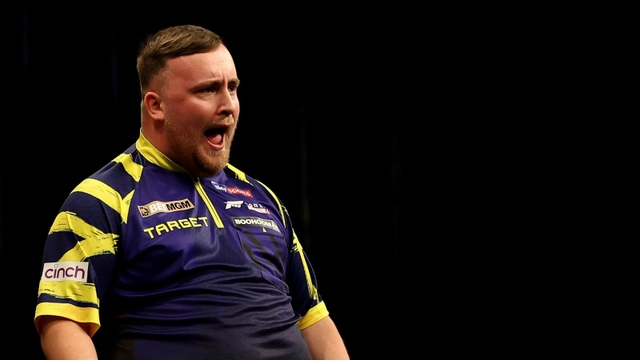
PDC Confirm Action Being Taken to Protect Luke Littler From Social Media Abuse
Luke Littler has become one of the biggest names in world darts, but the incredible success of the teenage sensation has also exposed him to a darker side of professional sport. While millions celebrate his achievements, the world number one’s growing popularity has brought an increasingly uncomfortable amount of abuse, both online and inside packed tournament venues.
Now, the Professional Darts Corporation (PDC) is taking steps to address the problem, with chief executive Matt Porter revealing that discussions have taken place with social media platforms about protecting players from abusive messages.
It is an important development for Littler, who has previously admitted how deeply the negativity surrounding him has affected his relationship with the sport. And frankly, it is difficult to argue against the PDC taking this issue seriously.
For a player who has achieved so much at such a young age, the last thing darts needs is for online abuse to overshadow his incredible talent.
PDC Chief Executive Matt Porter Addresses the Problem
Porter has made it clear that social media abuse is becoming a significant concern across professional sport, not just in darts.
Speaking to talkSPORT, the PDC chief executive explained that conversations had already taken place with a social media platform in an effort to find ways of protecting players from the abuse they regularly encounter online.
He acknowledged that social media has positive aspects for professional athletes, allowing them to communicate directly with supporters, promote their careers and attract commercial opportunities.
However, he also highlighted the damaging consequences of reading hostile comments from people who have little understanding of the impact their words can have.
“There’s no doubt social media is a huge contributing factor to not just darts, but any sports person’s mentality at the moment,” Porter said.
He continued: “Everybody deals with it in a different way. I think it can be used in a real positive. You can engage with your fans, you can use it as a platform to promote yourself and your sponsors.”
But Porter also pointed towards the disturbing behaviour that can follow when players become targets for online criticism.
“But obviously if you’re going on there and reading comments from some idiot who’s lost a £5 bet and wants all these terrible things to happen to you and your family, then it’s not particularly helpful or constructive.”
His comments highlight an increasingly serious problem, particularly in darts, where betting-related frustration can quickly turn into personal attacks against players.
Luke Littler Has Already Spoken About Walking Away
The situation is particularly concerning because Littler has previously revealed just how much the hostility has affected him.
The Warrington-born star has enjoyed an extraordinary rise since bursting onto the international scene at the 2024 World Darts Championship.
Reaching the final as a teenager immediately made him one of the most recognisable faces in the sport. His subsequent success, including back-to-back world championship victories in 2025 and 2026, has only increased the attention surrounding him.
But being successful has not meant receiving universal support.
Littler has regularly faced criticism, hostile reactions and personal comments from sections of the darts audience. The abuse has sometimes extended beyond his performances, with his family also becoming targets.
After winning the 2026 Premier League title, the young superstar became emotional while discussing the pressure he had experienced.
He admitted that the negativity had become so overwhelming that he had considered walking away from darts.
That revelation should have made people stop and think.
Here is a player who has helped bring enormous attention to professional darts, attracting younger audiences and creating excitement around tournaments. Yet, instead of simply enjoying his achievements, he has had to deal with hostility that can follow him long after he leaves the stage.
No sporting achievement should come at the expense of someone’s mental wellbeing.
The Problem Goes Beyond Social Media
One of the biggest challenges facing the PDC is that the abuse is not limited to online platforms.
Darts has traditionally celebrated its lively atmosphere, with supporters singing, drinking, shouting and attempting to influence the players. That environment has helped make the sport one of the most entertaining spectacles on television.
However, there is a clear difference between passionate support and deliberately trying to intimidate someone.
Littler has experienced that distinction several times. In April 2026, he faced boos and jeers during Premier League appearances in Rotterdam and Newcastle. Those incidents added to the growing debate about how far spectators should be allowed to go when expressing their dislike of a player.
The situation became even more uncomfortable during September’s World Series of Darts Finals in Amsterdam.
Littler faced hostile reactions while playing Dutch favourite Danny Noppert, before sections of the crowd continued booing and whistling during his match against Nathan Aspinall.
Despite winning that encounter 10-9, the Englishman was clearly unhappy with the treatment he received.
He subsequently suggested that he could stop travelling to the Netherlands for European Tour events if the behaviour continued.
Littler explained: “But yeah, if the Dutch stay like this, then I’m not going to do any Euro Tours over there. There’s just no point in me travelling, wasting my time whilst I’m getting booed.”
It was another indication that the problem had become bigger than ordinary sporting rivalry.
PDC Must Find a Balance Between Entertainment and Player Protection
There is no question that darts needs its atmosphere.
The noise, songs and interaction between players and spectators are part of what separates the sport from many other indoor competitions. Removing every expression of frustration or disapproval would take away something that makes darts special.
But that should never become an excuse for personal abuse.
The PDC needs to make sure players can compete without worrying about what might happen when they check their phones after a match.
Porter’s discussions with social media platforms are therefore a positive starting point. However, conversations alone will not solve the problem.
The real test will be whether platforms introduce effective measures to identify abusive messages, deal with threatening accounts and give players better protection.
There is also an important role for the Professional Darts Players Association (PDPA).
Its existing ThinkDARTS campaign encourages players to avoid engaging with abusive accounts, seek support, report and block offenders, take breaks from social media and preserve evidence of threatening messages.
That is useful advice, but the responsibility should not fall entirely on the athletes.
Supporters also have a responsibility to recognise that professional players are human beings with families and lives outside the sport.
Littler’s Success Should Not Become a Burden
One thing that makes this situation particularly frustrating is that Littler has given darts so much positive attention.
His remarkable performances have attracted viewers who might never previously have considered watching a professional darts tournament.
At just 19, he has already established himself as the sport’s leading name and collected some of its biggest prizes.
Naturally, that level of success attracts jealousy, criticism and expectations. Every defeat becomes a talking point, while every controversial moment can generate thousands of comments online.
Some criticism is perfectly reasonable. Players should be able to accept questions about their performances, decisions and behaviour without expecting everyone to agree with them.
But there is a massive difference between criticising a player’s performance and targeting their personal life or family.
That distinction seems to have disappeared for some people.
Littler should not have to switch off every social media account or avoid interacting with supporters simply because a minority cannot behave responsibly.
He has built a connection with darts fans, and that relationship is an important part of his appeal.
The sport should be finding ways to protect that connection rather than allowing online abuse to destroy it.
What Happens Next for the PDC?
The biggest question now is whether Porter’s discussions with social media companies will lead to meaningful changes.
The PDC cannot control everything that happens online, but it can use its influence to demand better protection for the players who make its tournaments successful.
There is also an opportunity to establish clearer standards for how abusive behaviour is handled at live events. The measures being tested to tackle whistling in crowds show that the organisation is beginning to recognise the seriousness of the wider problem.
For Littler, the priority should be making sure he can concentrate on winning trophies rather than constantly dealing with unnecessary hostility.
Darts is enjoying a hugely successful period, and having a superstar like him is a massive advantage for the sport.
The PDC must protect that success by taking player welfare seriously.
Personally, I believe fans should be free to support their favourites, celebrate victories and even express disappointment when their player loses. That is part of sport.
But abusing someone because they won a darts match is something entirely different.
Porter has made a welcome move by opening discussions with social media platforms. Now supporters will want to see whether those conversations produce real results.
Do you think the PDC is doing enough to protect Luke Littler, or should social media companies be taking much stronger action against abusive fans?