
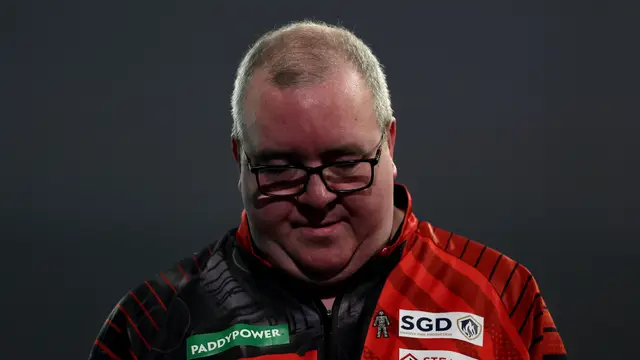
Darts is supposed to be loud. That is half the point. People in fancy dress, pints in the air, walk-on songs belted back at the stage. What happened in Amsterdam this weekend was something else. A shrill, timed whistle aimed at a player in mid-throw is not atmosphere. It is sabotage, and Luke Littler has had enough of it.
The 19-year-old world champion came through a 10-9 last-leg scrap with Nathan Aspinall at the World Series of Darts Finals and then said he is prepared to walk away from Dutch events the same way he has already walked away from most German Euro Tours. Referee Charlie Costorphine had already stopped the match to tell the crowd, “Ladies and gentlemen, please, out of respect to both of the players, please do not whistle whilst they are throwing. Thank you.” It did not fully work. The noise kept arriving when Littler was on the oche.
Littler’s own words after the match left little room for spin. “If the Dutch stay like this, then I’m not going to do any Euro tours over there. There’s just no point in me travelling, wasting my time whilst I’m getting booed. I just want to play my darts, obviously sign autographs. The past two nights, I’ve done nothing, I’ve just walked off stage without thanking anybody. There’s no point thanking everyone when they are booing me.” Asked whether he would take the same hard line he has taken with Germany, he said, “100%.”
That is the story sitting on the table now. A two-time world champion, chasing a clean sweep of the ten televised majors, is openly discussing which countries are still worth the trip.
Why the whistle cuts deeper than a boo
Plenty of players will tell you they can live with booing. Stephen Bunting has said exactly that. “I can take people booing me or shouting abuse, but the whistling for some reason it just affects you as a player, especially at an important time in a match. You try to regroup then and sometimes you can’t.”
He has also put a price on it. “I don’t think these people realise at that important moment that the whistles could cost you thousands of pounds. People have got lots of bets going on as well.” After a 6-5 defeat to Niko Springer in Göttingen in March, Bunting went further on Instagram. “I never moan about defeats or cry about them but feel really hurt tonight even though it was a small minority of people. To boo and whistle at important times through any match isn’t acceptable and if you want to do that then go to a football match.”
That night referee Huw Ware had already snapped. “I’ve asked politely once and I’ll say it politely, shut up please. We’re trying to have a game of darts up here.” Bunting lost the deciding leg and later admitted the episode helped him understand Littler’s Germany stance. “The whistling when you’re throwing for a double, when you’re travelling all that way to go over there, I understand now why Luke Littler doesn’t want to go over there.”
Bunting’s loss in that last-32 match cost him £1,500 in prize money. That is the unglamorous part people skip when they treat whistling as banter. Miss a dart at double because someone has chosen that exact second to pierce the room, and the night’s work is gone.
Players have already floated real sanctions
Bunting’s consistent line has been simple: shout, sing, support your player, just do not whistle. Nathan Aspinall has gone further and called for five-year bans for anyone caught doing it. His argument is that ejection alone is not enough. If a few people lose their tickets for years, the rest might think twice.
Whether the PDC ever adopts something that harsh is another matter. Policing 4,000 people in a dark arena is not easy. A handful of whistlers can hide. That is why the problem keeps returning, from Nottingham Premier League nights to German Euro Tours to Amsterdam this weekend.
Aspinall was in the match that triggered Littler’s latest threat. He even asked the referee to step in because, as Littler later put it, “They’re not whistling me, but they’re whistling Luke.” That detail matters. This is not always general rowdiness. Sometimes it is targeted.
What this means for the next few weeks
Littler is still due in Dortmund for the European Championship in October. He has already said that appearance will be a test of whether the German crowds have changed. The Dutch Darts Championship in Maastricht follows soon after. If the Amsterdam reception is the new standard, he has told everyone he will skip the Euro Tours there.
That is not a small thing. The sport’s biggest draw skipping whole countries changes fields, TV pictures, and the nights fans pay to see. It also puts pressure on the PDC to do more than hope referees can shout a room into silence.
There is a fair counter-argument. Darts sold itself on being the opposite of a library. Crowds in Germany and the Netherlands are passionate and partisan. Home players get a lift. Visiting stars get tested. Most of those rooms are fine. Bunting himself keeps stressing it is a small minority, and he still talks warmly about genuine German fans after nights like Berlin.
The problem is the minority is loud enough, and timed well enough, to decide legs. When the world number one starts talking about staying home, the minority is no longer a side issue.
The atmosphere is still the product
None of this should turn into a campaign against noise. Walk-ons, singalongs, and even a bit of needle are why people buy tickets instead of watching from the sofa. Bunting’s own Titanium entrance still makes rooms feel like a gig. That energy is precious.
What players are asking for is a line. Cheer when a dart hits. Groan when it misses. Do not try to wreck the throw itself. That is not a lot to ask from people who already know the rules of the sport they paid to watch.
Littler’s boycott threat will fade if the next Dutch and German rooms behave. If they do not, the calendar starts to look different, and the sport loses the very player who has pulled in new eyes. Bunting has been saying the same thing for months in plainer language: enjoy the night, just leave the whistle at home.
So here is the question worth arguing over. Is a five-year ban too much, or is it the only language a few people will understand? And if Littler does skip Maastricht, who do you blame first, the teenager or the people who made the room unplayable?