
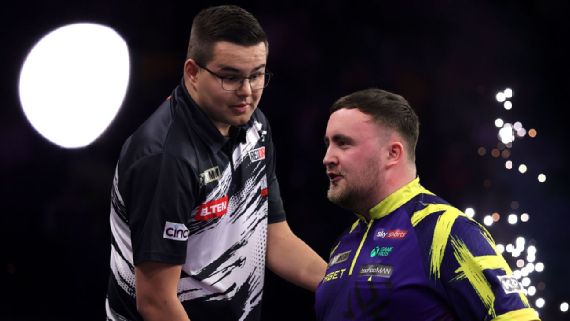
The tension between Gian van Veen and Luke Littler continues to linger over the 2026 Premier League Darts season, with the Dutchman making it absolutely clear that his opinion on their recent clash has not changed. Despite growing attention from fans and pundits urging both players to put the issue behind them, Van Veen has stood firm, insisting he has no interest in resolving the situation through any form of discussion.
The now widely discussed incident took place during a dramatic Premier League night in Manchester, where both players were involved in a fiercely contested quarter-final. What began as a high-quality encounter between two of the sport’s rising stars soon turned into one of the most talked-about flashpoints of the season. Emotions spilled over during a tense deciding leg, and what followed left a visible strain between the pair.
Van Veen eventually edged the contest 6-5, holding his nerve in a pressure-filled finish after Littler missed multiple match darts. However, the result itself was almost secondary to the drama that unfolded throughout the match. At the heart of the controversy was a moment that Van Veen believes crossed a line.
Explaining his side of the story, Van Veen pointed to a crucial phase in the match when he missed an important double. Frustrated, he turned away from the board, only to feel that Littler had reacted in a way that he found disrespectful. According to the Dutchman, “he was celebrating me missing,” a moment he did not take lightly. From his perspective, such behavior during a key moment of a match was “out of order,” and it sparked the tension that followed.
That single moment appeared to trigger a shift in the atmosphere. Both players became more animated, and the usual rhythm of the game was replaced by a sense of confrontation. While Littler continued to engage with the crowd, as he often does, Van Veen’s frustration grew more visible. The match developed an edge that went beyond competition, becoming personal in tone.
As the final leg approached, the pressure intensified. Littler had opportunities to close out the match but failed to convert, leaving the door open for Van Veen. Showing composure under pressure, the Dutchman stepped in and secured victory, but the aftermath was anything but celebratory. The handshake between the two players was brief and noticeably cold, reflecting the unresolved tension between them.
In the days following the incident, the darts world was quick to react. Fans debated who was at fault, while analysts offered differing interpretations of the events. Some viewed it as nothing more than competitive passion, a natural byproduct of elite sport where emotions run high. Others, however, argued that certain boundaries should not be crossed, regardless of the intensity of the moment.
Through it all, Van Veen has remained unwavering in his stance. When asked whether he would be open to discussing the situation with Littler to clear the air, his response was blunt and unambiguous: “I don’t need a conversation with him.” That statement has since become central to the ongoing narrative, highlighting his belief that there is nothing to resolve.
For Van Veen, the focus appears to be on moving forward rather than revisiting the past. His rise in professional darts has been rapid, and he has quickly established himself as a serious competitor on the big stage. Maintaining that trajectory seems to be his priority, and he has shown little interest in engaging in off-stage discussions that he feels are unnecessary.
On the other side, Littler’s position has been more nuanced. The young English star has denied any intention to disrespect his opponent, suggesting that his reactions during the match may have been misinterpreted. Known for his emotional style and strong connection with the crowd, Littler often wears his feelings on his sleeve, something that has both endeared him to fans and occasionally placed him under scrutiny.
The fallout from the Manchester clash became particularly evident during the Premier League stop in Rotterdam. There, Littler was met with a hostile reception from sections of the crowd, many of whom were supporting Van Veen. Boos and jeers followed him throughout the night, creating a challenging environment for the teenager. Despite that, Littler demonstrated resilience, producing strong performances and continuing to compete at a high level.
The rivalry between the two players has added an extra layer of intrigue to the Premier League season. Both are part of a new generation of darts stars, bringing energy, confidence, and personality to the sport. Their contrasting styles—Van Veen’s composed, focused approach against Littler’s explosive and expressive demeanor—make for compelling matchups.
Historically, darts has seen its fair share of rivalries, many of which have helped elevate the sport’s popularity. Moments of tension, while controversial, often become defining chapters in players’ careers. In this case, the clash between Van Veen and Littler has already captured significant attention, and it is likely to remain a talking point whenever the two meet again.
Van Veen’s refusal to engage in further dialogue suggests he is content to let his performances speak for him. Rather than seeking reconciliation, he appears determined to maintain his position and focus solely on his game. His comments indicate a level of confidence not just in his abilities, but also in his judgment of the situation.
At the same time, the lack of resolution means that the tension between the two players remains unresolved. Future encounters are likely to carry added intensity, with fans and commentators closely watching for any signs of lingering animosity. Each meeting will inevitably be framed within the context of their previous clash, adding pressure and drama to already high-stakes matches.
As the Premier League season progresses, both players will be eager to make headlines for their performances rather than off-stage controversies. However, the reality is that their rivalry has now become part of the narrative. Whether it evolves into mutual respect or continues to simmer beneath the surface remains to be seen.
For now, Van Veen’s position is clear and unchanged. In his view, there is no issue to resolve, no conversation to be had, and no need to revisit what happened. His focus is firmly on the future, even if the past continues to follow him.