
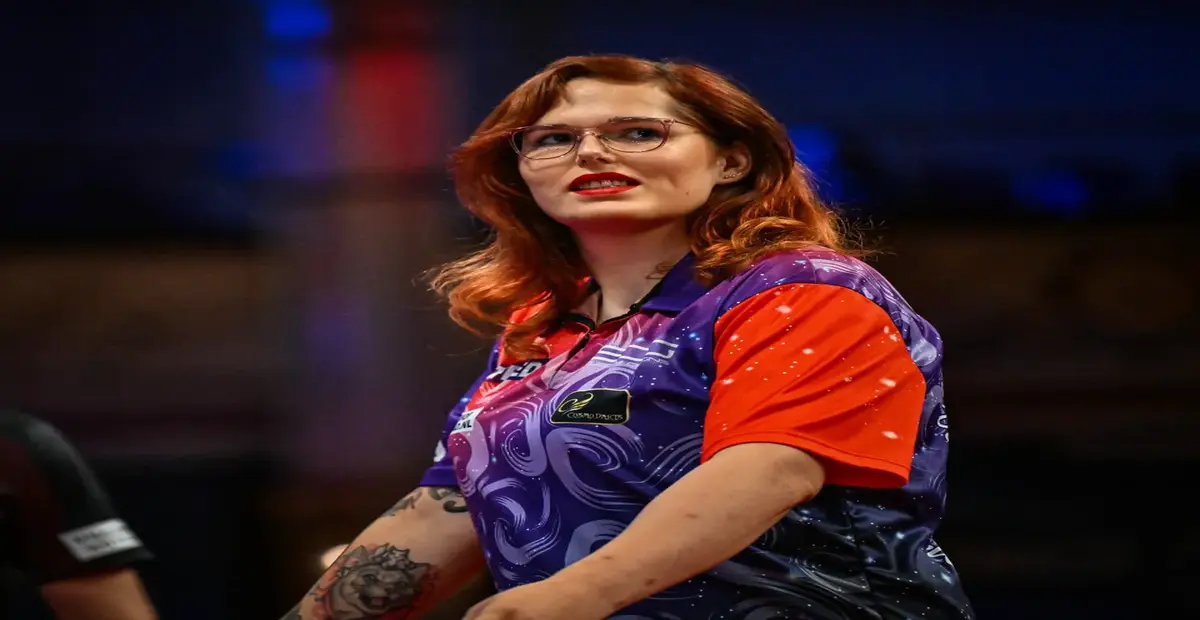
The debate over inclusion and fairness in professional darts has been reignited in dramatic fashion, with Noa-Lynn van Leuven delivering a powerful and deeply personal response to a ruling she says has “changed everything” and left her career ambitions in ruins. The Dutch player, who has become one of the most visible transgender figures in the sport, described the decision as “cruel” and emotionally devastating, insisting it has effectively derailed the progress she fought hard to achieve.
At the center of the controversy is a policy shift introduced by the Darts Regulation Authority, which now prevents transgender women from competing in women’s-only tournaments. The rule was implemented following a review into eligibility criteria and applies immediately across sanctioned events. For Van Leuven, the consequences have been swift and profound, stripping her of the platform where she had built her recent success.
The timing of the announcement only added to the sense of shock. Van Leuven revealed she was informed of the decision just a day before it was made public, leaving her little opportunity to process the news or prepare for its impact. “It changed everything,” she said, capturing the abrupt and life-altering nature of the situation. What had once been a clear and structured career path suddenly became uncertain overnight.
The emotional toll has been significant. Van Leuven explained that the ruling triggered deeply personal memories, recalling earlier experiences of rejection and misunderstanding. “It brings up childhood memories of people not accepting me,” she said, underlining how the issue extends far beyond sport. For her, this is not just about eligibility rules, but about identity, dignity, and the right to compete in a space where she felt she belonged.
Her frustration is also tied to the sense that her career has been interrupted without warning or choice. Having established herself within the women’s game, she now finds that avenue closed. “Apparently, I just got retired — not by choice,” she remarked, expressing disbelief at how quickly her opportunities have been taken away. The statement reflects both anger and sadness, as well as a feeling of being pushed out of the sport’s structure.
Van Leuven’s rise in darts had been widely viewed as a milestone for representation. Competing within the Professional Darts Corporation framework, she gained recognition through consistent performances and notable victories on the women’s circuit. Her achievements demonstrated not only her ability but also the possibility of greater inclusivity within the sport.
Now, that progress has been halted. While she remains eligible to compete in open events, the removal from women’s competitions represents a major loss. Those events had provided a clear pathway for development, exposure, and qualification for larger tournaments. Without them, her route forward becomes far less certain and considerably more challenging.
The governing body’s reasoning for the rule change centers on concerns about fairness. The review concluded that biological differences between male and female athletes could potentially influence performance, even in darts. Factors such as reach, muscle composition, and coordination were cited as areas where cumulative advantages might exist, leading to the decision to restrict participation in women’s events.
Van Leuven has strongly disagreed with that assessment. She argues that darts is fundamentally a game of precision, mental strength, and consistency, rather than physical dominance. In her view, the differences highlighted do not translate into meaningful competitive advantages at the oche. She believes the decision overlooks the nature of the sport and unfairly targets a specific group of athletes.
“This isn’t just about me,” she said, emphasizing the broader implications of the ruling. She described it as “another huge hit for the trans community,” expressing concern that it sends a discouraging message to others who hope to compete. Her comments reflect a wider frustration felt by many who see the decision as part of an ongoing pattern of exclusion across different sports.
The reaction within the darts community has been divided. Some argue that the policy is necessary to maintain fairness in women’s competitions, while others believe it represents a step backward in efforts to make the sport more inclusive. The discussion mirrors debates happening globally, as governing bodies across various disciplines attempt to balance complex and often competing priorities.
For Van Leuven, however, the debate is not theoretical. The impact is immediate and deeply personal. Years of effort, training, and sacrifice have led her to this point, only for her path to be abruptly altered. Darts had become a central part of her life, offering not just competition but also a sense of purpose and belonging. Losing that platform has forced her to rethink her future in the sport.
Despite the setback, Van Leuven has made it clear that she is not ready to walk away. “I’m not done,” she said, signaling her determination to continue competing and pursuing her ambitions. While the options available to her may now be more limited, she is exploring opportunities in open competitions where she can still test her skills and remain active in the game.
Her resilience is a defining feature of her journey. Before establishing herself in professional darts, she faced numerous personal challenges that shaped her path. The sport became a way to rebuild confidence and pursue a new direction, making her current situation all the more difficult. Yet it is that same resilience that now drives her to keep going despite the obstacles.
The coming months will be critical in determining how her career evolves from here. Adjusting to the new landscape will not be easy, but Van Leuven’s determination suggests she will continue to fight for her place. Whether through competition or advocacy, she remains a central figure in an issue that extends far beyond darts.
More broadly, her situation highlights the ongoing complexity of balancing inclusion and fairness in sport. There are no easy answers, and decisions like this are likely to continue generating debate. As policies evolve, the experiences of athletes like Van Leuven will play a key role in shaping the conversation.
For now, the immediate reality is one of disruption and uncertainty. A player who had been building momentum and making history has seen her trajectory suddenly altered. The disappointment is clear in her words, but so too is her resolve.
While the ruling may have “changed everything,” it has not extinguished her ambition. In a sport where mental strength is paramount, that determination could prove to be her greatest asset as she navigates the challenges ahead and seeks to carve out a new path in the game she loves.