
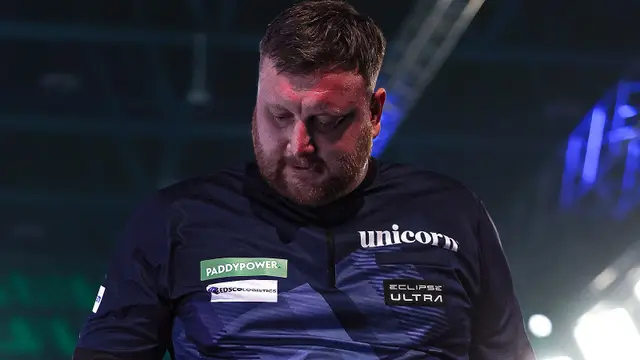
Cameron Menzies’ Heartbreaking Admission Reveals the True Cost of One Moment of Anger
For many darts fans, the image of Cameron Menzies punching the drinks table after his World Darts Championship defeat will be remembered for years. It was one of the most shocking scenes ever witnessed on the Alexandra Palace stage. Blood dripped from his hand, the crowd reacted with disbelief, and social media exploded with criticism.
But months later, the Scottish star has made a heartbreaking admission that shows the real story goes far deeper than one emotional outburst.
Menzies recently revealed that the damage caused by that incident was far more serious than many people first realized. After repeatedly punching the table following his painful first-round defeat to Charlie Manby, he suffered significant injuries to his throwing hand, required surgery, and even lost feeling in parts of his fingers. At one point, he admitted he considered walking away from darts completely. Reports indicate he could not properly feel his fingers for weeks and still faces ongoing treatment and recovery. The injury was so severe that specialists became involved, and Menzies later described the incident as a “massive mistake” that he must live with every day.
The original incident happened after a dramatic 3-2 loss to young debutant Charlie Manby at the World Championship. Menzies had led twice during the match and looked on course to progress, only for the contest to slip away in the deciding set. The frustration boiled over immediately after the final dart landed, leading to the now-infamous reaction. He later apologized publicly and acknowledged that his behavior was unacceptable.
What makes the story particularly sad is that Menzies was already carrying a heavy emotional burden before he stepped onto the stage. Following the incident, he explained that the recent death of his uncle had deeply affected him. He described his uncle as someone who had treated him like a son, and the grief had been weighing heavily on his mind throughout the tournament. The pressure of competing at the biggest event in darts while dealing with personal loss created an emotional storm that eventually erupted in full view of millions.
That does not excuse what happened. Professional athletes are expected to maintain control, especially on the sport’s biggest stage. Many fans felt disappointed by the scenes, and rightly so. Darts has worked hard to build its image as a family-friendly sport, and moments like that can overshadow the incredible performances happening on stage.
However, there is also a human side to this story that should not be ignored.
One thing that often gets forgotten in professional sports is that athletes are not machines. Fans see the averages, rankings, trophies, and prize money, but they rarely see the emotional struggles taking place behind the scenes. Menzies has always been known as one of the sport’s most emotional competitors. His passion is part of what makes him entertaining to watch, but passion can become a weakness when emotions are not properly managed.
The consequences have been brutal.
Instead of simply regretting an embarrassing moment, Menzies has had to deal with physical pain, surgery, loss of feeling in his hand, and a major dip in confidence. He even admitted there were moments when he felt like giving up the sport altogether. For a professional darts player, damaging your throwing hand is about as serious as a footballer injuring both legs or a tennis player damaging their serving arm.
The reaction from the darts community has been mixed. Some fans criticized him heavily, arguing that professional players must be held accountable for their actions. Others expressed sympathy, suggesting the incident was a sign of someone struggling emotionally rather than simply displaying poor sportsmanship. Discussions among fans frequently focused on the need for better mental health support for players dealing with pressure, grief, and expectations.
In many ways, the story serves as a reminder of how quickly a single moment can change everything.
Had Menzies walked off the stage quietly after losing, the defeat would likely have been forgotten within days. Instead, one emotional reaction created months of physical recovery, negative headlines, and ongoing scrutiny. It became bigger than the match itself.
Yet there may be a positive side emerging from the ordeal.
Recent reports suggest Menzies has been working on his mental wellbeing and has sought help through hypnotherapy. He has spoken positively about the impact it has had on both his game and his personal life. According to Menzies, it has helped him manage anxiety, improve his mindset, and rediscover some enjoyment in the sport. Those close to the situation believe he is now moving in a healthier direction after one of the most difficult periods of his career.
My view is that the biggest lesson here is not about anger. It is about pressure.
Professional darts has become more demanding than ever. Players are constantly travelling, competing, dealing with rankings pressure, media attention, financial expectations, and online criticism. Most handle it remarkably well. Occasionally, however, someone reaches a breaking point.
Cameron Menzies reached his.
The image of him punching the table will always be part of his story, but it should not define his entire career. What should matter more is how he responds afterward. Admitting mistakes, seeking help, and working to improve takes far more courage than throwing a dart on stage.
The heartbreaking reality is that one moment of frustration nearly cost Menzies far more than a match. It threatened his career, damaged his health, and left scars that may never fully disappear.
Now the challenge is turning that painful chapter into a comeback story.
Because if Cameron Menzies can recover from this setback and return stronger, it might eventually be remembered not as the moment that broke him—but as the moment that changed him.