
Concerns continue to build around Gian van Veen as the promising Dutch talent struggles to regain his rhythm following kidney stone surgery, with many in the sport beginning to question how deeply the issue is affecting his performances. What once looked like a straightforward recovery has now developed into a challenging period marked by inconsistency, visible frustration, and a noticeable dip in confidence on the oche.
Van Veen, still only 24, had been riding a wave of momentum not long ago. Known for his fearless scoring power, quick tempo, and composed presence under pressure, he had quickly established himself as one of the most exciting young players in professional darts. His ability to compete with seasoned names and deliver high-quality performances made him a player many expected to keep climbing the rankings. However, recent weeks have painted a very different picture.
A string of underwhelming displays and early exits from tournaments has raised eyebrows across the darts community. The sharpness that once defined his game appears to have dulled, and there are moments where his natural flow seems interrupted. Instead of the confident, free-scoring player fans had grown accustomed to, there is now a sense of hesitation creeping into his performances.
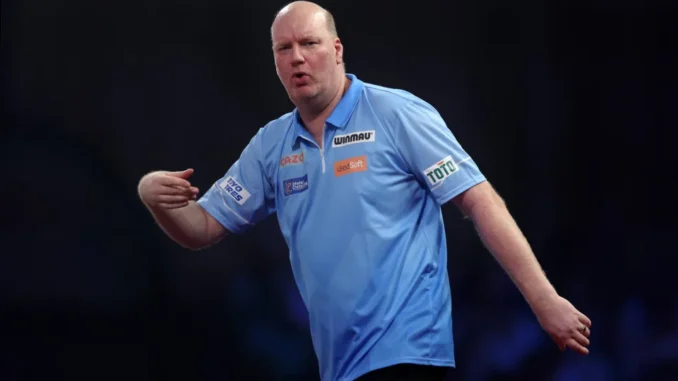
Among those keeping a close eye on the situation is fellow Dutchman Vincent van der Voort, who has offered a candid assessment of Van Veen’s current struggles. Having observed him over time, Van der Voort believes the issues go beyond simple loss of form and may be tied to the after-effects of his recent surgery.
He pointed out that Van Veen’s overall energy and demeanor appear to have changed. In the past, he was lively, quick on his feet, and often carried a relaxed, upbeat attitude both on and off the stage. Now, that spark seems less visible. There is a subtle shift in his body language—less urgency, less ease—which suggests that something is still not quite right beneath the surface.
Van der Voort warned that these kinds of struggles can gradually “eat away” at a player if they are not addressed. Even if the physical discomfort from the kidney stones has subsided, the broader impact of the experience may still be lingering. Recovering from surgery is not always just about physical healing; it can also affect stamina, confidence, and mental clarity, all of which are crucial in a sport like darts.
The timing of Van Veen’s return to competition has also been questioned. It is believed that he resumed playing relatively soon after the procedure, eager to maintain his place in a demanding schedule. However, there were early signs that his body might not have been fully ready. At one point, he admitted to feeling exhausted after only a short period of play, which is a significant concern in a sport that requires sustained concentration and precision.
That early fatigue may have set the tone for what followed. When a player returns before reaching full fitness, they often find themselves trying to compensate in other areas. This can lead to overthinking, especially when results do not go as expected. Instead of relying on instinct, the player begins to analyze every throw, every movement, and every decision, which can disrupt their natural rhythm.
Technically, there have been signs that Van Veen is still searching for consistency. Observers have noted small but important variations in his throw and timing. While these might seem minor on the surface, in darts they can have a major impact. A slight change in release or stance can affect accuracy, and once confidence begins to drop, those issues can quickly become magnified.
Van der Voort explained that this is often how deeper problems develop. A player notices something is off and tries to fix it, but in doing so, they may create additional complications. Over time, this can turn into a cycle of constant adjustments, where nothing feels completely natural anymore. Breaking out of that cycle requires patience and, often, a willingness to step back and reset.
The psychological side of the situation cannot be overlooked either. Darts is as much a mental game as it is a physical one, and periods of poor form can weigh heavily on a player’s mind. According to Van der Voort, these struggles do not end when the match is over. Players often replay moments in their heads, searching for answers and questioning what went wrong. This kind of mental strain can build up over time, making it even harder to perform freely.
For Van Veen, the pressure is intensified by expectations. As one of the sport’s rising stars, he is constantly under scrutiny. Fans and analysts expect him to deliver, and every performance is closely watched. While he is known for being thoughtful and composed, even the most level-headed players can feel the weight of expectation during difficult periods.
Despite the concerns, there is still strong belief in Van Veen’s ability to turn things around. His talent is unquestioned, and he has already shown glimpses of what he can achieve at the highest level. The key now is finding a way to rebuild his confidence and rediscover the natural flow that once made him such a dangerous competitor.
Those close to the sport believe that patience will be crucial. Rather than trying to fix everything at once, Van Veen may benefit from focusing on small improvements, allowing his game to settle gradually. Trusting his instincts again, rather than overanalyzing every detail, could help him regain his rhythm.
Van der Voort remains optimistic that this challenging period will ultimately prove to be a valuable learning experience. Many top players have faced similar setbacks in their careers, and overcoming them often leads to growth. The ability to navigate adversity is what separates good players from great ones, and this could be a defining moment for Van Veen.
For now, the focus will be on recovery—both physically and mentally. Whether it is regaining stamina, refining technique, or simply finding enjoyment in the game again, the road back to top form will require time and resilience. The demanding nature of the darts calendar leaves little room for rest, but finding the right balance will be essential.
The darts world will be watching closely as Van Veen works through this difficult phase. There is no doubt about his potential, and many are eager to see him return to his best. While the current struggles may be concerning, they are also a reminder of the challenges that come with competing at the highest level.
If he can navigate this period successfully, it could become a turning point in his career. Adversity often shapes athletes in ways success cannot, and this experience may ultimately make Van Veen stronger, more resilient, and better equipped for the demands of professional darts.
Leave a Reply