
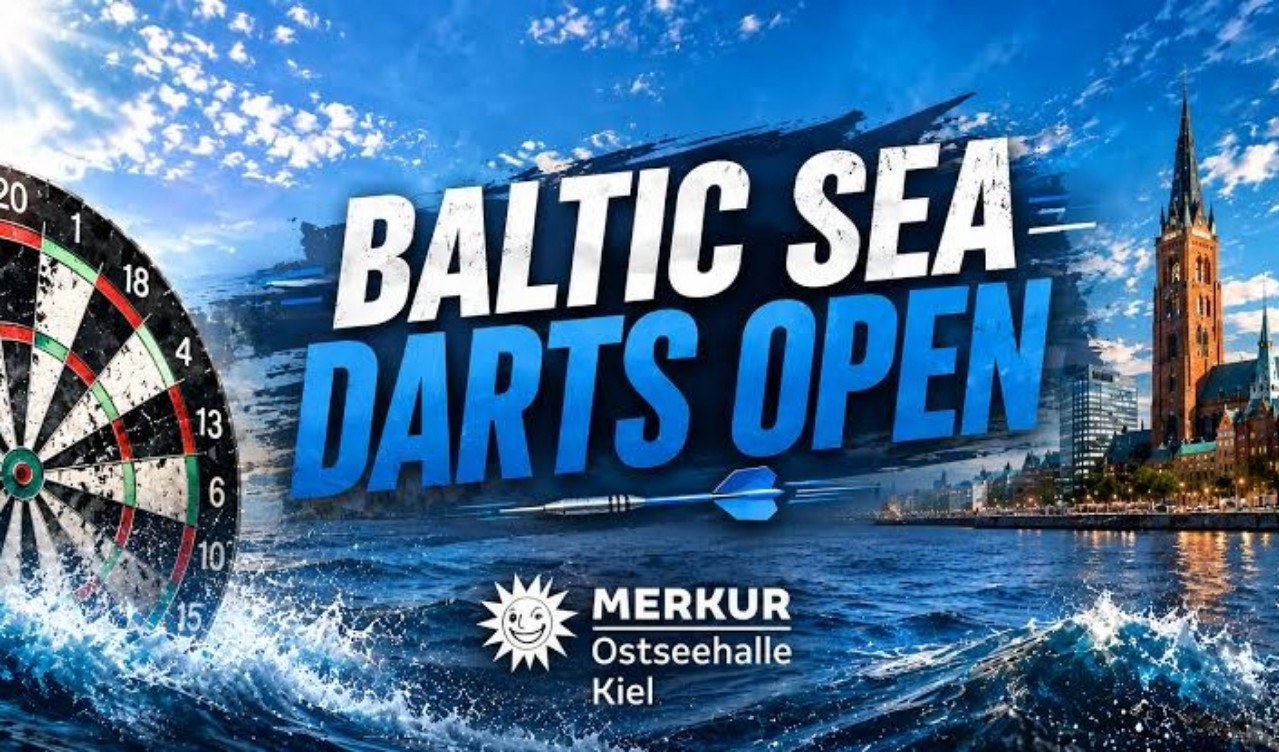
The 2026 Baltic Sea Darts Open is set to be one of the standout events on the Professional Darts Corporation (PDC) European Tour calendar, drawing huge attention from fans across the world. Hosted at the Wunderino Arena in Kiel, Germany, the tournament runs from 29–31 May 2026 and brings together 48 of the world’s top darts players competing for ranking points, prestige, and a significant prize fund of around £230,000.
As excitement builds ahead of the event, one of the biggest questions for fans in different regions is how to watch the action live. With darts continuing its rapid rise in global popularity, coverage has expanded across television networks and streaming platforms, making it easier than ever for supporters in the United Kingdom, United States, and Australia to follow every leg, checkout, and dramatic finish.
In the United Kingdom, darts remains a major part of the sports broadcasting landscape. Live coverage of the Baltic Sea Darts Open is expected to be shown primarily on Sky Sports, which holds long-standing rights to many PDC events. Subscribers will be able to watch the tournament across dedicated sports channels, with full coverage from the opening rounds through to the final. Sky Sports typically provides extensive darts programming, including pre-match build-up, expert analysis, and post-match interviews that give fans deeper insight into player performances and key moments.
For those who prefer online viewing, Sky Sports’ digital platforms will also offer live streaming. This allows fans to watch matches on smartphones, tablets, laptops, and smart TVs. The flexibility of streaming has become increasingly important for modern audiences, especially for viewers who may not be at home during live sessions. Whether it’s afternoon fixtures or evening finals, UK fans will have multiple ways to stay connected to the tournament.
Outside the UK, international coverage plays a vital role in bringing the event to a global audience. In the United States, darts continues to grow steadily, with more fans tuning in each year. While traditional TV coverage is still limited compared to Europe, streaming services have stepped in to fill the gap. Platforms such as PDCTV, the official streaming service of the PDC, are expected to carry full coverage of the Baltic Sea Darts Open. This includes all main stage matches, from the early rounds right through to the final.
PDCTV typically offers both live and on-demand content, meaning American fans can watch matches in real time or replay key sessions later. This is particularly useful given the time difference between Europe and the United States, which often means live matches take place during working hours or late at night. With on-demand access, fans never miss the most important moments, even if they cannot watch live.
In addition to PDCTV, other sports streaming platforms may also carry selected coverage depending on regional broadcasting agreements. This expanding accessibility reflects the growing interest in darts in the US, where the sport has gained a stronger following thanks to increased exposure of PDC events and rising American participation on the professional circuit.
Meanwhile, in Australia, darts enjoys a passionate fan base and strong viewing numbers for major tournaments. Coverage of the Baltic Sea Darts Open is expected to be available through established sports broadcasters and subscription streaming services that hold rights to PDC events. These platforms usually provide comprehensive coverage, including live matches, highlights, and replay packages.
Because of the time difference between Germany and Australia, many live sessions will take place during early morning hours or overnight for Australian viewers. As a result, highlights and replay services are especially important. Fans can catch up on all the action at convenient times, ensuring they remain fully engaged with the tournament even if they cannot watch live sessions in real time.
The structure of the Baltic Sea Darts Open follows the standard European Tour format, which adds to its excitement and unpredictability. The top 16 players on the PDC Order of Merit are seeded and automatically placed into the second round. They are joined by 32 qualifiers who battle through the first round for the chance to face the sport’s biggest names.
This format often creates dramatic early-round clashes, where lower-ranked players have the opportunity to challenge established stars. It is not uncommon for upsets to occur, especially when qualifiers come into the tournament full of confidence and without pressure. As the event progresses, the intensity increases, leading to high-stakes knockout matches in front of packed crowds in Kiel.
Matches are played in a “legs” format, meaning each leg is a single mini-game where players must score points from 501 down to zero, finishing on a double. This format rewards consistency, precision, and mental strength. Even the smallest mistake can shift momentum, making every leg crucial. Fans can expect plenty of high scoring, dramatic finishes, and tense deciding legs throughout the weekend.
Broadcast coverage typically begins with afternoon sessions featuring first-round matches, followed by evening sessions that include second-round games and later-stage encounters. By the final day, the quarter-finals, semi-finals, and championship match take centre stage, delivering the most high-pressure darts of the entire tournament. Broadcasters often enhance the experience with expert commentary, player statistics, and behind-the-scenes insights.
One of the reasons the Baltic Sea Darts Open attracts so much attention is its importance in the wider PDC European Tour. Performances here contribute to the Order of Merit rankings, which determine qualification for major televised tournaments such as the World Matchplay and the World Championship. As a result, every match carries significance beyond just the trophy itself.
For players, success in Kiel can be a turning point in their season. For fans, it offers a chance to see both established champions and rising talents competing on the same stage. The mix of experience and emerging skill often produces unpredictable outcomes, keeping audiences engaged from start to finish.
As global interest in darts continues to grow, the availability of multi-platform coverage ensures that fans across different continents can stay connected to the sport. Whether watching on Sky Sports in the UK, streaming via PDCTV in the United States, or catching highlights through Australian broadcasters, supporters have more access than ever before.
With its competitive field, energetic atmosphere, and crucial ranking implications, the 2026 Baltic Sea Darts Open promises another thrilling chapter in the darts calendar. Thanks to widespread television and streaming coverage, fans around the world will be able to follow every moment of the action as the drama unfolds in Kiel, from the opening throw to the final double that decides the champion.