
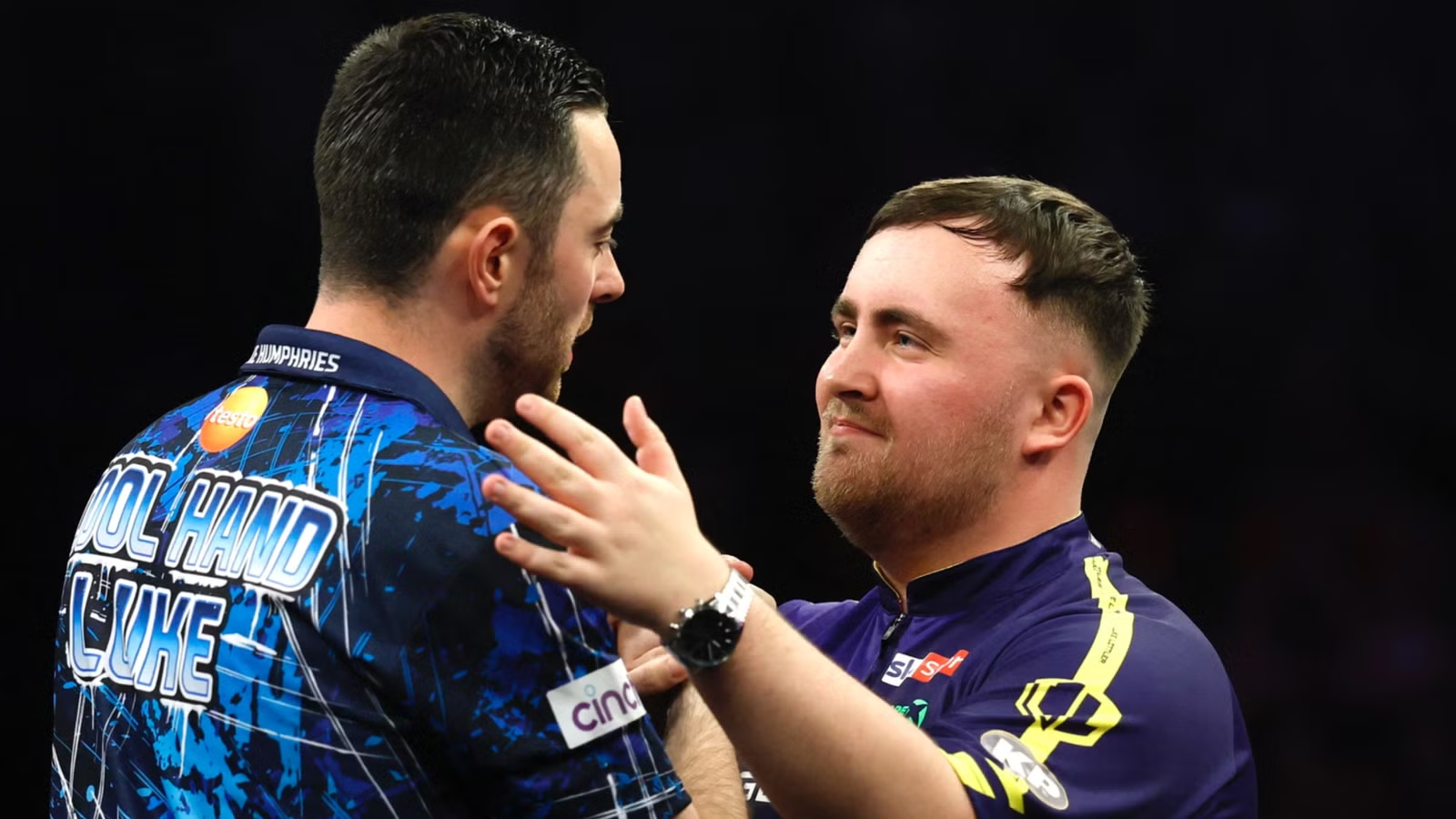
It was supposed to be an unforgettable evening of sporting excellence, where the raw intensity of professional darts took center stage. Luke Littler, the dazzling young prodigy who has taken the sport by storm, squared off against Luke Humphries, the experienced world champion and current number one, in a final that promised high drama and razor-sharp precision. The arena buzzed with thousands of passionate fans, the atmosphere electric as the two players battled it out on the oche. Yet, what unfolded went beyond the thrilling contest between these two elite athletes. A sudden, politically charged chant erupted from parts of the crowd, targeting Britain’s Prime Minister and pulling attention away from the action. In response, broadcaster ITV acted quickly to keep the focus squarely on the match and shield its live audience from the disruption.
The moment came during one of the match’s most tense and gripping legs. As the pressure mounted and the scoreline hung in delicate balance, sections of the spectators broke into a loud, repetitive chant set to the familiar riff of The White Stripes’ “Seven Nation Army.” The lyrics were crude and directed squarely at Prime Minister Sir Keir Starmer, using strong offensive language that crossed the line from sporting banter into explicit political protest. Darts events are known for their lively, boisterous crowds, where chants and songs often fuel the excitement and create a unique party-like vibe. However, this particular outburst stood out as a rare instance where the energy veered sharply into controversial territory, momentarily overshadowing the skill on display between the sport’s brightest young star and one of its most accomplished veterans.
ITV, handling the live broadcast, responded without hesitation. The network muted the arena audio and replaced it with overlaid crowd noise to prevent the chant from reaching viewers at home. An on-screen message appeared, offering an apology for any offensive language that might have slipped through. This decisive intervention ensured the coverage remained professional and centered on the competition, avoiding any prolonged exposure to the politically sensitive interruption. While crowd participation is a cherished part of darts culture—adding to the sport’s accessibility and raucous appeal—broadcasters have occasionally had to manage similar situations in the past. This incident highlighted the delicate balance between celebrating fan enthusiasm and maintaining appropriate broadcast standards, especially during a high-profile final watched by a wide audience.
Despite the brief distraction, the match itself delivered everything fans could have hoped for. It was a classic encounter filled with breathtaking checkouts, dramatic momentum shifts, and the kind of nerve-wracking closeness that defines elite darts. Littler, at just 19 years old, demonstrated why he is widely regarded as a generational talent. He started the contest with his trademark fearless approach, throwing with uncanny accuracy and composure far beyond his years. Early on, Humphries edged ahead in key moments, capitalizing on his experience and consistent scoring. But Littler refused to wilt under the pressure. He clawed his way back into contention, leveling the match through a series of superb finishes and then seizing control when the stakes were at their highest.
In the deciding set, the tension reached its peak. Both players traded blows with remarkable precision, the crowd roaring with every maximum score and crucial dart. Littler ultimately prevailed in a nail-biting finish, securing the title by the narrowest of margins. His victory was a testament not only to his natural ability but also to his extraordinary mental resilience. Speaking to ITV immediately afterward, a visibly exhausted Littler admitted he was “completely shattered.” He explained that he had given everything he had during the intense battle and somehow found the reserves to push through. The teenager described the entire week as “weird and tough at times,” with challenges both on and off the stage, yet he emphasized that every single leg and every match had been worth the fight. His ability to stay focused amid the chaos, including the unexpected crowd noise, only added to the admiration surrounding his performance.
This latest triumph adds yet another prestigious trophy to Littler’s rapidly growing collection. Since bursting onto the professional scene, he has amassed an impressive array of titles, winning multiple major events and establishing an unbeaten record in several televised finals. His consistency, powerful finishing, and unflappable demeanor under pressure have already sparked comparisons to the sport’s legendary figures. At such a young age, Littler’s ascent feels almost unstoppable, and this win further cements his status as one of the most exciting prospects darts has ever seen. Fans and pundits alike marvel at how he handles the spotlight, the expectations, and the physical and mental demands of competing at the highest level week after week.
Humphries, for his part, brought his usual blend of class, determination, and high-level skill to the final. As the reigning world number one, he entered the match as a formidable opponent, having already lit up the tournament with a stunning nine-darter earlier in the competition—a perfect leg that reminded everyone of his world-class pedigree. Throughout the final, he pushed Littler to the limit, showcasing sharp scoring and tactical awareness. Even in defeat, Humphries displayed great sportsmanship, praising his younger rival’s performance and acknowledging how fine the margins had been between victory and defeat. His commitment to fitness and continuous improvement has been evident in recent times, and despite falling short here, his resilience and competitive spirit continue to define a career filled with notable achievements.
In the hours and days following the final, discussions naturally split between the on-stage brilliance and the off-stage controversy. Social media buzzed with reactions to the chant, with opinions ranging from strong defenses of free expression in a live sporting environment to criticisms of the timing and content, arguing it detracted from the players’ efforts. Many fans, however, chose to keep the spotlight on the sport itself, celebrating the exceptional quality of play and the compelling rivalry that is developing between Littler and Humphries. Their contests are becoming must-watch events, built on mutual respect, intense competition, and a shared drive to be the best.
As the darts calendar moves forward, attention now shifts to the next major tournaments and championships on the horizon. Both players will be motivated to build on their performances—Littler aiming to extend his remarkable winning streak and continue his meteoric rise, while Humphries will be determined to bounce back, reclaim titles, and reestablish his dominance at the very top. Their budding rivalry promises more memorable clashes ahead, each one potentially adding new chapters to their legacies.
Ultimately, the evening served as a vivid reminder of why darts continues to captivate audiences worldwide. It is a sport that blends incredible individual skill with a vibrant, inclusive atmosphere that draws in fans from all walks of life. The electric energy inside the arena, the unpredictable twists and turns of a close match, and the raw emotion on display create moments that linger long after the final dart is thrown. Even with the brief political interruption that forced broadcasters to adapt, the night belonged to the players and the thrilling contest they produced. In an era where sports often intersect with wider societal conversations, this final underscored both the passion of the crowd and the enduring appeal of pure sporting drama. As Littler lifted the trophy, the focus rightly returned to the future—a future that looks incredibly bright for him, for Humphries, and for the sport of darts as a whole.
Leave a Reply