
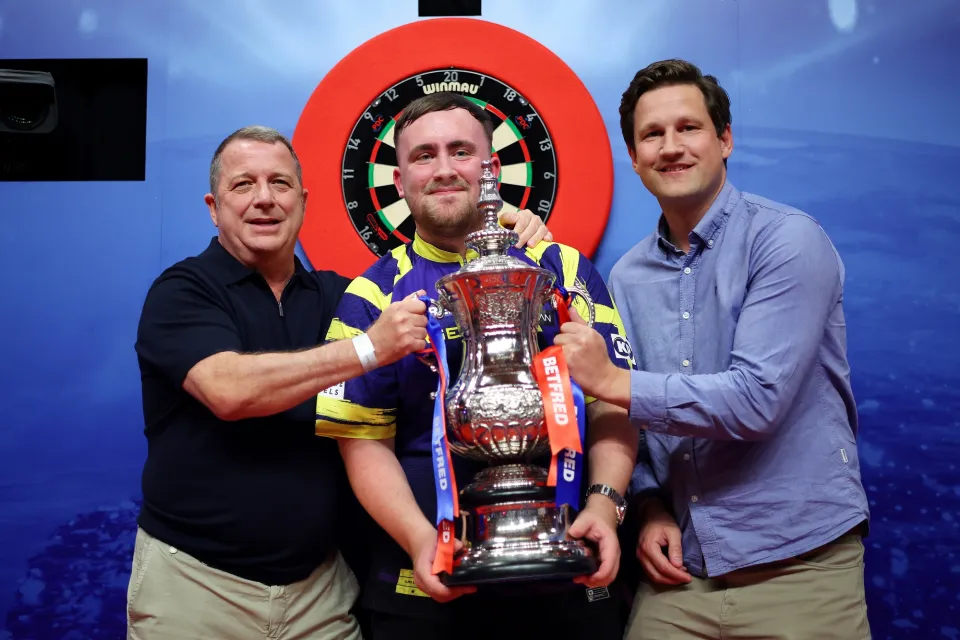
Luke Littler has become one of the biggest names in darts, but his impact is no longer measured by trophies, prize money and records alone. The teenage sensation is also helping transform the fortunes of the company that backed him long before he became a household name.
Target Darts, the manufacturer that began sponsoring Littler when he was just 12, has seen its annual turnover soar beyond £100 million. The numbers tell a remarkable story about the commercial power of a player who has taken darts to a new audience and turned his sporting success into a business opportunity.
And here is the fascinating part: this is not simply about selling more darts to existing fans. Littler’s rise is helping demonstrate how one exceptional sporting talent can influence an entire industry, from equipment sales to international expansion.
The Figures Behind the Remarkable Rise
Target’s parent company, Elysian Holdings Ltd, recorded turnover of £106.4 million, up from £53.7 million in the previous year. Gross profits also doubled, reaching £57.4 million.
Those are enormous numbers for a business operating in a sport that was once largely associated with pubs, traditional tournaments and a loyal core audience.
The scale of that growth is even more impressive when considering how quickly Littler has moved from promising junior player to one of darts’ most recognisable figures. His influence is now visible in the commercial side of the game, not just in the results column.
Of course, a company’s financial performance rarely depends on one individual alone. Target Darts has its own products, manufacturing operations, distribution networks and business strategy. Nevertheless, the timing of this surge makes it difficult to ignore the importance of the Littler effect.
His popularity has given fans another reason to buy darts equipment, while his signature range offers supporters a direct connection to a player they admire.
From a Young Prospect to a Commercial Powerhouse
Target’s relationship with Littler began when he was just 12 years old, after chairman Garry Plummer spotted his potential at a youth world championship.
Plummer explained the decision by saying: “We’d never taken on someone so young, but I saw something special in him.”
He added: “Watching him grow since, as both a player and a person, has been a privilege. His achievements on and off the oche have been remarkable.”
Those words carry extra significance now. Target was investing in a young talent before the wider sporting world fully understood what he might become.
Littler’s breakthrough at the 2024 World Championship, when he reached the final as a 16-year-old, changed the conversation around his career. Suddenly, darts had a teenage star capable of attracting attention well beyond its established audience.
He followed that breakthrough with major tournament success, winning the World Championship in 2025 and defending his title in 2026. His second triumph also made him the winner of the tournament’s first £1 million prize.
That sequence of achievements helped establish something valuable for a manufacturer: a player whose success repeatedly puts his equipment, branding and commercial partnerships in front of the public.
A £20 Million Deal Shows the Partnership’s Importance
Target and Littler strengthened their relationship in January 2026 with a reported 10-year agreement worth around £20 million.
The deal was described as the biggest player-brand agreement in darts history. It reflected the company’s belief in his future influence and the value of keeping him associated with its products for the long term.
This is where the story becomes particularly interesting.
A sponsorship deal of that size is not simply a reward for winning tournaments. It represents a long-term bet on a player’s ability to attract attention, sell products and remain commercially relevant.
Littler is still young, which gives the partnership considerable potential. If he continues winning major titles and attracting new audiences, Target could benefit from years of exposure and demand for his branded equipment.
Naturally, there are no guarantees in sport. Form changes, new stars emerge and consumer interests evolve. But Target has already secured a relationship with a player whose impact has extended far beyond the dartboard.
For Littler, the arrangement also provides a foundation for building his career outside tournament prize money. The partnership links his sporting achievements to a business capable of developing and selling products around his name.
China and the International Opportunity
One of the most revealing details in the latest report is the contribution from China, which generated £12.1 million in revenue for the business.
That matters because the future of darts cannot depend entirely on its traditional British and Dutch audiences.
Littler has become an important figure during a period when the sport is seeking to broaden its international appeal. A recognisable champion can help unfamiliar audiences discover darts, while branded equipment gives new fans a practical way to participate themselves.
Target has been expanding its international ambitions, with Germany, North America and China among the markets it considers important for future growth. Its presence in China, where it has more than 300 employees, also highlights the scale of its operations beyond the professional circuit.
There is a logical connection here. Watching a major darts final might introduce someone to the sport, but buying a set of darts or trying a board at home can turn that initial interest into a lasting hobby.
Littler’s appeal potentially helps bridge that gap between entertainment and participation.
However, international expansion requires more than one famous player. Manufacturers need reliable distribution, accessible products, local engagement and a reason for beginners to keep playing. Target’s commercial challenge is to convert the attention surrounding Littler into sustained demand, even when he is not competing on television.
Darts Is Changing, and the Business Is Changing With It
The traditional image of darts is being challenged by younger players, new audiences and technological developments.
Target has explored products such as its Omni automatic scoring system and new game formats designed to make darts more accessible to casual players. It has also looked beyond traditional venues, including partnerships bringing dartboards into five-a-side football facilities.
That strategy is important because commercial success built around a single athlete can be vulnerable. A broader customer base gives a company more ways to grow, from home equipment and technology to social entertainment.
There are also practical challenges. Darts manufacturers have faced volatility in the price of tungsten, a key material used in quality dart barrels. Rising production costs can put pressure on margins, even when sales are increasing.
Target therefore needs to balance the benefits of Littler’s popularity with the less glamorous work of managing costs, improving products and reaching new customers.
The real test will be whether today’s remarkable growth becomes a sustainable business model rather than a temporary surge driven by one superstar.
What Happens Next for Littler and Target?
For darts fans, this story is another reminder that Littler’s influence extends well beyond his performances on the oche. He is helping reshape the commercial landscape of a sport that has found a powerful new audience.
Target’s turnover rising from £53.7 million to £106.4 million in a year is extraordinary, and its growing international presence suggests there is still room for further expansion.
But the most interesting question is what happens next. Can Target turn Littler’s popularity into a lasting global business while helping introduce a new generation to darts? And can the sport maintain this momentum as more players compete for attention?
Littler has already delivered the trophies and headlines. Now, his partnership with Target is showing just how much commercial value a sporting superstar can create.
For me, that is one of the biggest stories in darts right now. Is Littler becoming the figure who takes the sport to an entirely new level, or will the real measure of his legacy be how much growth continues after his playing career eventually ends?
Share your thoughts on Littler’s growing influence and whether darts is entering its biggest commercial era yet.