
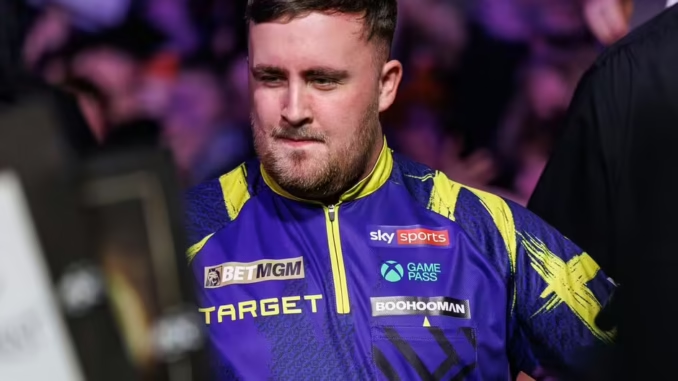
Luke Littler has revealed he is prepared to explore a completely different sport as part of his efforts to improve his fitness and lose weight, offering a candid glimpse into how the teenage star is thinking about his long-term development both on and off the oche.
The 17-year-old sensation has taken the darts world by storm over the past year, rising from a promising youngster to one of the most talked-about names in the sport. Known for his incredible scoring power, composure under pressure, and fearless attitude on the biggest stages, Littler has already achieved remarkable success at an age when most players are still learning their craft. Yet despite his rapid rise and growing list of accomplishments, he is far from satisfied.
In a refreshingly honest admission, Littler explained that he is keen to lose weight and improve his overall fitness, and believes that taking part in another sport could help him achieve that goal. Rather than sticking strictly to gym sessions or routine training, he appears drawn to something more engaging and competitive—an activity that would push him physically while also keeping him mentally stimulated.
It is a striking insight into the mindset of a player who is already operating at an elite level. Many athletes in his position might be tempted to stick with what is already working, especially given the success he has enjoyed in such a short period of time. However, Littler’s comments suggest that he is thinking ahead, looking for ways to refine every aspect of his performance and ensure that he can maintain his high standards over the long term.
The idea of turning to another sport is not about abandoning darts, but rather about complementing it. Darts may not traditionally be viewed as a physically demanding sport in the same way as football or athletics, but the modern game tells a different story. Long matches, intense concentration, and a packed schedule all require stamina, focus, and resilience. Improving fitness can have a direct impact on consistency, particularly during high-pressure tournaments that stretch late into the night.
Littler’s willingness to address his fitness openly has also resonated with fans, many of whom see it as a sign of maturity beyond his years. He is not reacting to a downturn in form or a lack of results—instead, he is proactively identifying areas where he can improve, even while continuing to perform at a world-class level.
There have even been moments where his openness about fitness has been paired with a sense of humor. In one light-hearted exchange, Littler joked about the idea of taking on endurance legend Mo Farah in a hybrid challenge that would combine running with darts finishing. While clearly said in jest, the comment highlights his willingness to embrace new challenges and think creatively about how to stay active.
Behind the humor, though, lies a serious intent. The modern darts landscape is evolving, and players are increasingly recognizing the benefits of improved physical conditioning. Matches are often decided by the finest of margins, and maintaining energy levels over long periods can be crucial. As a result, fitness is becoming a more important factor than ever before.
Littler’s situation also reflects the demands of a hectic professional schedule. With frequent travel, late-night matches, and constant media attention, staying physically and mentally fresh can be a challenge. Engaging in another sport could offer a valuable outlet, providing both a physical workout and a mental reset away from the pressures of competition.
At the same time, his performances on the board continue to underline just how talented he is. Littler has been a standout figure in the Premier League Darts, delivering a series of impressive displays against some of the best players in the world. His ability to compete—and often dominate—against seasoned professionals has marked him out as a generational talent.
What makes his latest comments particularly compelling is the timing. Rather than waiting until later in his career to make lifestyle adjustments, Littler is already thinking about how to build a stronger foundation for the future. This proactive approach could prove crucial in helping him sustain success over the coming years.
There is also a broader impact to consider. As one of the most high-profile young players in the sport, Littler’s actions and attitudes are likely to influence others. If he begins to incorporate another sport into his routine and sees positive results, it could encourage a new wave of players to adopt similar strategies. In that sense, his personal journey could contribute to a wider shift in how darts players approach fitness and preparation.
Of course, any move into another sport would need to be carefully balanced with his existing commitments. Darts remains his priority, and his schedule is already packed with tournaments, exhibitions, and media obligations. However, even a small amount of cross-training could make a meaningful difference, helping him build endurance, improve coordination, and maintain overall health.
For Littler, the motivation appears to be clear. He is not content with simply being one of the best—he wants to keep improving. That drive is evident in the way he talks about his game, his preparation, and now his fitness. It is the kind of mindset that often defines the very best athletes, regardless of the sport they compete in.
Fans will undoubtedly be intrigued to see what he decides to do next. Whether it is football, running, or another discipline entirely, the prospect of Littler stepping into a different sporting environment adds an exciting new dimension to his story. It also reinforces the idea that his journey is still only just beginning.
For now, his focus remains firmly on darts, where he continues to chase titles and build on his already impressive résumé. But his willingness to explore new avenues of improvement suggests that he is thinking well beyond the present moment.
In a sport that is becoming increasingly competitive, those who adapt and evolve are often the ones who stay ahead. Littler’s openness about his goals—and his readiness to take unconventional steps to achieve them—shows that he is not afraid to push boundaries in pursuit of excellence.
If his progress so far is any indication, that approach could take him even further. And as he continues to develop both as a player and as an athlete, the idea of branching out into another sport may prove to be just one more step in an already remarkable rise.
Leave a Reply