
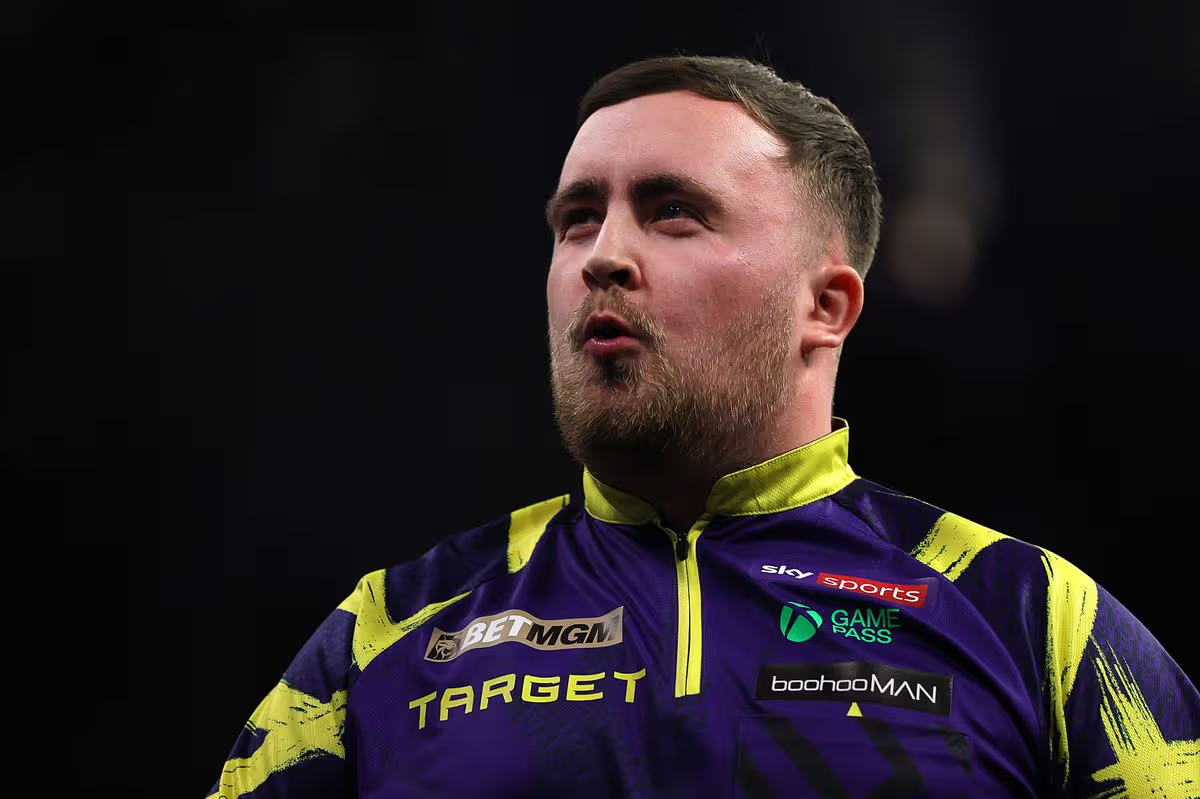
The darts world is buzzing with anticipation and tension as the Premier League Darts roadshow rolls into Rotterdam this week, where teenage sensation Luke Littler is expected to face a hostile reception from Dutch fans amid an escalating feud with local favorite Gian van Veen. The 19-year-old world champion, already a household name for his explosive rise in the sport, has been warned to brace himself for the worst possible atmosphere when he steps onto the stage in the Netherlands on Thursday night.
The simmering row traces back to a fiery quarter-final clash on Night Nine of the Premier League in Manchester earlier this month. In a high-stakes deciding leg, the drama unfolded rapidly. Littler missed a crucial match dart, prompting visible frustration. Van Veen then stepped up and missed double 15 for the victory on 90. As the Dutchman turned away from the board in evident disgust at his own error, he spotted Littler gesturing and appearing to celebrate toward the crowd. What followed was an intense on-stage confrontation that has since divided opinions across the darts community.
Van Veen, clearly irritated, muttered something in Littler’s direction. The situation escalated when Littler, after missing his own opportunities at double seven, turned toward his opponent and made a mocking crying gesture with both fists to his eyes. He reportedly called Van Veen a “cry baby” in the heat of the moment. The match ended with Van Veen claiming a dramatic 6-5 victory, but the frosty handshake that followed spoke volumes about the bad blood that had developed in mere minutes.
In the aftermath, Littler has been vocal about his side of the story, explaining that the gesture was never intended as a direct taunt toward his rival. “Didn’t do it to him, I did it to Faith, her dad and the crowd,” he clarified, referring to his girlfriend and her family in the audience. He insisted the celebration was a release of tension aimed at supporters rather than provocation. Littler went further in detailing an unseen moment that fueled his reaction: “What people didn’t see is that, as I walked around, he has put his darts down. I think he’s the one not doing his job, obviously being respectful. It’s the first-ever time I’ve seen someone put their darts down in my face. Why? I came inside [the double to win the match]. I called him a cry baby because there was no need for it. There was no need for him to put his darts down, and then when he won, I picked my darts up and said ‘Well done’.”
Littler described the entire evening as one of his most challenging on the big stage, admitting it ranked as his worst televised performance. He cited fatigue and a lack of recent practice time at home as contributing factors, noting that he “had the worst average” and “knew it was pretty bad even when I got on stage. I didn’t want to be there. I just couldn’t be bothered.” Despite the loss, which denied him further progress that night, the young star has urged calm, suggesting it’s time for everyone involved to move on from the incident.
Van Veen, however, has stood firm in his criticism, branding Littler’s behavior “out of order” and labeling the world champion a “bad loser.” From his perspective, the celebration after his missed dart felt like salt in the wound. “From my perspective, I missed the double 15 and I was fuming with myself that I missed, and I looked around and he was celebrating that I missed. That was out of order. I was fuming about that,” Van Veen explained. He added that Littler then missed his darts and “looked at me like I was the problem,” intensifying the sense of injustice. The Dutchman has not shied away from hinting that future encounters could be even more charged, stating their next meeting “might not be very friendly.”
The fallout has rippled through the darts circuit, with fans and pundits weighing in on social media and in interviews. Littler himself took to Instagram shortly after the match, sharing a story that directly referenced Van Veen as a “crybaby” while showcasing a montage of his remarkable trophy-laden achievements over the past two years on the PDC tour. The post only added fuel to the fire, particularly among Dutch supporters who have rallied behind their compatriot.
Now, as the Premier League heads to Rotterdam, the atmosphere promises to be electric—and potentially uncomfortable for Littler. Dutch darts expert and commentator Jacques Hartman has issued a stark warning about what awaits the teenager. “I’m afraid for Luke it will be a worse reception than Brighton, because you see it in the reactions of the articles and also on social media, a lot of the Dutch fans are saying to each other, ‘we will whistle and we will boo him, he can prepare for the worst’,” Hartman said. He added that while Littler has publicly stated he is mentally ready for the challenge, the evening may not rank among the most supportive in his young career: “I think Luke is prepared for the worst he said this week. I think in terms of supporting, it will not be the best evening of his life, I’m afraid.”
This isn’t the first time Littler has navigated crowd hostility, but the personal nature of the van Veen dispute elevates the stakes. The Dutch crowd is known for its passionate, vocal support, often creating a sea of orange that can overwhelm visiting players. For a prodigy who has captivated audiences worldwide with his precocious talent—becoming the youngest world champion and dominating leaderboards—facing boos in a rival’s backyard represents a new test of resilience.
The broader context of the Premier League Darts only heightens the intrigue. As one of the sport’s flagship events, it features a rotating cast of top talents battling week after week in different cities, with points accumulating toward the playoffs. Littler’s consistency has made him a frontrunner, but off-table drama like this can disrupt focus. Other players, including fellow Englishman Luke Humphries, have downplayed the spat as “hot news now” that will likely fade in the coming weeks, emphasizing the professional need to move forward.
Yet the row shows little sign of cooling immediately. Van Veen has continued to defend his stance in recent interviews, while Littler maintains he bears no grudge but stands by his on-stage reaction given the circumstances. Neither player has reportedly reached out to the other since the Manchester clash, leaving the tension unresolved as they potentially cross paths again soon.
Darts enthusiasts are no strangers to on-stage rivalries that spill into personal territory—think of the intense battles between legends like Phil Taylor and Raymond van Barneveld in years past. Those feuds often elevated the sport’s entertainment value, drawing larger audiences and creating memorable narratives. In this case, the youth versus experience dynamic, combined with national pride, adds a fresh layer. Littler, at just 19, carries the weight of being the face of darts’ new generation, while van Veen represents a rising Dutch contingent eager to challenge the established order.
As Thursday night approaches, all eyes will be on the AO Arena equivalent in Rotterdam, where the roar—or jeer—of the crowd could play a decisive role. Will Littler channel the anticipated hostility into another dominant display, further cementing his status as an unflappable champion? Or will the emotional undercurrents affect his rhythm in what promises to be a cauldron of noise?
One thing is certain: the “crybaby” row has injected fresh drama into the Premier League season, reminding everyone why darts remains one of the most compelling and unpredictable sports. Fans tuning in can expect not just high-level throwing but a charged atmosphere that tests character as much as skill. Littler has repeatedly shown maturity beyond his years, but navigating this particular storm in enemy territory will demand every ounce of his renowned composure.
The incident also sparks wider conversations about sportsmanship in high-pressure environments. Gestures, celebrations, and on-stage interactions are part of the game’s theater, yet they walk a fine line between passion and disrespect. Both players have their defenders—Littler for his youth and raw emotion, van Veen for his self-described frustration at perceived unsportsmanlike conduct. Ultimately, the resolution may come not through words but on the oche, where the arrows rarely lie.
As the darts caravan continues its journey, this chapter serves as a reminder of the sport’s human element. Behind the 180s and checkouts are young athletes dealing with fame, fatigue, and the intensity of elite competition. For Luke Littler, preparing for the “worst” in Rotterdam isn’t just about surviving the boos—it’s about proving once again why he sits atop the world rankings at such a tender age. The coming nights will reveal whether this feud becomes a footnote or a defining rivalry in the unfolding story of modern darts.
Leave a Reply