
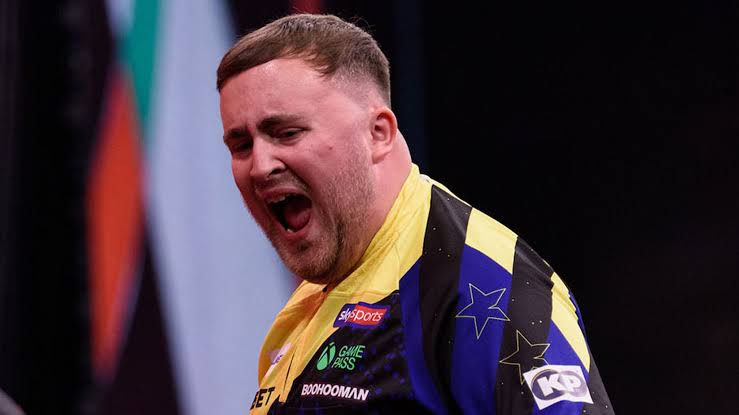
Luke Littler will not be walking onto the stage in Maastricht this weekend, but the impact of his absence could be felt long after the Dutch Darts Championship trophy has been lifted.
The world number one has become such a major attraction in professional darts that his decisions now generate almost as much discussion as his performances. Whether he is winning titles, losing a rare match or choosing to skip an event, Littler remains one of the sport’s biggest talking points.
And that is precisely why his absence from the October 16–18 tournament matters.
Some fans will argue that darts should be bigger than one player. They are right to an extent. The sport has plenty of outstanding professionals capable of producing spectacular matches.
But pretending that Littler’s absence makes no difference would be equally dishonest.
The teenager brings attention, anticipation and an extra layer of drama to tournaments. Without him in Maastricht, the remaining stars have an opportunity to take centre stage, but the event has also lost one of its biggest attractions.
Why Littler’s Absence Is Bigger Than One Tournament
Littler’s withdrawal is not simply a case of a top-ranked player missing another weekend of darts.
The 19-year-old had already faced a difficult reception at the World Series of Darts Finals in Amsterdam, where sections of the crowd booed and whistled during his matches.
After the tournament, he made his frustration clear, warning that he would stop playing European Tour events in the Netherlands if the treatment continued. He subsequently withdrew from the Dutch Darts Championship in Maastricht, as well as two Players Championship events in Den Bosch.
The timing has inevitably fuelled discussion about whether the hostile atmosphere influenced his decision. However, it is important to distinguish the sequence of events from an officially confirmed explanation for every withdrawal.
Nevertheless, the bigger issue remains: what happens when one of darts’ most marketable stars decides that certain events are no longer worth attending?
That is a question the sport cannot afford to ignore.
Littler is not just another name on a tournament entry list. His matches attract attention from casual viewers who might otherwise have little interest in following a full weekend of professional darts.
His scoring power, confidence and willingness to take on opponents have helped make him a compelling figure. When he plays, people want to know whether somebody can finally stop him.
That anticipation is part of the attraction.
Without him, the Dutch Darts Championship can still deliver excellent competition. But the tournament loses one of the central storylines that would have made the weekend even more interesting.
The Crowd Controversy Has Created an Uncomfortable Debate
Here is where I believe Littler’s critics need to think carefully.
There is nothing wrong with passionate darts supporters backing their favourite players. The atmosphere is an important part of the sport, and opponents should expect different levels of support depending on where they compete.
However, there is a difference between creating a hostile sporting atmosphere and making a player feel that competing at an event is no longer an enjoyable experience.
Littler’s experience in Amsterdam raised precisely that concern.
The teenager was booed during matches involving Dutch favourite Danny Noppert and England’s Nathan Aspinall. While crowd reactions are part of professional sport, the intensity of the response became a major talking point.
Some people will argue that Littler should simply ignore it.
That sounds easy when you are watching from home. It is a different matter when you are the person standing on stage, trying to concentrate on a double while thousands of people are making their feelings known.
Professional players are not machines. They can be competitive, confident and mentally strong without having to accept every possible form of crowd behaviour without comment.
And Littler has every right to express his frustration.
The argument that a superstar must attend every event regardless of the circumstances is particularly difficult to defend. Fans pay to watch their favourite players, but that does not mean any individual player should be treated as though their career belongs to the public.
If the sport wants Littler to keep appearing at major events across Europe, creating an environment in which its biggest stars feel welcome should be part of the conversation.
Luke Humphries and Michael van Gerwen Have a Chance to Step Up
Littler’s absence also creates an opportunity for his biggest rivals.
Luke Humphries will be among the players hoping to turn the weekend into another important statement. He has the experience and ability to win major titles, and the absence of the world number one removes the possibility of a direct showdown with him in Maastricht.
Michael van Gerwen, meanwhile, has a different motivation.
The Dutchman will want to make the most of a home tournament and demonstrate that he remains a serious contender for the biggest prizes in darts. With the home crowd behind him, this is an opportunity to deliver a performance that reminds everyone of his quality.
Gian van Veen and Danny Noppert will also have reasons to believe they can make a strong challenge.
The Dutch Darts Championship has an additional storyline, too: no Dutch player has won the event since its introduction in 2018. The return to Maastricht offers the home contingent another chance to end that remarkable drought.
That could make the competition fascinating.
However, I would not be surprised if Littler’s absence becomes a talking point even while the remaining players are battling for the title.
If Humphries wins, people will discuss his performance. If Van Gerwen lifts the trophy, supporters will celebrate a significant home victory. But some fans will inevitably wonder how the tournament might have unfolded if Littler had been there.
That is the consequence of becoming the player everyone wants to beat.
Darts Must Be Careful About Its Biggest Attraction
There is another side to this story that deserves attention.
Darts has spent years building its profile, attracting new audiences and turning its biggest players into recognisable sporting personalities. Littler has played a major role in that wider conversation.
His emergence has helped bring fresh attention to the game, particularly among younger fans. His achievements have also created new rivalries and given established stars another benchmark against which to measure themselves.
That makes his relationship with the tournament circuit important.
Nobody should expect the PDC to redesign its entire calendar around one player. Darts has a long history, and its success depends on much more than Littler alone.
But there is a difference between protecting the integrity of the competition and ignoring the commercial reality that certain players attract more attention than others.
If a major star repeatedly decides against travelling to particular events, organisers should at least consider what that means for the tournament, its supporters and the wider sport.
It does not automatically mean Littler is right about every aspect of the situation. Nor does it mean every crowd reaction is unacceptable.
It simply means the issue deserves more than an argument about whether he should toughen up.
Littler Could Still Be the Biggest Talking Point
The Dutch Darts Championship will go ahead without him, and the winner will deserve credit for overcoming the field.
But Littler’s absence has created a storyline that extends beyond the results.
His rivals have an opportunity to win a title, the Dutch players have a chance to end their home drought, and supporters can look forward to three days of competitive darts.
Yet the bigger question remains whether the sport can find the right balance between passionate crowds, player welfare and the expectations placed on its biggest stars.
From a Littler-supporting perspective, the answer should not be complicated: he has earned the right to make decisions about his schedule, and missing one tournament does not diminish his achievements.
If anything, the reaction to his absence demonstrates how important he has become to the sport’s wider conversation.
The players in Maastricht now have their chance to take advantage. They should make the most of it.
But if fans find themselves discussing Littler throughout a tournament he is not even playing in, that will tell its own story.
The Dutch Darts Championship may crown a winner this weekend, but Littler’s absence could prove to be one of the tournament’s biggest talking points.
Totally agree with you
It’s harressment at it’s highest level.you would not put up with it in any workplace which the stage is his .